
Governance in the 21st Century
Governance is how communities invent and shape their destinies. It determines whether a society goes forward or backward. Like the homeostasis of all organisms, governance is the regulator, arbiter and navigator of human affairs. It processes emotion through reason as the means by which societies not only survive, but thrive by adapting to change.
The imperative today is to bring the quality of governance up to par with the scientific and technological leaps of human civilization. It is a given that any universal approach that arises from new planetary conditions must pragmatically accommodate diversity. In a diverse world, cooperation implies different paths to harmonious collaboration, not the lock step uniformity of one model. The hope is that humanity can graduate from the dire competition of “survival of the fittest” to the less conflictive and more intelligent capacity for thriving of the wisest.
While the complexity of deeper planetary integration requires the capacity to manage the systemic links of interdependence at the supranational level, growing diversity within societies has led to a clamor from the bottom up for a say in setting the rules that govern people’s lives. Failure to find an institutional response to this double challenge will result in a crisis of legitimacy for any governing system.
That institutional response might be called “intelligent governance,” which both devolves power by meaningfully involving the grass roots in matters of their competence while fostering legitimacy and consent for delegated authority to higher levels of complexity. In short, devolving, involving and decision-division.
The Berggruen Institute has pursued these ideas in various forums, projects and contexts over the years under the theme, “participation without populism.”
Our Think Long Committee for California reformed the direct democracy system in the world’s 4th largest economy to bring more deliberation and negotiation to that process by which citizens make law directly at the ballot box. It has also helped institutionalize Engaged California, an AI-assisted deliberative platform for “government with the people” through citizen participation at scale.
As AIs diffuse throughout economies, delinking productivity growth and wealth creation from jobs and income, the Institute has promoted the idea of “universal basic capital” through savings/investment accounts where all own a stake in the future.
In Europe, we are widely engaged in the ongoing discourse over whether the experiment of shared sovereignty through the European Union can be a model for planetary governance and a new universality based on practical convergence around core interests. Our Europe Center at Casa dei Tre Oci in Venice hosts a Europe-wide series of lectures related to this idea and publishes a dedicated book series for the continent’s most notable thinkers to make concrete proposals about the future of Europe.
The Institute sponsored the first trans-national citizens’ assembly on the future of Europe, convened at the birthplace of democracy in Athens and continuing in Florence and Vienna before concluding in Brussels. Among much else, it organized a “Planetary Summit” of civil society at Palazzo Diedo in Venice and runs a yearly keynote event at the Capitol in Rome on the anniversary of the founding Treaties of the European Union.
For years, our 21st Century Council, comprising a dozen former heads of state and government, global thinkers and tech titans from Google, LinkedIn, Snapchat, and Alibaba, met regularly in Beijing with Xi Jinping and others in the Chinese leadership to promote mutual understanding between East and West and explore a “partnership of rivals” where cooperation is as imperative as conflict is inexorable. “Planetary realism" and "convergence of interests” are the guiding principles.
Biennially we publish the comparative Berggruen Governance Index that rates the quality of governance in 145 countries across the world through a triangle of criteria: accountability, state capacity and public goods provision.
Featured News

Nathan Gardels interviewed by NRC, discusses Universal Basic Capital

Living the Contradiction

On the Equality of All Things with Carlo Rovelli

Engaged California launches statewide to give all Californians a stronger voice in AI policy
2026 Berggruen Governance Index

Neither Human nor Machine: On the In-Betweenness of AI

Living Metaphysics: Process Thought, Buddhist Philosophy, and the Impact of Ontology
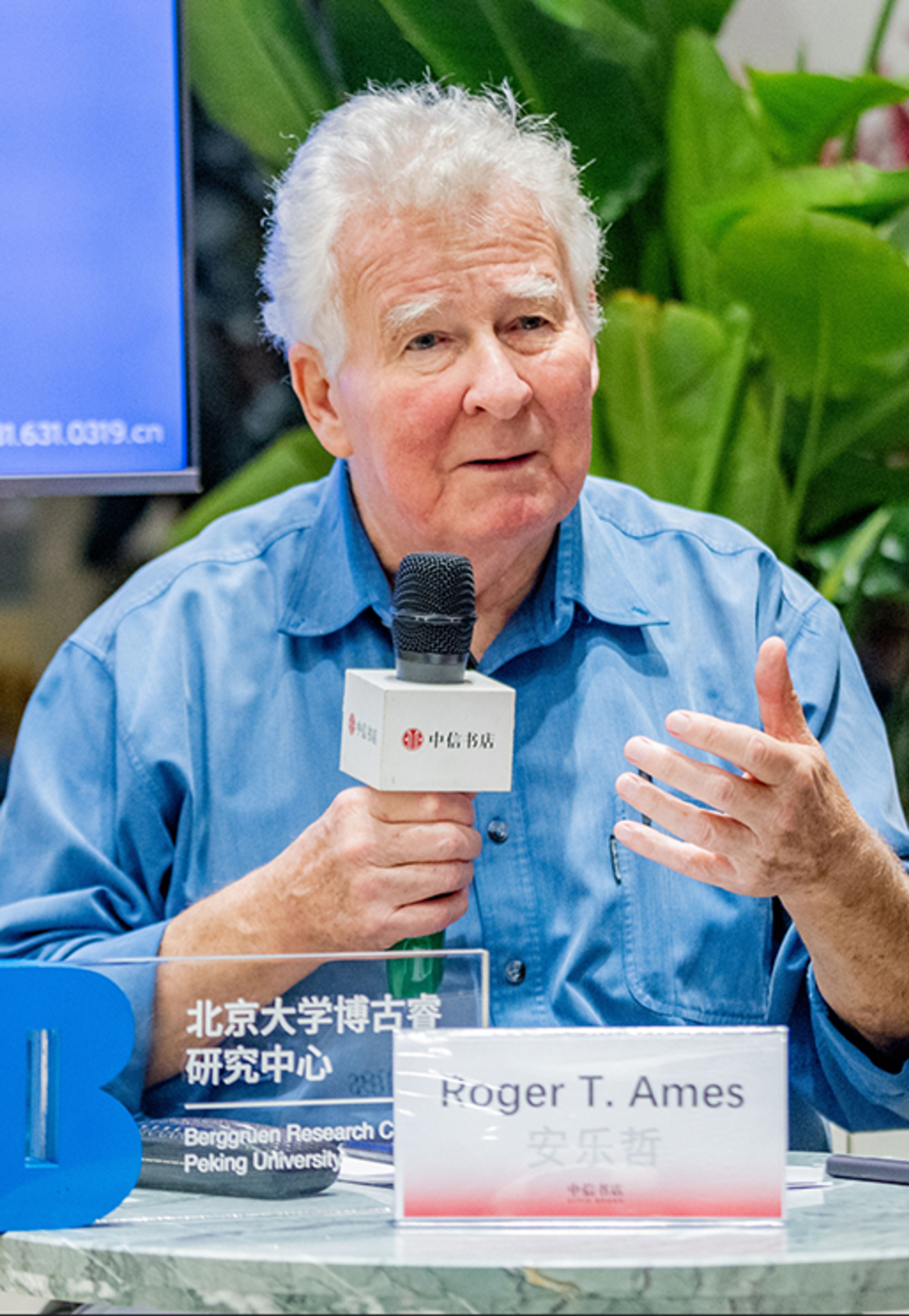
Translating Chinese Philosophy

The Intuition Trap: Exploring How Evolutionary Psychology Explains Contemporary Misconceptions
When Sci-Fi Meets Brain Science: Baoshu Discusses New Book with Ge Jianqiao

A Reflection on Speciesism

2025–2026 Berggruen Institute China Fellows Announced

Aristotle on Emotions and Emotion Proof

Ten Thousand Things: Cross-morphing and Transmattering

Human Nature and Planetary Metaphysics

Verb Thinking and Neo-Enlightenment

The Elusive Body: From Daoism to Digital Selves

In Conversation with Peter Singer | Utilitarianism: Avoiding Common Misunderstandings and Responding to Objections

A Democratic Revival 2,345 Years in Waiting

What Is Universalism