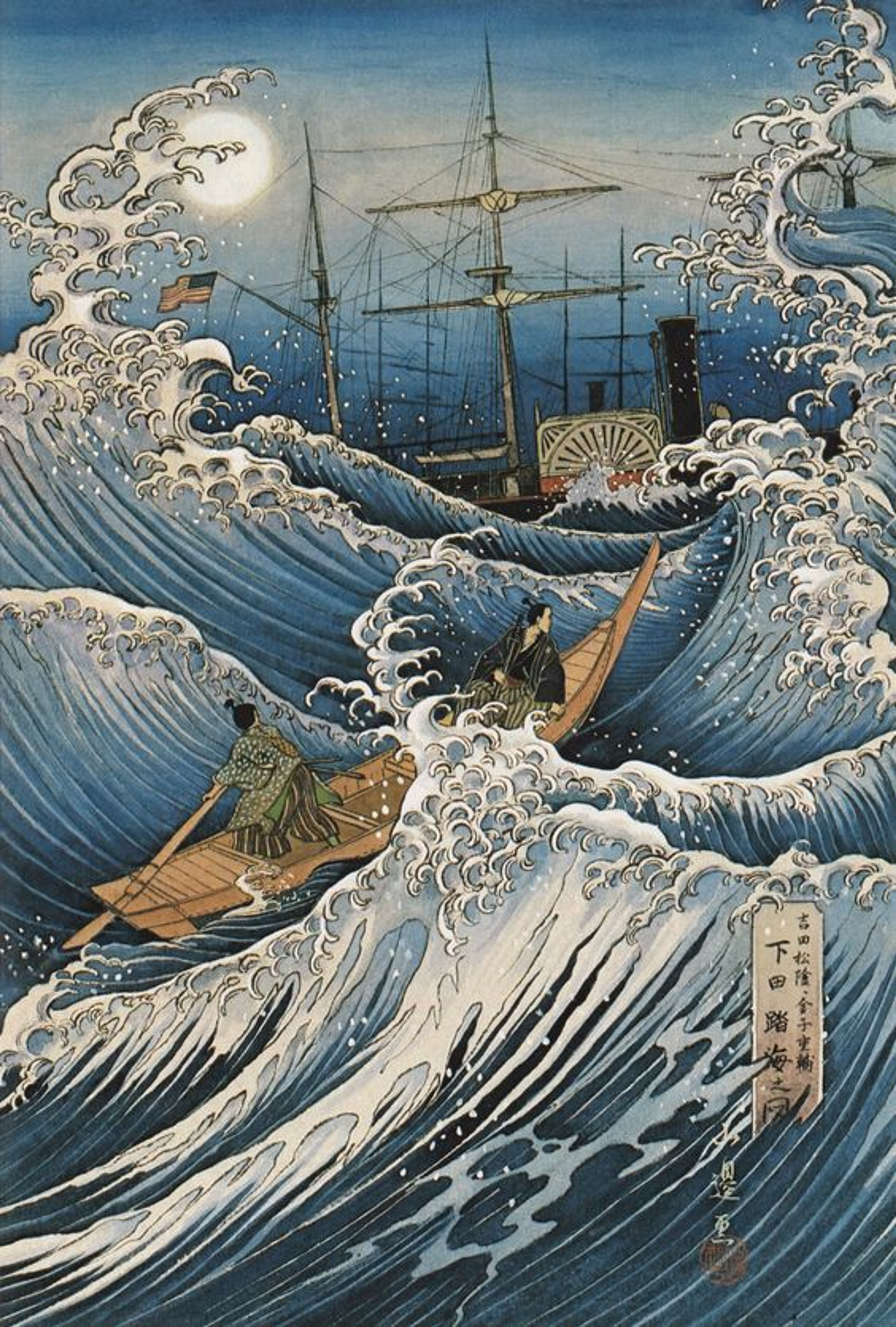
On the Equality of All Things with Carlo Rovelli
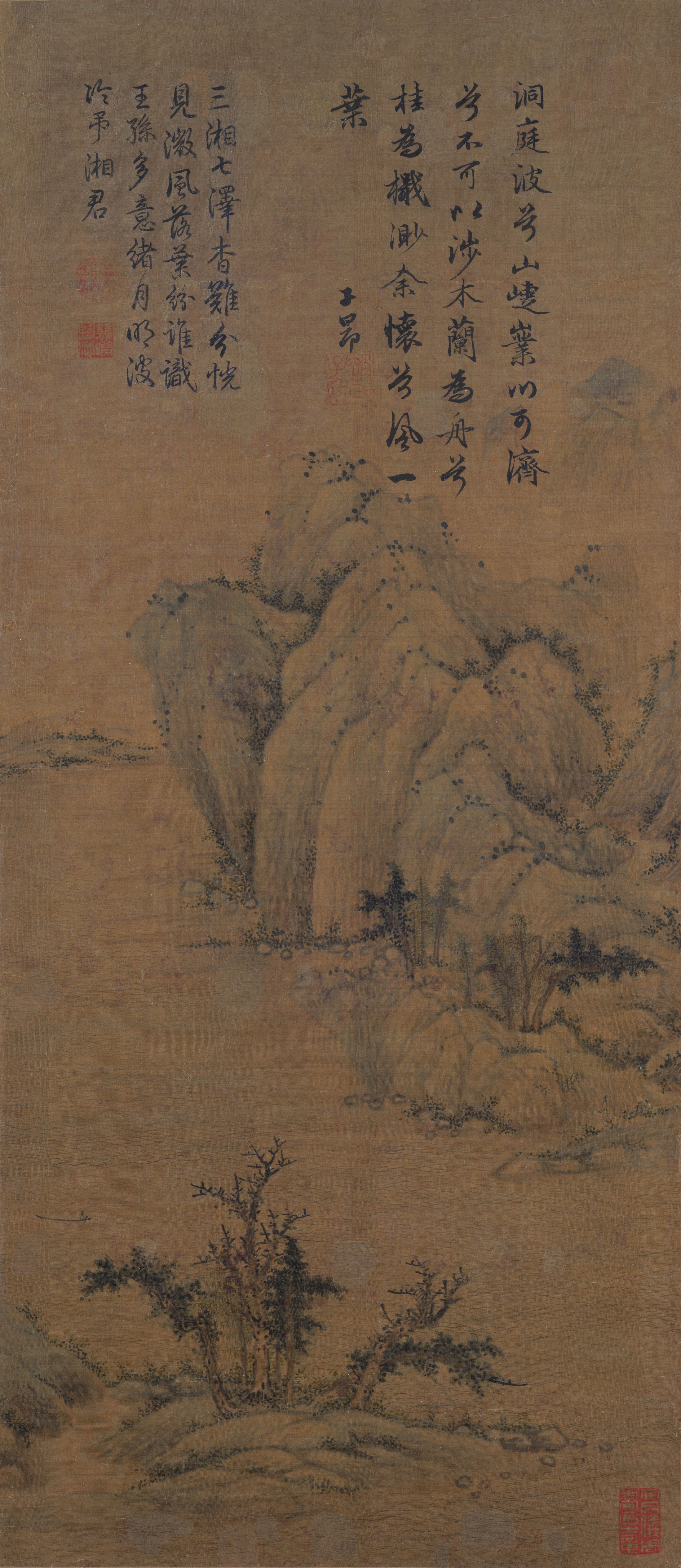
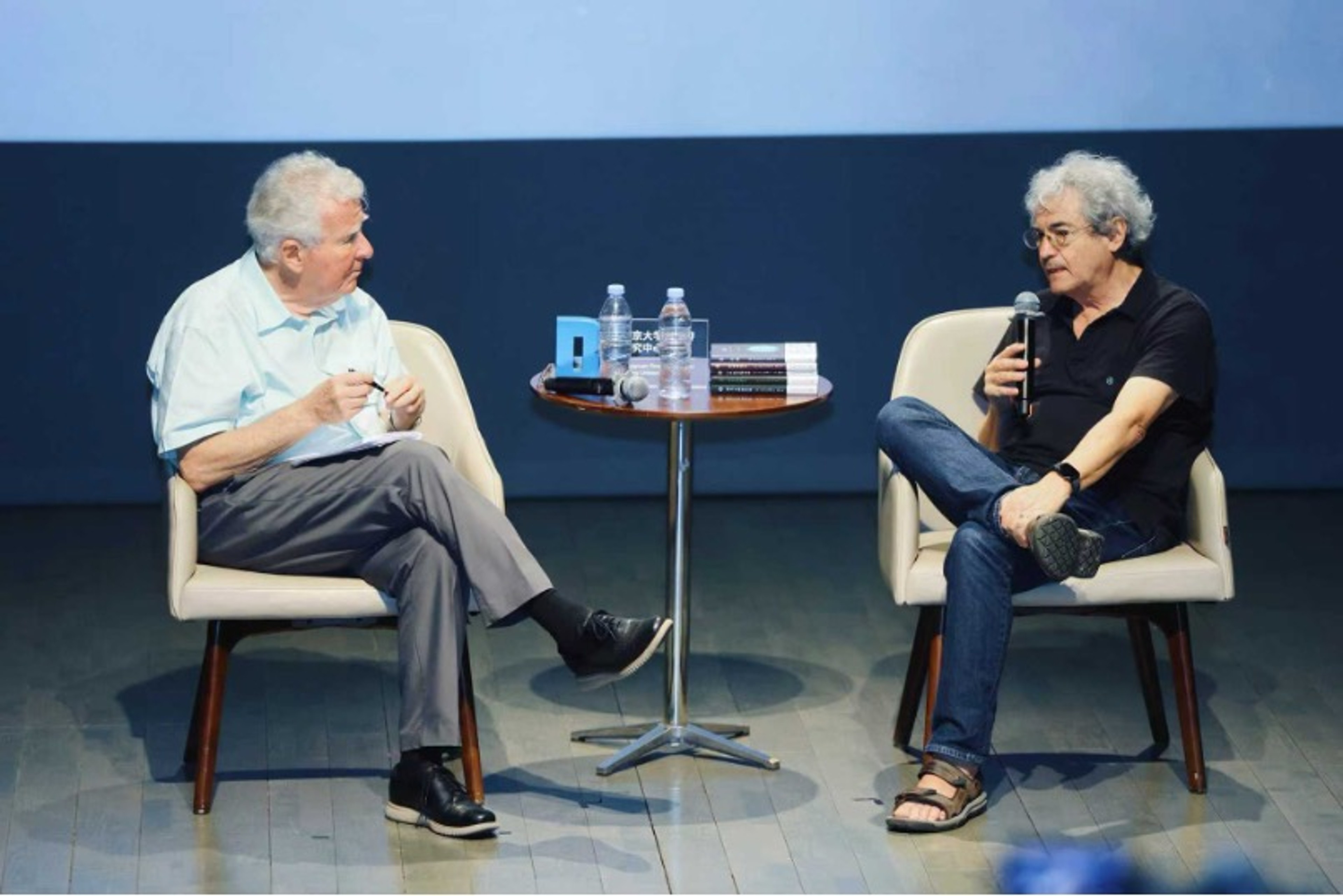
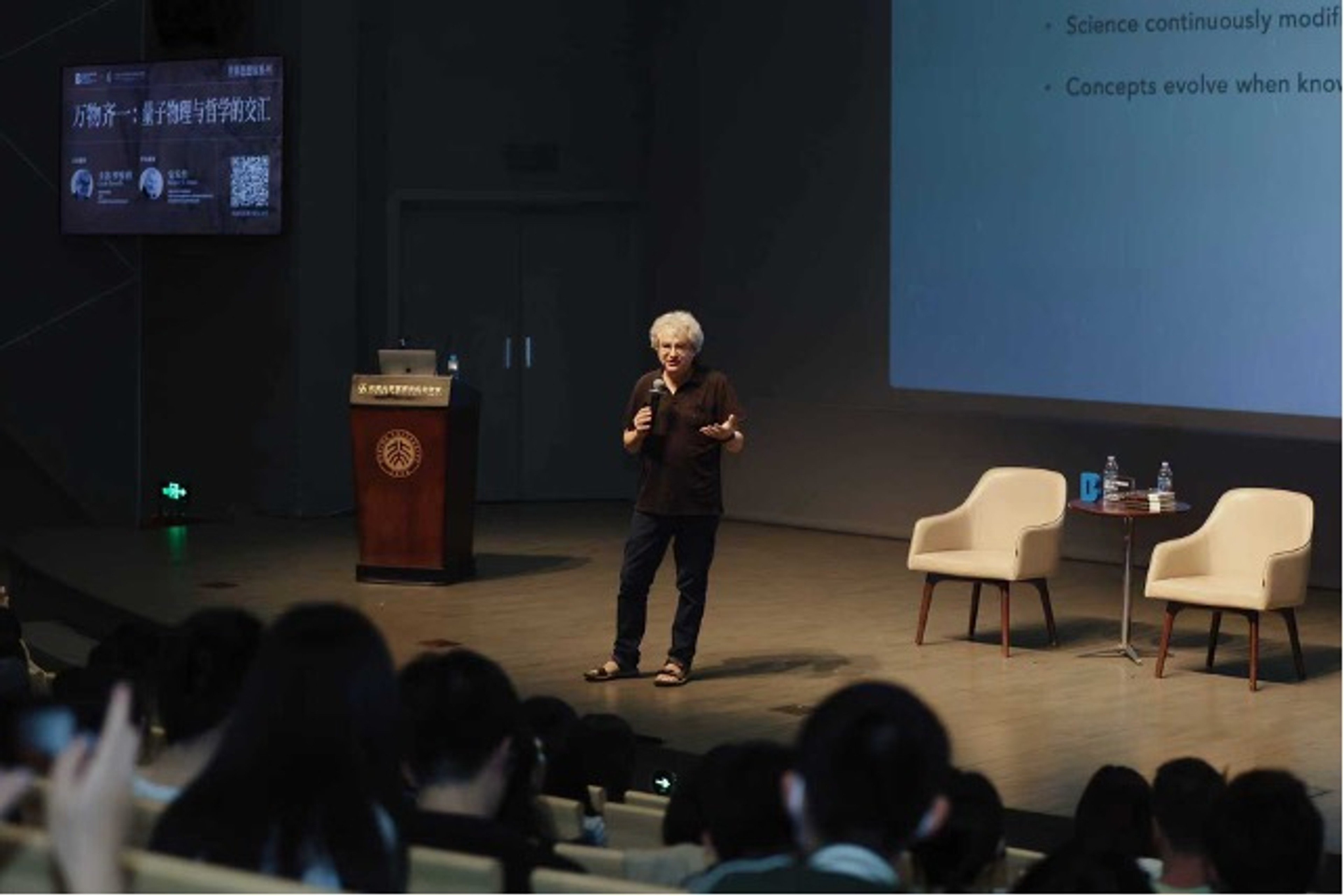
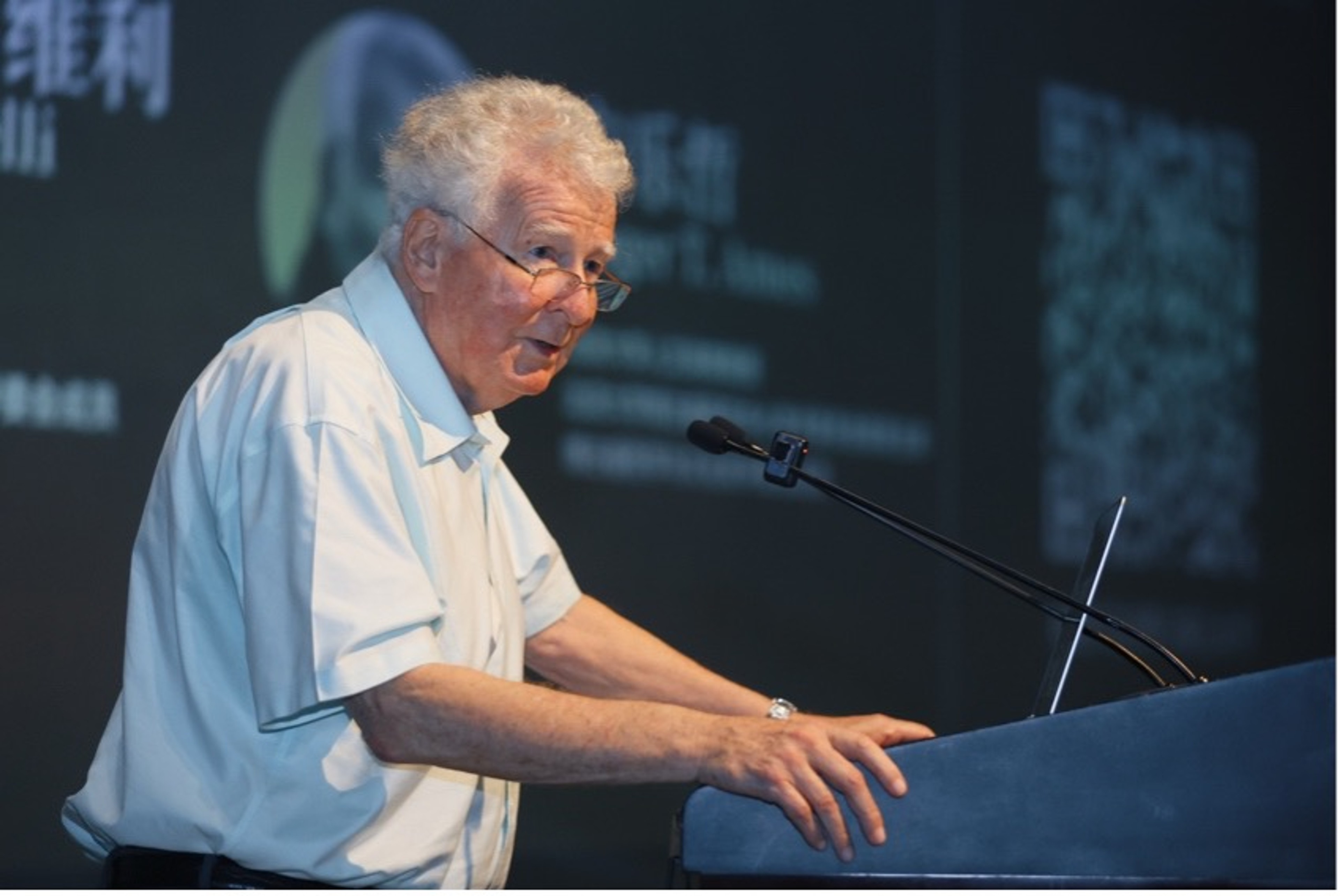
On May 14, 2026, the Berggruen Global Thinkers Series presented the lecture “On the Equality of All Things” held at Peking University’s Centennial Memorial Hall. The lecture was delivered by the renowned theoretical physicist Carlo Rovelli who drew from his recent manuscript under the same name Sull’eguaglianza di tutte le cose (On the Equality of All Things, 齊物論) following the famed Zhuangzi chapter. Rovelli’s lecture explores the intersection of modern physics and philosophy. Roger T. Ames, Chair Professor of Humanities at Peking University, served as commentator and provided perspectives from Chinese philosophy.
Physics and Philosophy Exist in a Dialogue
Rovelli began by arguing that physics and philosophy stand in a reciprocal relationship: philosophical concepts shape scientific discovery, while scientific knowledge drives the evolution of our concepts and worldview. Big jumps in scientific discovery often originated in philosophical ideas, evidenced in the discoveries of Newton, Darwin, Maxwell, and Einstein. Einstein notoriously read Kant before he reached the age of fifteen and Kant is incomprehensible without understanding his work as a reaction to and interpretation of Newton’s theories about space and time. Heisenberg and Schrodinger were also famously avid readers of philosophy, and similarly the discovery of quantum mechanics coincided with the philosophical ideas from which they drew.
Rovelli demonstrated this interplay between philosophy and science through a simple concept in classical mechanics: velocity. If a person is sitting in a chair, the concept of velocity appears simple. They are not moving, so one might say their velocity is 0. If this person was sitting on a train, however, they still would be sitting motionless on the chair, but their velocity would take on the velocity of the train. Zooming out, consider that the earth is spinning and orbiting around the sun. In turn, the earth and sun are in a galaxy that is rotating, and this galaxy is moving toward the galaxy Andromeda. Does the sitting person have a velocity of zero, the velocity of the train, the velocity of the earth, or the velocity of the galaxy? Viewing velocity at these increasingly wider scopes, the concept of “absolute velocity” becomes meaningless, and instead velocity only acquires meaning relative to other objects, for practical purposes usually the ground. This fundamentally changes our concept of what it means to be “moving.” Similarly, when it was discovered that the earth is round, the concept of “flat” changed, and when evolution was discovered, that concept of “humanity” changed. As such conceptual structures evolve in conversation with scientific discovery.
Quantum Mechanics Reveals a Relational Metaphysics
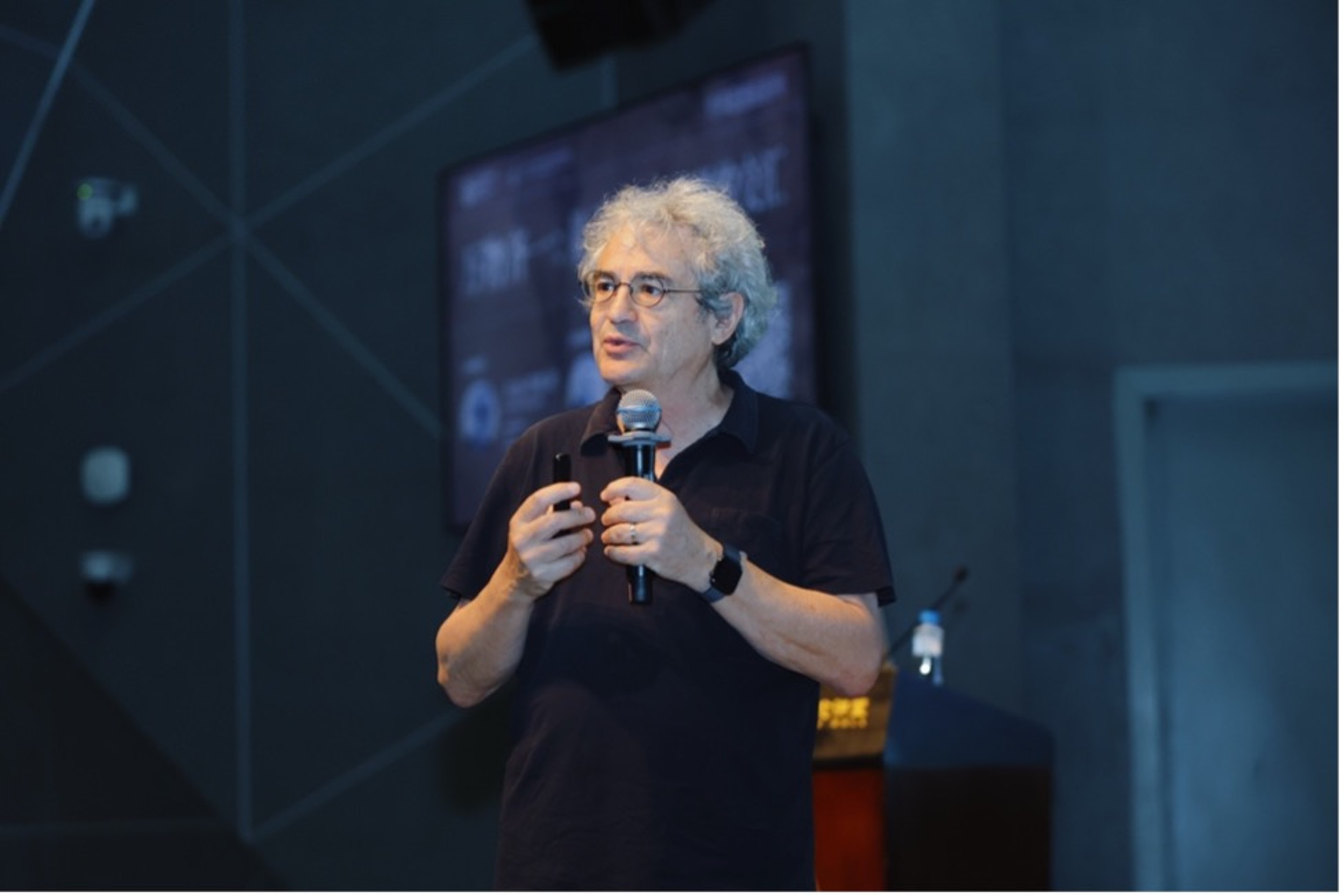
Moving on from classical mechanics, Rovelli argues quantum mechanics further pushes philosophy toward a relational understanding of reality. First Rovelli walked through the double slit experiment to demonstrate the “strangeness” of reality quantum mechanics suggests. In this experiment, balls are thrown at a wall with two slits. In a classical understanding of the world, if we cover one slit and observe that some balls land on a given point, and then cover the other slit and observe that some balls land on the same point, we would expect that when both slits are uncovered and the experiment is run again, approximately the sum of the balls from the previous two experimental runs would land on that point as the expectation is the ball either goes through the first slit of the second slit. At the quantum level, however, this simple probabilistic expectation fails; this failure is known as quantum interference. In this simple experiment, the ball could be considered in a quantum superposition of both positions. Like “absolute velocity” instead of viewing the ball going through one slit or the other as a property of the ball, going through one of the slits must be considered the property of the ball and the thing that detects which slit the ball goes through. That is, the ball doesn’t have a position without reference to the detector. Quantum mechanics implies that all properties are like this: not properties of the systems themselves, but properties of one system relative to other systems.
Rovelli offers a further illustration through Wigner’s friend thought experiment, in which a friend inside a room observes which of two possible events occurs, while Wigner remains outside the room. For the friend, the experiment yields a definite outcome; for Wigner, however, both the friend and the event remain in a state of superposition. Here, too, what the friend observes is not absolute, but relative to the observer. This has radical implications for the nature of reality, challenging the Enlightenment ideal of an objective world that can be observed from an external standpoint. Instead, Rovelli suggests, we can only describe the world from within it, as participants embedded in the very reality we seek to understand.
Wittgenstein, Nāgārjuna, and Zhuangzi: Toward a Relational Metaphysics Beyond Classical Mechanics
To make sense of these ideas from quantum mechanics, Rovelli turns to three philosophers: European philosopher Ludwig Wittgenstein, Buddhist philosopher Nāgārjuna, and Daoist philosopher Zhuangzi. These philosophers all question absolute objective reality and the metaphysics suggested by classical mechanics and emphasize perspectival or relational knowledge. Wittgenstein writes about how we are often misled by our language into implicit metaphysical commitments, such as using nouns to talk about objects assumes they exist independently of measurements. Quantum mechanics, however, suggests questions like “What is the position of the ball?” in the double slit experiment are ill-defined instead of simply not known because position only comes meaningful through interaction with an observer.
The Mahayana Buddhist philosopher Nāgārjuna offers a complete relational view of reality, denying the existence of things and concepts that exist independently of each other. Zhuangzi speaks of perspectivism, demonstrating how objects look different depending on perspectives, deconstructing the Enlightenment ideal of pure reason that observes the world from the outside. Classic mechanics is not wrong; it is helpful for calculations, but the metaphysics it suggests is decidedly wrong given current scientific knowledge. Instead, all knowledge comes from a perspective and is profoundly uncertain.
Rovelli uses this relational framework to extend how this goes beyond metaphysics to touch morality and politics. Looking at a bottle of water, one can describe it starting with a scientific picture as a body with a mass, energy, velocity, position, temperature and pressure. It also includes microbacteria and the chemistry of the water. It can be seen at the atomic level, quantum level or through nuclear physics. It also is embedded into an economic system where plastic bottles are manufactured in one place and exported globally. In this way the bottle of water can be described politically, socially, and culturally as well. No one picture is the “real” bottle, rather they describe different ways to see the bottle based on an interaction with the bottle.
Correspondingly, chemistry and physics can both view an atomic bond’s chemical and physical properties respectively without contradiction; as such, two disciplines that were once considered entirely distinct merge. There is no metaphysical gap between the heavens of the earth, humans and non-humans, and living and non living things. Biology is just a very particular type of chemical phenomenon, which can also be described in terms of physics; you simply use the level of description fitting for the circumstances. Rovelli emphasizes this is what he means by the “equality of all things,” that is the dissolution of all metaphysical gaps.
Rovelli then uses the concept of circularity to further destabilize apparent contradictions humans have constructed. He first describes the classical philosophical paradox between “The world I know is in my mind” and “I am in the world.” These two statements are self-referential creating what Rovelli describes as a circularity rather than a contradiction. He ties this into the ostensible contradiction between Confucianism and Daoism, where one focuses on self-cultivation and education to realize their humanity and the other sees humanity as just part of a natural phenomenon. He argues that these are not actually contradictions; science is part of nature but science is a product of humans. Science is a cultural and historical phenomenon created by humans, and therefore part of nature as humans are part of nature. Through this emerges a new way of viewing reality.
Rovelli concludes that even moral values are relative, cautioning about the trap of viewing moral values as absolute. Morals arise culturally through human relations. Although they are relative, they are not arbitrary; in fact, they have value precisely because they are part of what it is to be human, and they must evolve through negotiating people’s differences and similarities. Rovelli offers a final perspective on our current geopolitical context, a world in the face of nuclear weapons heading toward disaster: these moral values must continue to evolve toward a universalism that is a common goal and not a single assumed perspective
Commentary and Discussion: Circularity and Chinese Thought
In his commentary, Ames adds nuance to the discussion by introducing ideas about Confucian relational ethics, life, and cosmology. He first applies Rovelli’s concept of relationism and perspectivism in physics to Chinese thought. For example, the concept of morality in Confucianism is not based on a fixed set of rules. Instead, li (礼) is a social structure emphasizing growing and nurturing relationships.
Ames then complicates the picture by asking if relationism and perspectivism are already given facts, how does physics account for the “life” factor as seen in Daoist thought? He interprets a passage in the Daodejing (道德经) through a “zoetological” (生生论) lens:
“道生之,德畜之,物形之,势成之”
Each thing sprouts forth within a world-growing ecology (dao), and is nourished in the symbiotic coalescence it strives for with everything else (de); environing things (wu) give each thing its shape, and its contextualizing circumstances (shi) usher it to completion”
From the above passage, Dao is the source of all things and yet each thing has a compulsion internal to itself and thus is “self-causing”, where life gives rise to life. Ames supports this observation by citing Joseph Needham’s view that cosmology “has its own causality and its own logic”.
Rovelli responded that both the sciences and culture have undergone an evolution in thought, where the distinction between the “living” and “non-living” is far less sharp than before. It became clear that after all, life is not so different from inanimate matter and vice versa. For example, in biochemistry, we discovered DNA and headed in a direction of reductionism, to be able to break down life into inanimate elements. On the other hand, when we study other matter such as stars or rocks, which a priori have nothing to do with life, there are processes within them which mimic life. This is a generative notion resembling the zoetological interpretation of Dao and the concept of qi (气). Qi represents vitality, the structure of life, and is inanimate all at the same time. Ames and Rovelli concluded that life can be viewed on a spectrum.
Second, drawing from Daoist thought, Ames asks how should we understand “beginnings” and “endings” in physics? Ames describes how in Chinese thought, nothing is truly empty or in a void. The concepts of you (有) or “something”, and wu (无) or “nothing”, only exist in relation to each other and this correlation is fundamental.
At the start of his book, Rovelli also writes about how our concept of “time” should not be taken for granted as it exists in relation to Earth. There is a common time on Earth, but not in the rest of the universe. Ames extrapolates this insight on “relations” to reflect on our assumptions that everything has a beginning and an end temporally. Hence, where is the end of the cosmos and when was its beginning? Rovelli suggested that there currently lacks clarity in contemporary physics on beginnings and ends, because we are still discussing ideas such as the direction of time and quantum gravity.
During the Q&A session, an audience member asked how to approach the argument that perspectivism itself is a kind of perspective. Rovelli quoted Nāgārjuna’s idea that “emptiness is empty”, meaning emptiness does not have an existence itself. Perspectivism does not claim to have understood the world, but rather attempts to understand it through different lenses, which are bound by one’s culture, knowledge, language etc. Rovelli encourages openness and a willingness to probe our underlying assumptions. To conclude, Rovelli suggested that the relational thinking we find in quantum mechanics and relativity is crucial for rethinking reality, the self, and value, and for shaping a future in which science and the humanities remain deeply connected.
--
Written by Berggruen Interns: Chianna Cohen, Shien Hsu, Lochlan Zhang
Guest Speaker

Carlo Rovelli
Theoretical Physicist, Writer
Rovelli is known for his work on loop quantum gravity, on the nature of space and time, and on the relational interpretation of quantum theory. He has also worked on the history and philosophy of science. Born in Italy, Rovelli has worked in the United States, France and Canada. He is member of the Institute Universitaire de France, honorary professor at the Beijing Normal University, Honoris Causa Laureate of the Universidad de San Martin, Buenos Aires, member of the Académie Internationale de Philosophie des Sciences. He is currently affiliated to the University of Aix-Marseille in France, the philosophy department of the Western Ontario University and the Perimeter Institute in Canada and is Fractal Faculty at the Santa Fe Institute for Complexity. Rovelli has been awarded the 1996 Xanthopoulos Award for “the best relativist under forty” and the 2024 Lewis Thomas Prize for Writing About Science. During the last decade, he has written global best sellers translated in more than fifty languages, including Seven Brief Lessons on Physics, The Order of Time, and Helgoland (on quantum theory). He has been included in the 2019 list of the 100 most influential “Global Thinkers” by Foreign Policy magazine and in the 2021 list of The World’s 50 Top Thinkers by Prospect magazine.
Moderator

Roger T. Ames
Humanities Chair Professor, Peking University
Co-Chair, Academic Advisory Council, Berggruen Research Center, Peking University
Professor Ames is the former editor-in-chief of Philosophy East & West and founding editor of China Review International. He has authored several influential works on Chinese philosophy, including Thinking Through Confucius (1987) and Human Becomings: Theorizing Persons for Confucian Role Ethics (2020). His translations of Chinese classics include The Art of Warfare (1993), The Confucian Analects (1998), and The Daodejing (2003). His work has been widely translated into Chinese, including his recent Sourcebook in Classical Confucian Philosophy (2022).
About The Berggruen Institute
About The Berggruen Institute
About The Berggruen Institute
About The Berggruen Institute
About The Berggruen Institute
About The Berggruen Institute
About The Berggruen Institute
About The Berggruen Institute
About The Berggruen Institute
About The Berggruen Institute
Related

Living the Contradiction
Translating Chinese Philosophy

In Conversation with Peter Singer | Utilitarianism: Avoiding Common Misunderstandings and Responding to Objections

In Conversation with Peter Singer: Ethics and Animals

In Conversation with Wang Gungwu: Understanding the Sinic Civilization in World History