Winners of 2025 Berggruen Prize Essay Competition Honored during South by Southwest (SXSW)
- Date: March 17, 2026
- Location: Austin, Texas
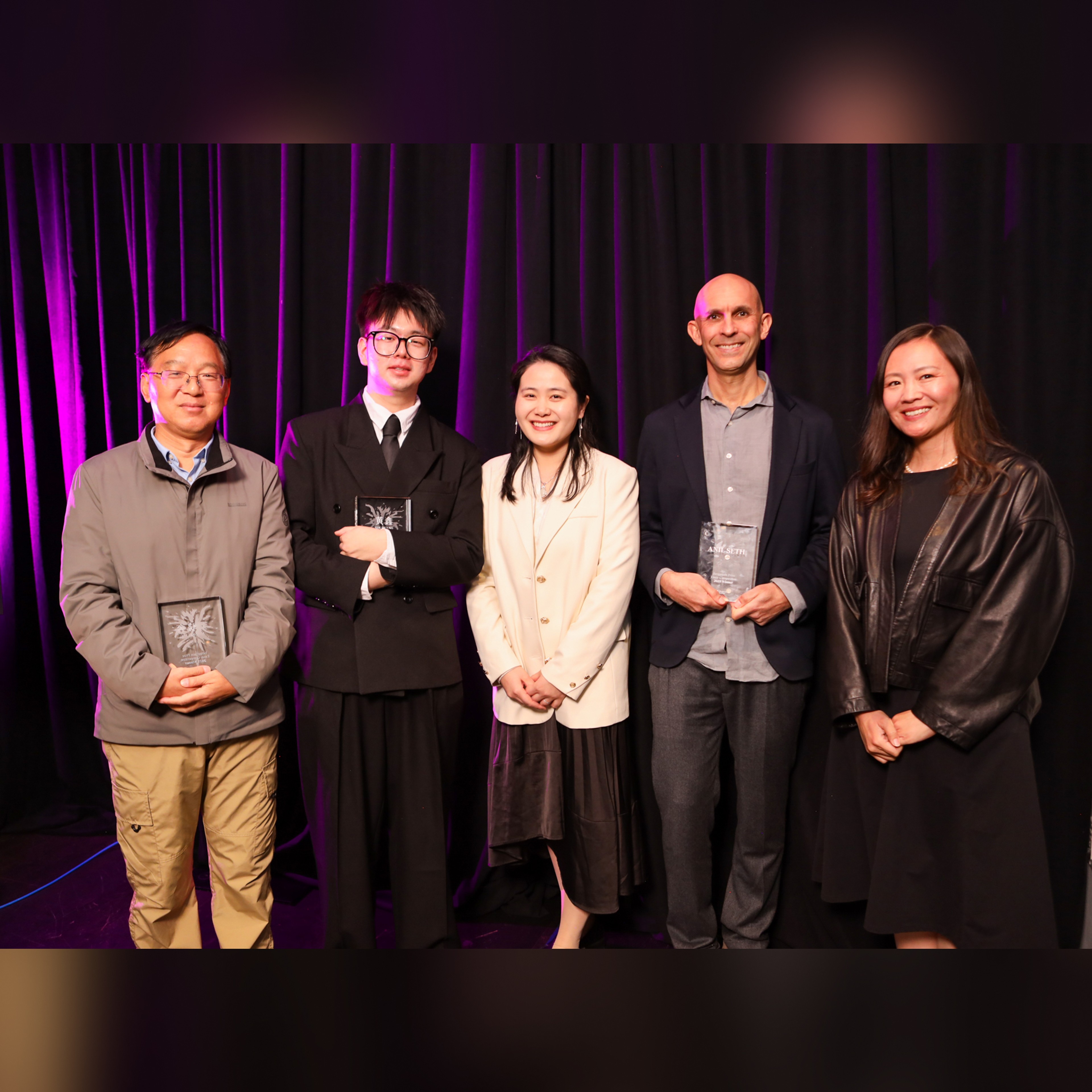
The 2025 Berggruen Prize Essay Competition winners Anil Seth, Professor of Cognitive and Computational Neuroscience and Director of the Centre for Consciousness Science at the University of Sussex; Xin Huang, graduate researcher in the integrated master’s–PhD program in Philosophy of Science and Technology at Tsinghua University; and Xiaoben Liu, who studied philosophy at Nanjing University were honored during a special ceremony this March in Austin, Texas.
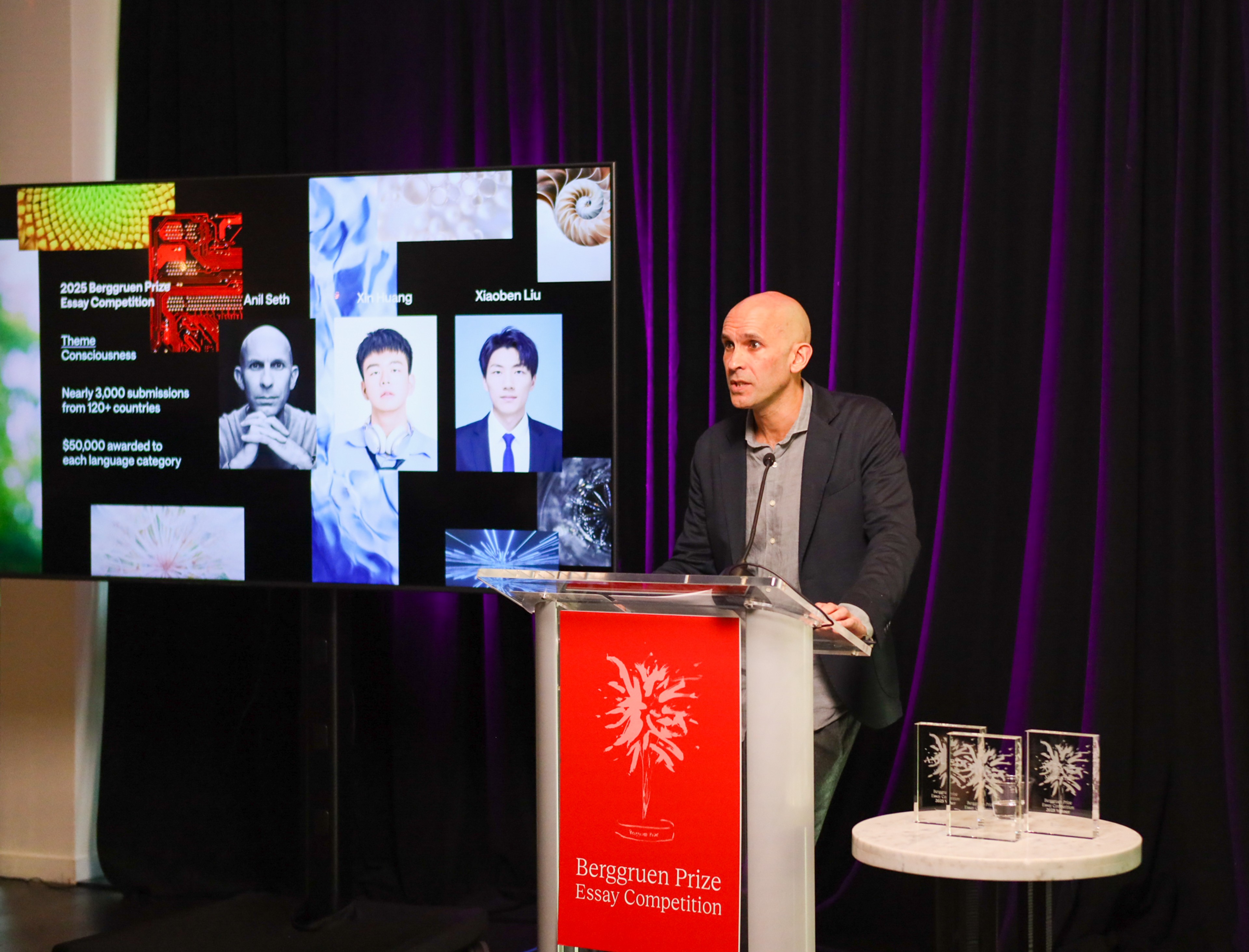
Held during the annual South by Southwest (SXSW) festival, the event gathered thinkers and practitioners across various disciplines for an evening of lively celebration and thoughtful dialogue centered on consciousness, intelligence, and the nature of mind. Winners of both the English essay competition and Chinese essay competition delivered remarks and shared excerpts of their essays, which ranged from critiques of conscious AI to bold visions of consciousness evolution.
Anil Seth presented ideas from “The Mythology Of Conscious AI,” wherein he examined one of the most consequential questions of our technological era: Could artificial intelligence ever be conscious? While the prevailing intuition suggests that consciousness might naturally follow sophisticated computation, Seth outlined a series of arguments challenging this assumption. You can read his full essay published in Noema.
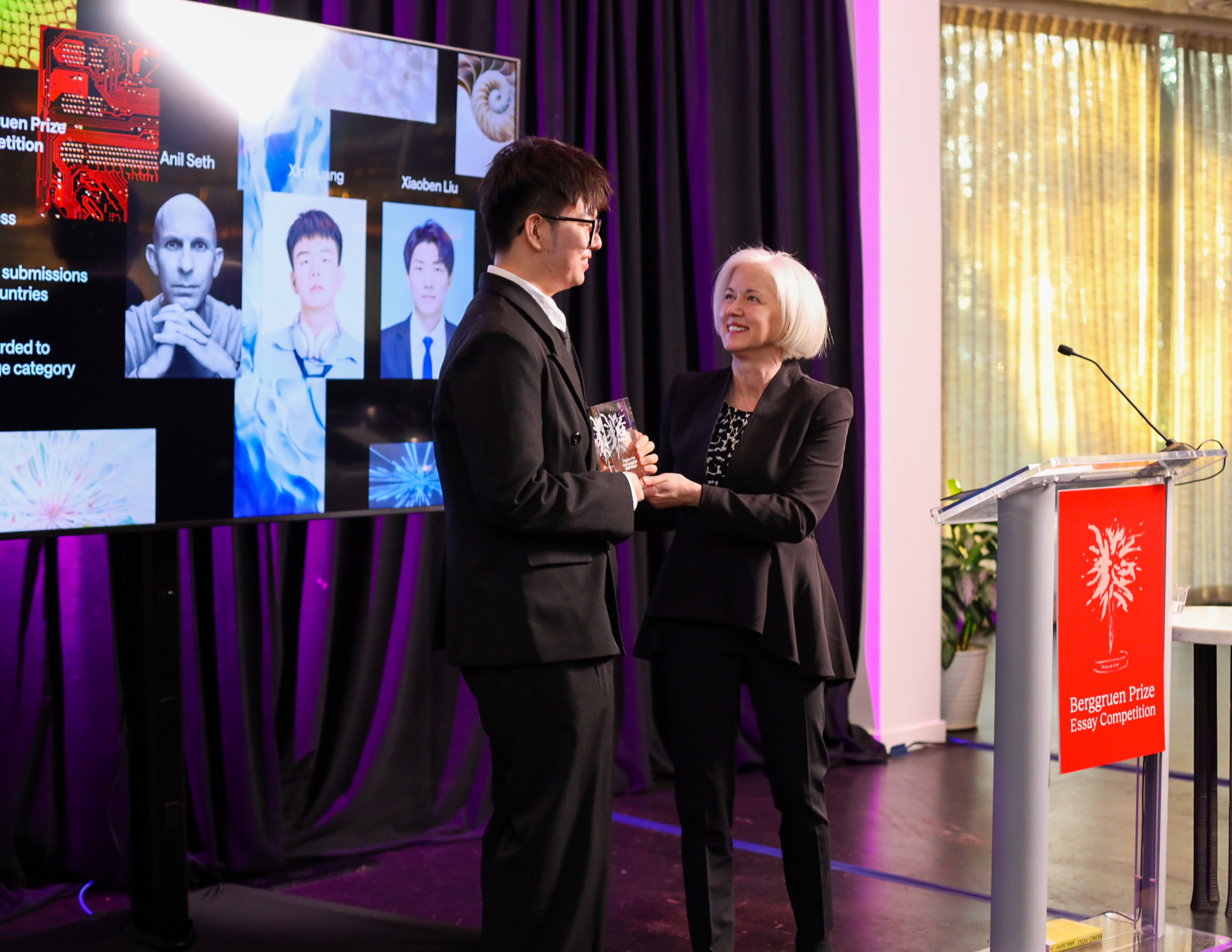

Xin Huang discussed how he used the “token” to reopen the consciousness problem in the age of intelligent systems: when experience and intention are encoded as computable objects, do we obtain consciousness itself, or a more manageable substitute? He then explained how he examined the ambition of the “unified token,” as an enticing blueprint for bridging language, computation, and mind. You can read his full essay, ““Language, Consciousness, and Computation: A Philosophical Analysis of the Token Concept in the Age of Intelligence” (语言、意识与计算之间:智能时代中token 概念的哲学分析)” published in Cuiling.
Xiaoben Liu’s essay, ““The First Paradigm of Consciousness Uploading: Mechanisms of Consciousness Evolution in the AI Axial Age and a Prospect toward Web4” (意识上传第一范式——AI 轴心时代的意识演化机制与Web4 前瞻)” confronted one of the most fundamental philosophical challenges of the AI era: What does consciousness itself mean when machines have mastered language—the very core of human consciousness? He examines an era of consciousness where human consciousness and AI consciousness will no longer stand in subject-object opposition, but exist as equal subjects in symbiotic evolution. His essay can be read in full here.
About The Berggruen Institute
About The Berggruen Institute
About The Berggruen Institute
About The Berggruen Institute
About The Berggruen Institute
About The Berggruen Institute
About The Berggruen Institute
About The Berggruen Institute
About The Berggruen Institute
About The Berggruen Institute
Related

On Human Questions: Consciousness, AI, and the Human Future

2025 Berggruen Prize Essay Competition Winners
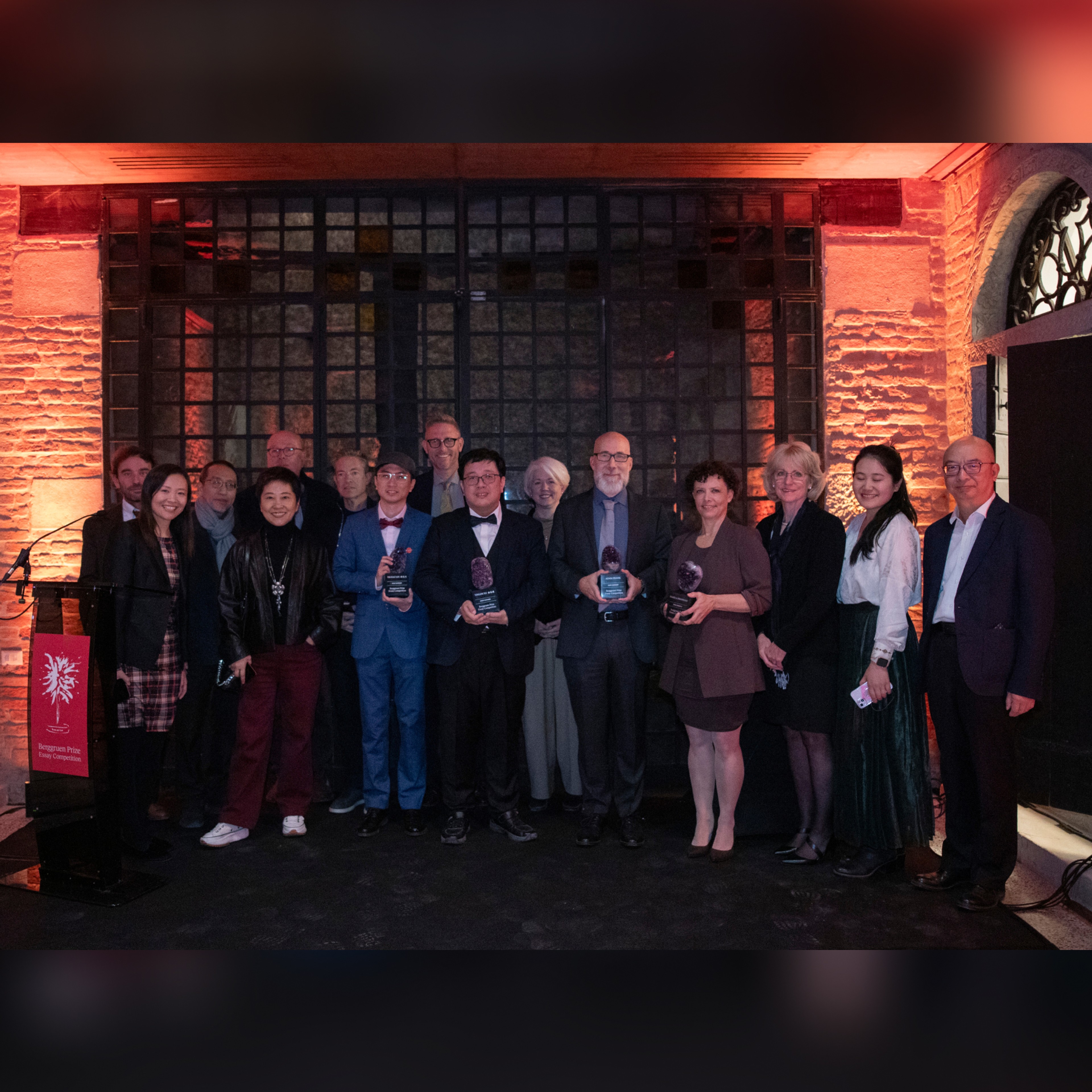
Inaugural Winners of 2024 Berggruen Prize Essay Competition Honored at Casa dei Tre Oci

2024 博古睿论文奖得主
2024 Berggruen Prize Essay Competition Winners
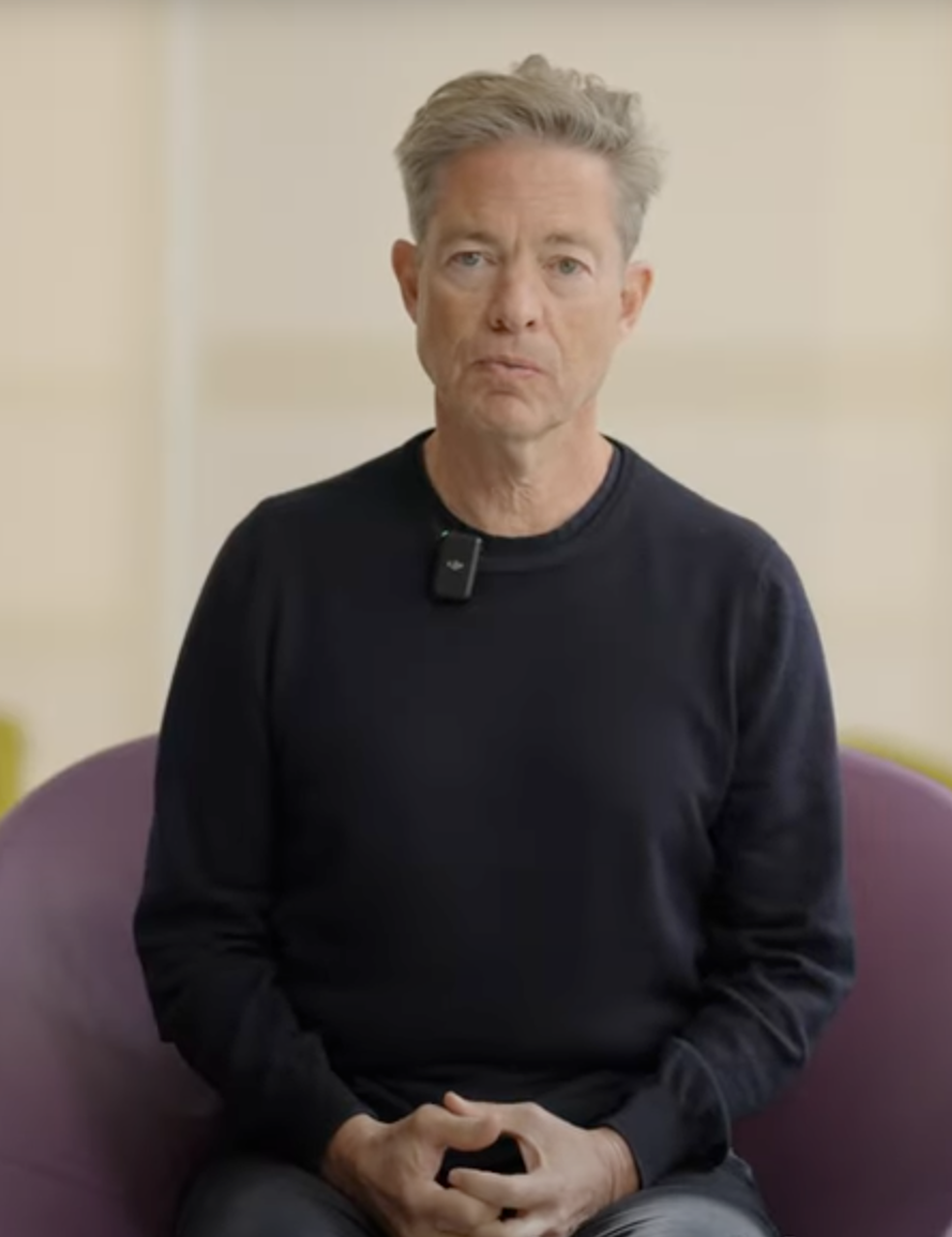
Berggruen Institute Founder Nicolas Berggruen on the Berggruen Prize Essay Competition