“Non-Human Intelligence” Workshop
- Date: May 27, 2026
- Location: Peking University Berggruen Research Center
On May 27th, the Peking University Berggruen Research Center organized a workshop on “Non-Human Intelligence”, hosted by Liang Xitong, Assistant Professor in the Peking University School of Life Sciences and 2025-2026 Berggruen Fellow.
Intelligence beyond the human lets us understand ourselves by providing the perspective of the “Other”. Over the long and gradual course of biological evolution, life has produced an astonishing wealth of diverse natures. For this reason, intelligence has likewise taken form along a variety of paths. In facing the apparent complexity of cognitive functioning, whether in biological evolution or in the development of machine intelligence, convergence on any particular “optimal solution” may not lie in a single unique answer, but rather come through many equally expedient modes of explanation.
Through mutual discussion among the life sciences, the cognitive sciences, and the science of intelligence, this workshop hoped to hone in on those unique intelligences displayed by animal species unrelated to humans in evolutionary history and strikingly different in terms of their nervous systems, while at the same time placing artificial intelligence and human intelligence together in comparison. Opening up space for contrast and reflection between three paths of intelligence, the discussion deepened our understanding of the nature of intelligence.

First, Liang Xitong introduced her original intention in organizing this workshop. Right away, the rapid development of artificial intelligence inspired us to reflect on the very nature of “intelligence” itself: what ultimately sets human and non-human intelligence apart, and what ultimately draws them together? Against this background, the workshop brought together scientists and philosophers from the areas of biological intelligence, artificial intelligence, and human intelligence to enhance our understanding of the diverse natures of “intelligence” through various scientific inquiries concerned with intelligence in its different forms.
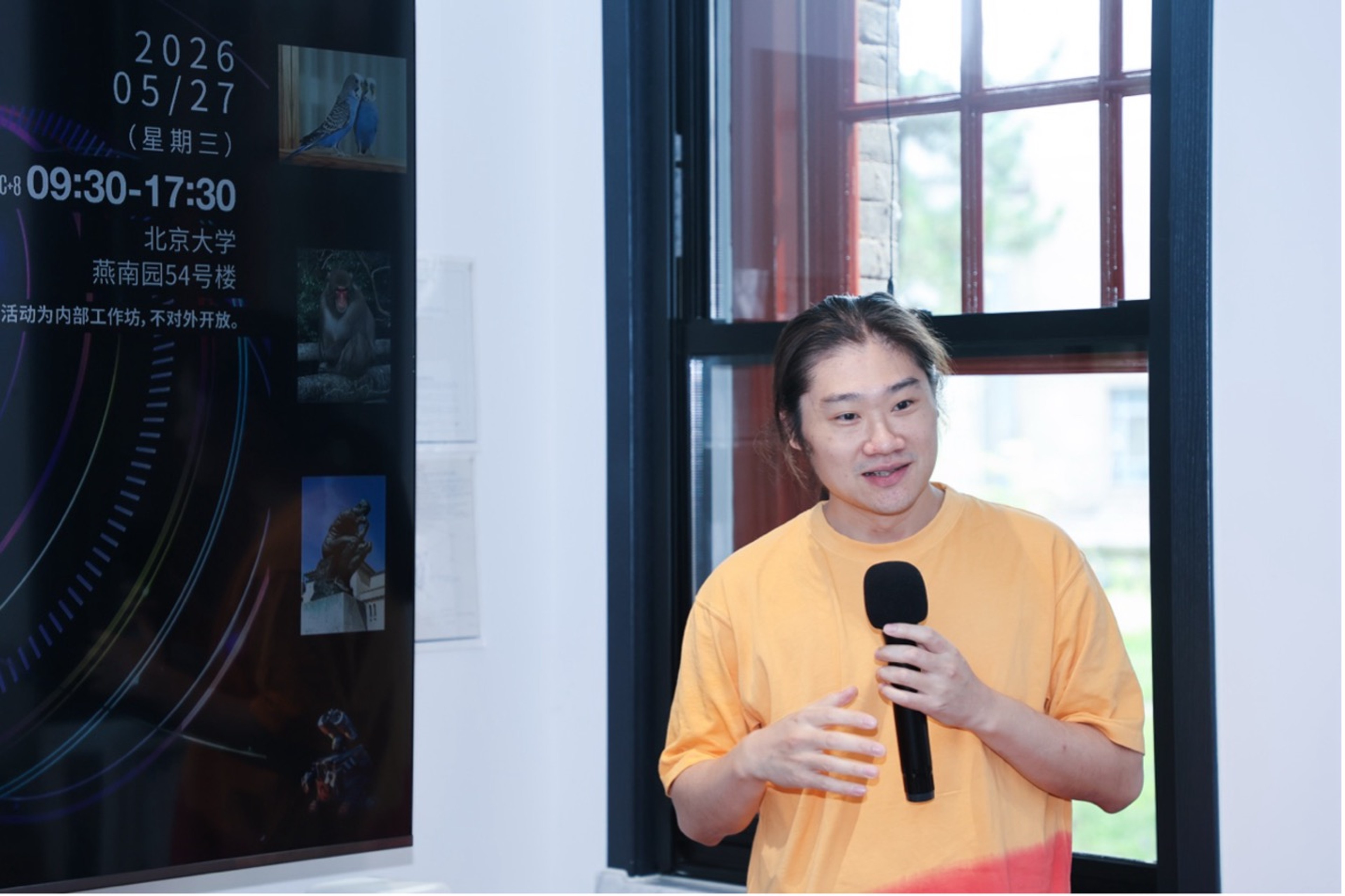
Professor Gong Neng, researcher at the Center for Excellence in Brain Science and Intelligence Technology, Chinese Academy of Sciences, presented on the topic of “what makes humans human”. He thinks that what makes humans human lies in the extraordinarily complex cerebrums possessed by humankind, which enable them to engage in advanced cognitive behaviour. This kind of advanced cognition is intimately connected with consciousness, emotion, language, and other such core questions of biology.
Combining advancements in AI with an evolutionary-developmental perspective, he drew on the work of his primate social cognition research group to emphasize that research should follow the testable path of “non-human intelligence” if it is to achieve breakthroughs. Centering on the mirror test, he noted that the common notion that animals have no sense of self (aside from humans and a small number of great apes) remains a point of dispute, and proposed that rather than animals not having a sense of self, it could be that their levels or expressions of self-consciousness are different. Moreover, the view that a sense of self needs to spontaneously arise and cannot be trained is not necessarily an established fact. By having animals learn how to use a mirror, we can examine whether behaviour associated with a concept of self may emerge.
He advocated for establishing more testing scenarios using brain imaging to look for activation in brain areas related to sense of self, and at the same introducing world models to advance explanations of the underlying mechanisms at play, then applying these thought patterns to robots to test the latter’s automatization and generalization. Research on “non-human animal intelligence” should search among animals for clues to the mechanisms behind its joint evolution alongside human intelligence, while further discussing mechanisms related to emotion and language on the basis of mixed models.
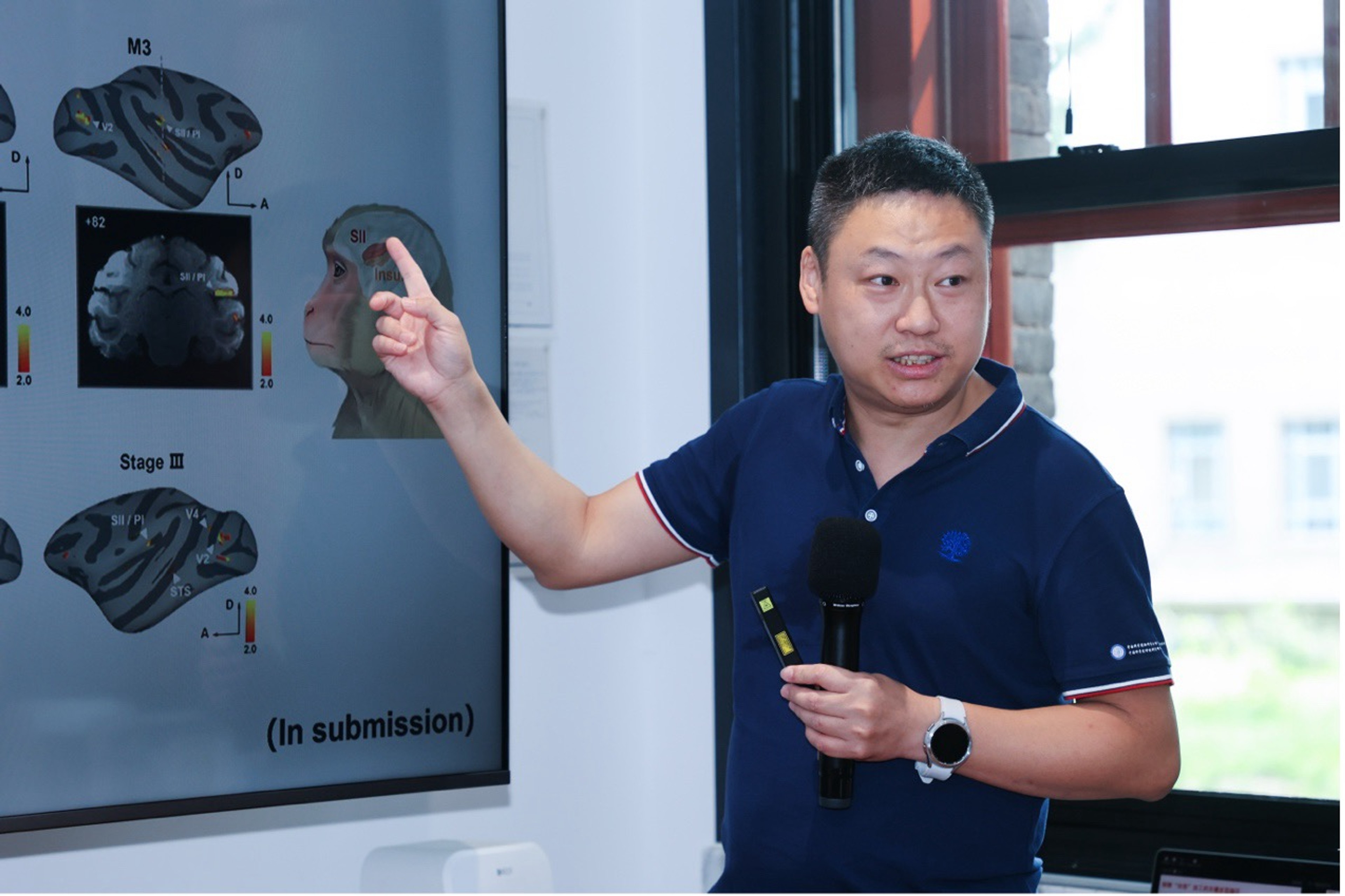
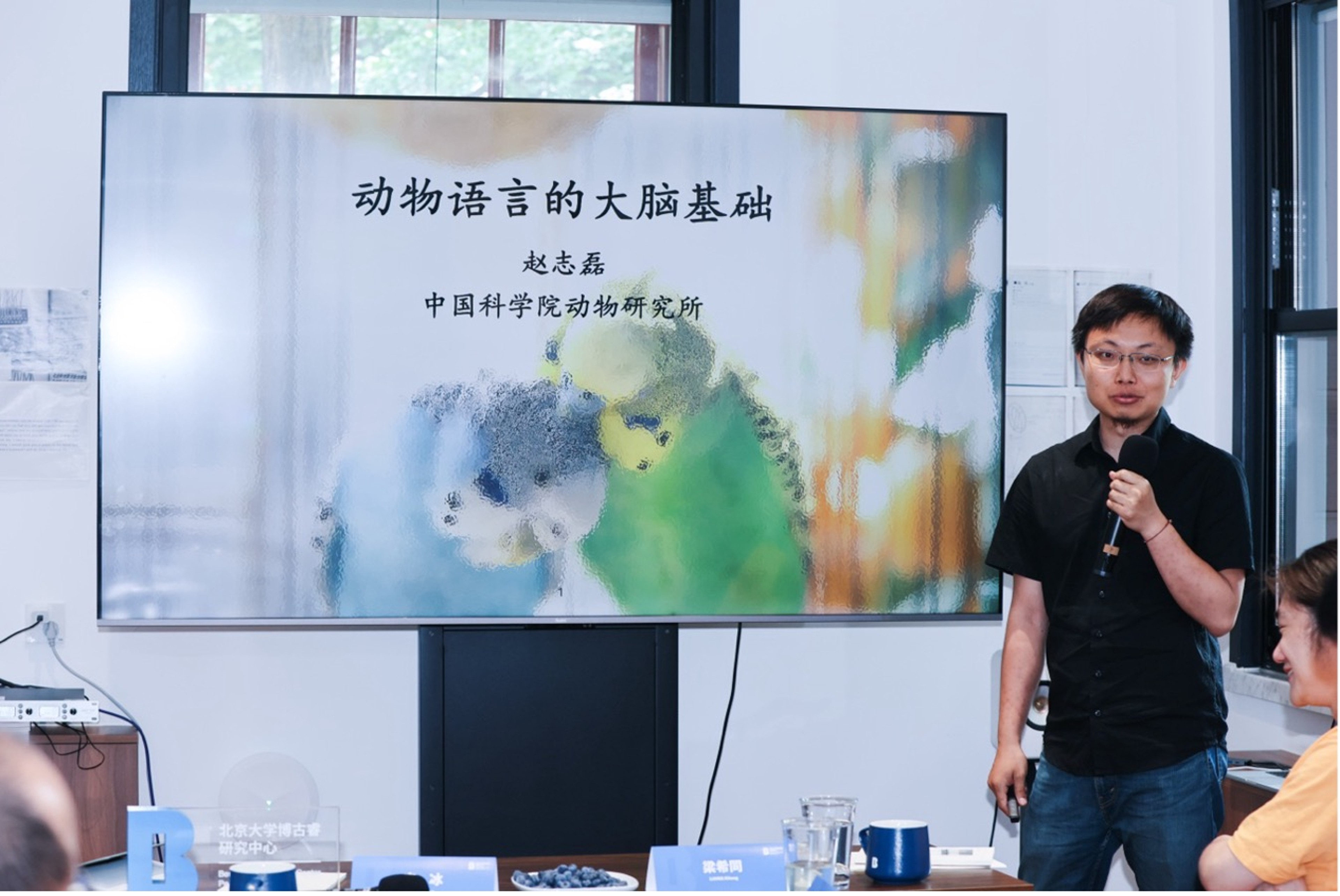
Zhao Zhilei, researcher at the Institute of Zoology, Chinese Academy of Sciences, raised the topic of the cerebral foundations of animal language, sharing his research on the language of parrots. He divided language into three functional modules: phonology, syntax, and semantics. Parrots possess a striking ability to imitate (human-language) speech, their calls displaying that they have learned how different syllables combine in sequential rules. Some parrots that have gone through training retain the ability to understand and employ language (such as the viral grey parrot Alex).
Zhao proposed that the forms these abilities take are intimately tied to the pressures that parrots face in sexual and social selection. Based on the complexity and human-like nature of parrots’ linguistic behaviour, as well as the convenience of using parrots to advance research, we can establish a “parrot model” to research the cerebral mechanisms of language.
Current research has already identified the essential nature of the MO/NAO brain region in the parrot cerebrum to their phonology. Following this, Zhao introduced the progress his team has made on the neural mechanisms underlying parrots’ flexible phonology. Their new research has discovered that different permutations and combinations of phonemes in parrots’ calls are strongly associated with MO neural activity: different neurons map onto different acoustic-spatial firing fields, and this, along with similar cases in other systems, together demonstrate how neurons encode the pronunciation of phonemes in universality in the algorithmic sense. To conclude, Zhao compared two paradigms in current research on animal semantics—observation in the field and training in the laboratory—proposing that we ought to consider a new paradigm involving the development of suitable neural technology to further our research into semantic questions in animal communication.
Professor Bi Yanchao of the Peking University School of Psychological and Cognitive Sciences intervened via the topic of human language and intelligence, discussing the relationship between language and animal intelligence. She first cited the research method of focusing on the cognition of preverbal infants as an instructive path to breakthroughs in research on “non-human intelligence”, which likewise has no way of relying on linguistic reports.
Reflecting on and comparing topics and approaches in traditional research on human and non-human language and intelligence, Bi claimed that when it comes to the hard scientific problems of understanding “language” in different species and ascertaining whether having some form of language is a prerequisite for intelligence, one promising path is this: to explore the mechanisms whereby human language models informational representations in the brain, and using this as a frame of reference for examining the cognitive mechanisms of other animals. Bringing in her own laboratory’s empirical research into cognition and the brain, she proposed many types of mechanisms whereby human language mediates intelligent learning: vocabulary is a flexible, open, and fast-working tool for classifying and summarizing information; the process of learning vocabulary and semantics serves to reconstruct how concepts are classified in the perceptual cortex;concepts that specify the relationships among other vocabulary (such as negation markers, hypothetical markers, and causal connectives) pertain to how internal representational models are rapidly deployed and updated; and, as seen by way of comparison with animals’ perceptual-observational learning, language’s function of symbolically compressing experiential data—and thereby narrowing the hypothesis space—is humankind’s uniquely efficient pathway for intelligence and learning. All in all, at the same time that language serves as a tool for communication, it also transforms into a kind of new model of mechanisms for intelligence and learning, enabling abstract knowledge to be disseminated and accumulated across individuals.

Lu Qiaoying, tenured associate professor in the Peking University Department of Philosophy and 2020-2021 Berggruen Fellow, discussed the topic of “AI Consciousness from an Evolutionary Perspective”. She thinks that if we merely approach the question of AI consciousness with a ‘checklist of abilities’, we are apt only to be able to reveal behaviour associated with consciousness, without getting at the heart of conscious subjectivity and the first-personal perspective. The key to consciousness research lies precisely in a kind of internal perspective that differentiates self and environment.
Lu cited the notion of an “explanatory gap”: that even if we capture all of the objective facts about an experiencing subject, we may still have no way to answer the question of why this subject itself has the capacity for experience, since consciousness’s mode of existence is not necessarily something that can be measured as a third-personal matter of fact. As she further explained with the “robotic bat” thought experiment, we are unable to establish the truth of internal experience by means of behavioural and cognitive testing alone, as training and imitation may merely reproduce external expressions thereof. This granted, she advocated for distinguishing synchronic and diachronic paths of evolutionary development, suggesting that subjectivity need not have arisen in tandem with cognitive complexity. Rather, more rudimentary forms of subjectivity may have arisen earlier in the course of biological evolution, with higher capacities associated with the self-world distinction developing later. At present, it is difficult to support the conclusion that something possesses consciousness if it lacks the basis for subjectivity. If we are to contemplate the consciousness of future systems, we need to redirect our attention to the basic question of how the subjective and internal perspective is produced in the first place.

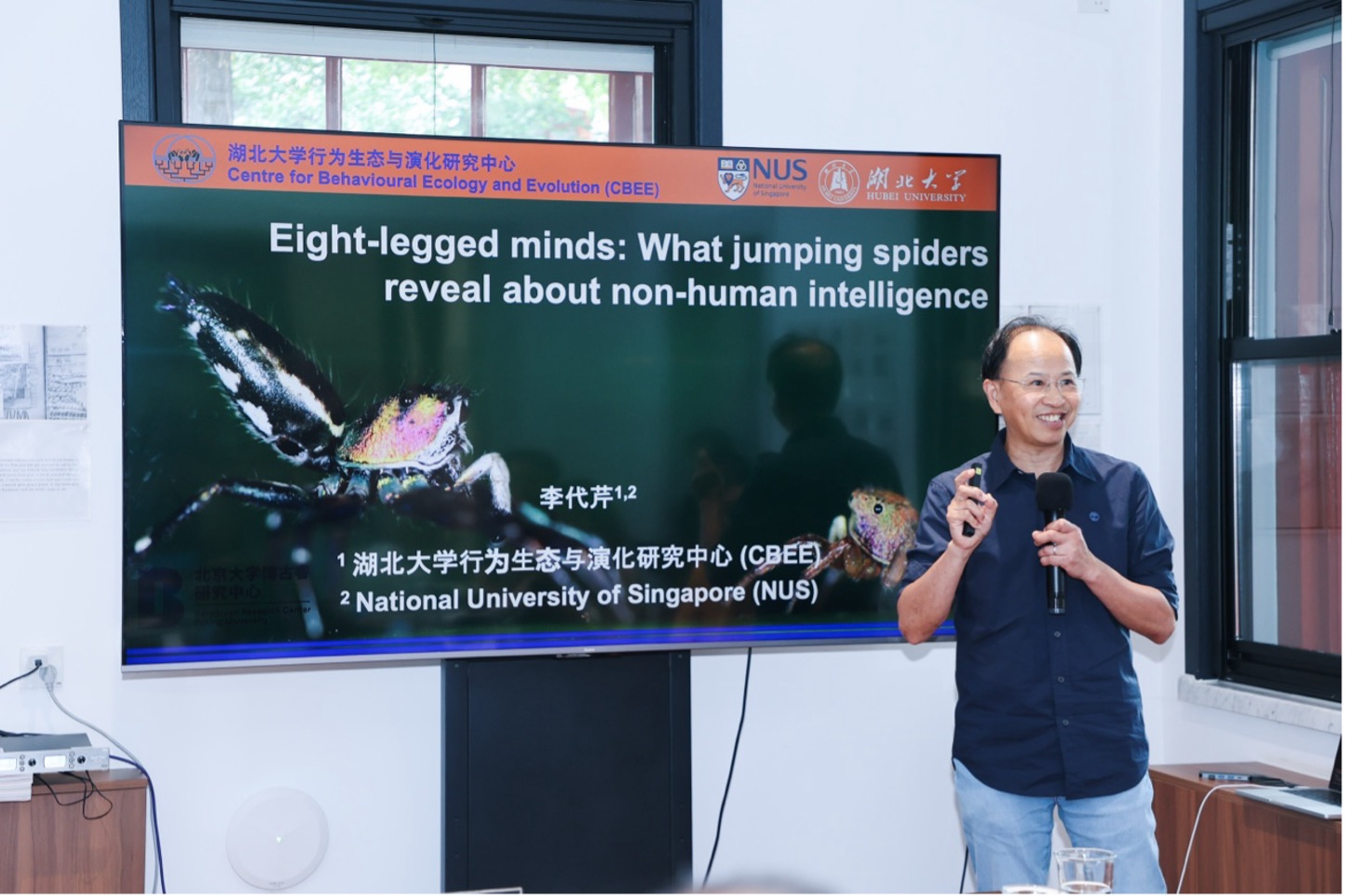
Li Daiqin, professor by special appointment in the Hubei University School of Life Sciences, gave a talk entitled “Eight-Legged Minds: What Jumping Spiders Reveal about Non-Human Intelligence”. Taking jumping spiders (a. k. a. Portia spiders) as his object of research, he thinks intelligence is not simply a binary question of presence or absence, but rather should be understood as a continuous spectrum exhibiting different degrees of divergence along multiple dimensions. The key lies in what aptitudes are displayed in the context of concrete and defined tasks.
In their research, Li and his team have discovered that, despite the comparatively small size of their cerebra and neural structures disanalogous to the human cortex, jumping spiders are capable of carrying out complex visual perception and decision integration. Because of this, they also exhibit decisive tactics and situational responsiveness in catching prey, making choices, and selecting routes. Accordingly, both experimental and observational research have found that jumping spiders will adjust their behaviour based on environmental clues in order to improve their efficacy in catching prey.
That said, jumping spiders’ “cleverness” is not entirely triggered by instinct. When it comes to their behavioural mechanisms, jumping spiders can use tapping movements (“plugging”) to simulate the vibrations of prey and attune their plugging frequency to different environmental conditions, which betrays hallmarks of learning and adjustment by trial-and-error. When facing obstacles blocking their way to prey or obscuring them from view, Portia spiders will select strategic vantage points while adopting more planning-oriented tactics. This connection between route planning and subsequent action is equally observable in both laboratory and field settings.
Li went on to discuss a philosophical dispute concerning the primacy of tools or behaviour: whether spiderwebs are really just a product of spider behaviour, or rather can be understood as a joint extension of perception and action. He thinks this dispute can be recast as a testable mechanistic hypothesis, drawing on “connectomics” and other such approaches to depicting the neural basis for intelligence arising in the cerebellum. Perhaps we may understand this case as providing evidence for nonhuman intelligence being a continuous spectrum with different degrees of difference.
Professor Peng Fei of the Southern Medical University School of Public Health shared about the “wisdom of bumblebees”. He first introduced his reason for taking bumblebees as his object of research—namely, that existing results have already made clear that bumblebees already possess such capacities as self-image, perception capable of cross-modal object recognition, something approaching tool use (pulling string, rolling balls), behaviour applied to opening puzzle boxes, and even their own affective states, taste reactivity, motivational trade-offs, and other such feelings.
He emphasized that even in experimental settings, bumblebees still display behaviour evincing social cognition among themselves, and are capable of learning from interacting with each other. The latest research results further show that bumblebees can communicate their attitudes among themselves using visual modalities alone.
Summing up his approach, Peng remarked that as small as bumblebees are, they too can engage in perception, action, evaluation, and interaction with the environment and with others. These discoveries may not be able to prove that bumblebees enjoy subjective experience, but they at least make this possibility harder to dismiss. In light of this, we need to deeply examine how subjective experience is produced in the cerebrum.
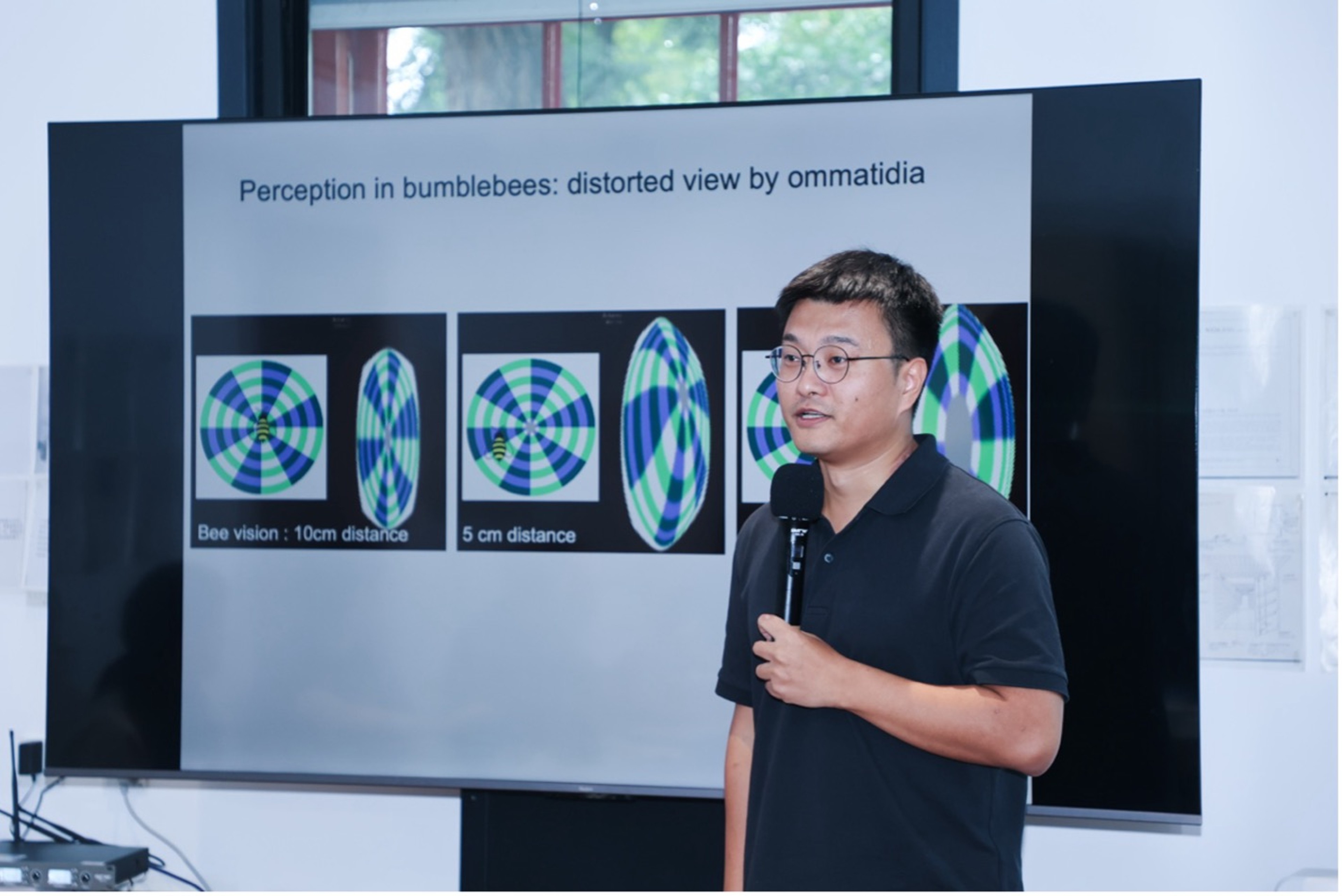
Wang Liyuan, assistant professor in the Department of Psychological and Cognitive Sciences at Tsinghua University, presented on the topic of “sustained learning in artificial intelligence and validation ofmechanisms through reverse-engineering, with inspiration from fruit fly learning and memory”. He thinks that present AI research overly relies on one-time offline training. Despite the continual advancement of AI learning capabilities, it remains difficult for them to steadily update amid sustained environmental changes. For this reason, they display insufficient responsiveness to catastrophic memory loss. He thinks that the key to sustained learning does not lie in making models “even stronger”, but rather in drawing lessons from the dynamic equilibrium of biological intelligence in efficiently absorbing new knowledge while simultaneously preserving old representations.
As to why Wang takes fruit flies as a model and as an object of research, the reason lies in the fact that their learning and memory circuitry is relatively amenable to analysis and elucidation in ways transferable to sustained learning’s neural-computational principles. The fruit fly model adopts a parallel modular architecture: by actively protecting key connections, it can keep old knowledge from being overwritten, while by actively forgetting redundant and outdated connections, it can display plasticity in novel tasks. The intensity of protection and forgetting is not a static switch; rather, it is determined by a dynamic distribution of modulating signals throughout the module.
Wang advocated for applying fruit flies to AI thinking to map out a trainable framework for continuous learning, with modules treating them as a form of neural network. By introducing the core contribution of a “memory/forgetting rate” into weight-layer regularization, they can achieve a balance between preserving old knowledge and learning novel tasks. At the same time, the above conclusions secured experimental validation in the contexts of both supervised and reinforcement learning tasks. Wang and his team have conducted further experiments on fruit flies’ sense of smell to validate these mechanisms through reverse-engineering. Through this process of experimental verification, they discovered that when navigating scenarios where interferences are switched on or off, animals exhibited adaptive regulatory behaviour that was tied to the level of similarity and time interval between tasks.
In light of this, future AI may develop along the direction of “selective plasticity, modular routing, and dynamic memory modulation” working in tandem. In this way, it will enhance its learning efficiency and generalization ability even under resource constraints and unstable conditions.
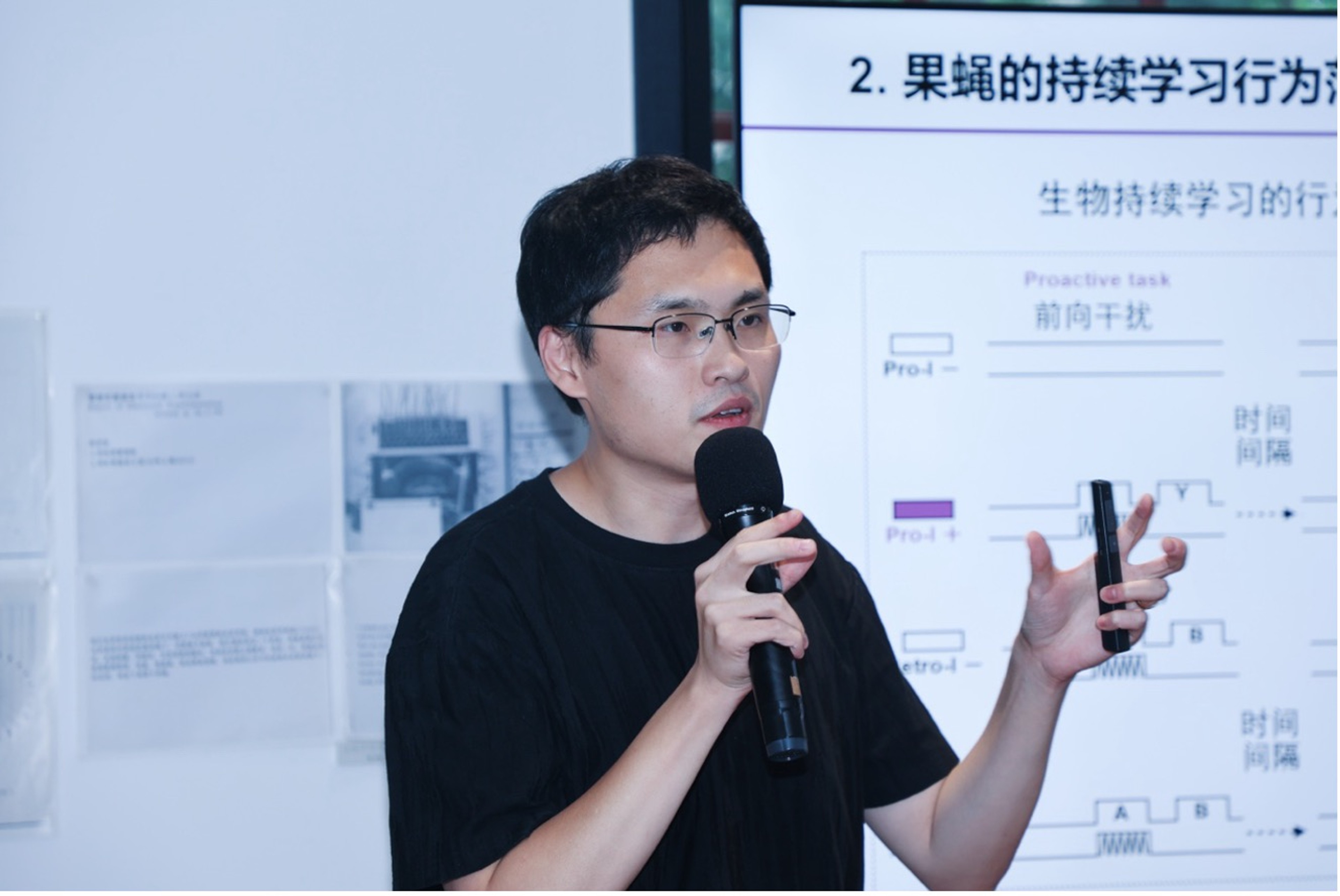
Yu Shan, researcher at the Institute of Automation, Chinese Academy of Sciences, presented on the topic of “Exploring brain-like intelligence and thinking”. Drawing on British neuroscientist and psychologist David Marr’s quadripartite division between the four domains of learning, computation, algorithms/representation, and physical realization, he introduced the cross-pollination of research on cerebral mechanisms and brain-like artificial intelligence.
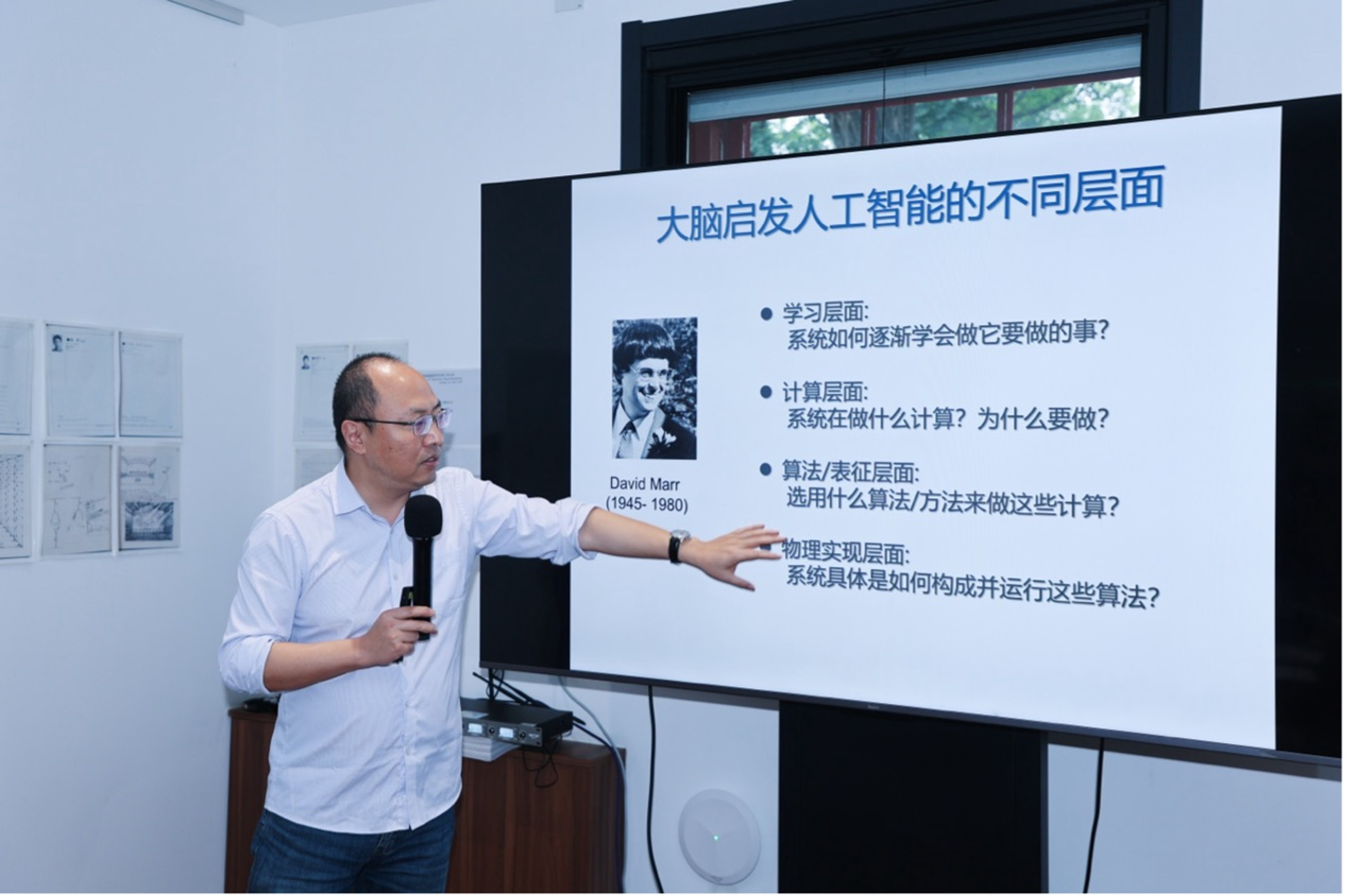
In the domain of physical realization, the von Neumann architecture relied on enhancing the rate of frequency of digital clocks in successive iterations. Yet the human brain does not operate on a purely digital model. The team’s latest research results therefore employ a new paradigm for embedding learning in physical processes to succeed in realizing artificial neural network learning in a simulated system.
In the domain of algorithms, the random release of biological neurotransmitters is highly relevant to the “Dropout” algorithms employed by artificial neural networks. There is also a deep connection between biological neural networks’ critical states during informational processing and the vanishing gradient problem in deep neural networks. Furthermore, we can apply the brain’s self-organizing critical state mechanisms to enhancing the learning efficiency of artificial neural networks.
In the domain of computation, in recent years research has made increasingly apparent the important significance of orthogonality to cerebral neural network mechanisms. This may be intimately related to how the biological cerebrum can learn continuously, engendering strategies for remedying catastrophic memory loss in artificial neural networks that employ orthogonal weights to modify algorithms. Aside from this, the cognitive functions of the cerebrum’s prefrontal cortex also inspire researchers to develop context-dependent processing modules similar to the prefrontal cortex in artificial neural networks. Applying lessons drawn from the cerebrum’s symbol-grounding ability for language, artificial neural networks can use CDP structures to reverse train out low-dimensional vectors in a manner resembling symbolic reasoning. Insofar as they possess the ability to generate “concepts”, they are able to employ conceptual vectors to swiftly regulate neural networks’ internal operative states, thereby transmitting knowledge between different intelligent agents. This serves to propose a new line of thought concerning how to build artificial intelligence systems capable of humanlike concept generation, understanding, and exchange.
Liu Haoying, young associate researcher in the Department of Philosophy and Logic of the Fudan University School of Philosophy, lectured on the topic of “‘nonhuman intelligence’ and ‘forms of life’”. Research on animal intelligence generally has no way to rely on linguistic reports, thus linguistic reports are unable to serve as the starting point for understanding animal intelligence. With this in the background, Liu drew on the Wittgensteinian concept of forms of life, arguing that our understanding of intelligence needs to take “forms of life” as its conceptual foundation.
The concept of forms of life originates in reflection on “language games”. Understanding language is not just about decoding symbols, but is more so about grasping the “language games” in which symbols find their use. Further, understanding what language games others are engaged in and what they are using language to do requires first understanding the “forms of life” to which they belong. After all, even human language output cannot be taken as transparent evidence. When trying to understand an entirely new language, an interpreter also needs to take into account the language users’ shared form of life to come to a full understanding.
By the same token, he argued that to understand animal intelligence, we first need to understand what animals are doing in light of their forms of life. As to just what sort of “forms of life” animals have, he thinks that ethology suggests a practical framework (including searching for food, reproduction, spatiotemporal behaviour, social life, communication, learning, and other such modes of behaviour). He noted that these forms of life are ones that human beings also possess, making them a common allotment shared between humanity and other animals. Only if we gain an understanding of the significance of what animals are doing in their forms of life may we then ascertain whether animals’ behaviour involves intelligence, rather than merely being mechanical or physiological displays. Based on the above considerations, he thinks that, before comparing intelligence between different species, we must first consider what forms of life they respectively have, then advance our assessment in light of the benefits and drawbacks of these forms of life, along with their strengths and weaknesses and how they emerge and are organized.
Regarding artificial intelligence, Liu thinks that the reason we remain unclear on whether or not mental properties may be attributed to a machine comes down to this: that we remain unclear on whether or not we should think that artificial intelligence is capable of having life.
--
Text by: Tianzeng Tian, Chenzhou Li (Berggruen Intern)
Translation: Jonah Dunch (Berggruen Intern)