International Conference on “Philosophy of Family as a New Subfield in Professional Philosophy”

- Date: October 16, 2025
- Location: Peking University
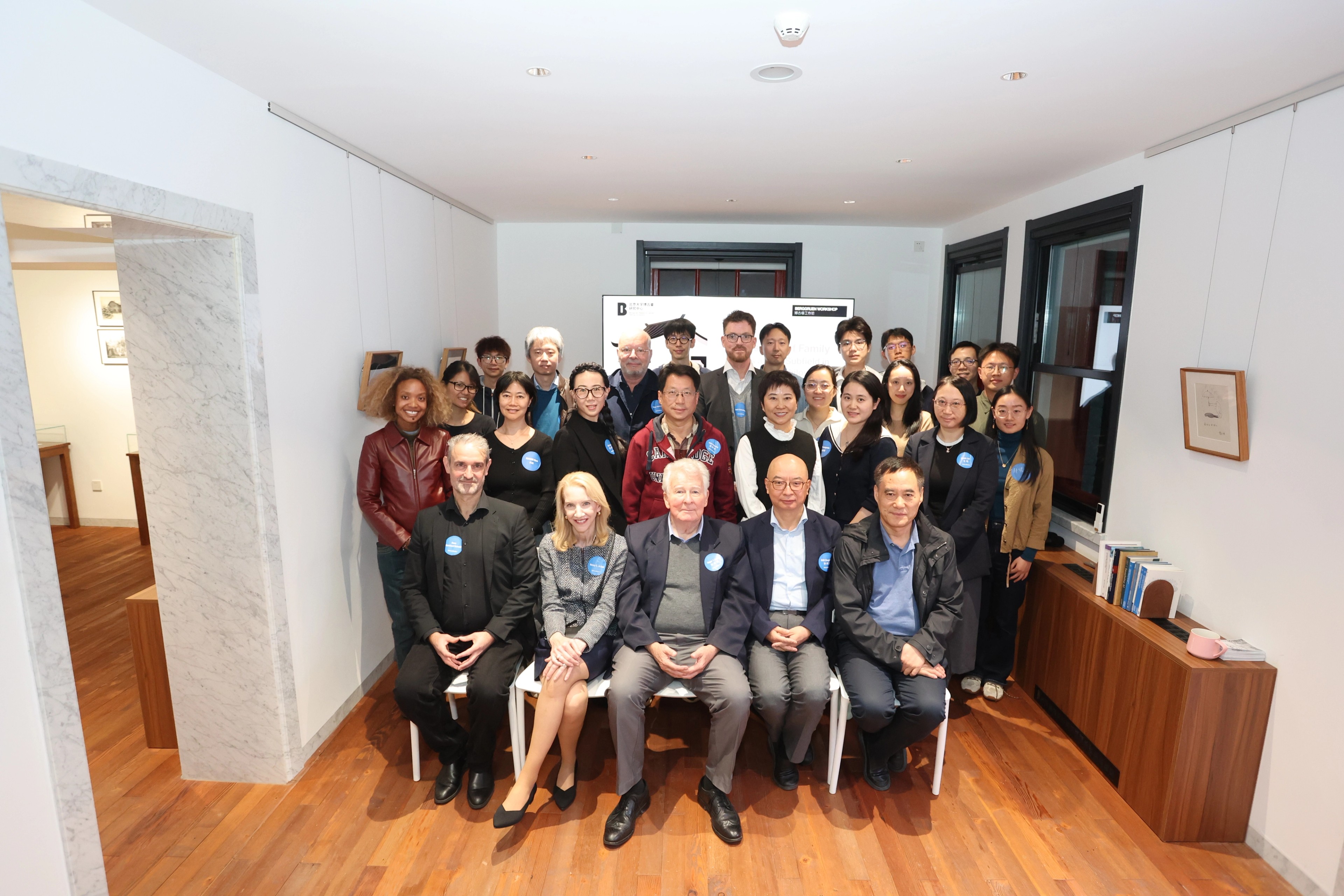
The international conference “Philosophy of Family as a New Subfield in Professional Philosophy” hosted by the Berggruen Institute China was held on campus of Peking University from October 16 to 18. The project was co-initiated by Roger T. Ames, Humanities Chair Professor at PKU and Co-Chair of the Academic Advisory Committee of the BIC, together with Xiangchen Sun, Distinguished Professor at Fudan University and 2024–2025 Berggruen Fellow.
Drawing on diverse areas of expertise, twenty-four scholars from China, the United States, Austria, Germany, and Canada convened at PKU for in-depth discussions on the ethical and social roles of the family and its entanglements with global issues such as politics, culture, and environmental sustainability. The workshop aims to establish a theoretical framework for the emerging discipline of “philosophy of family,” while offering philosophical insights and practical guidance for the ongoing social reform and shifts in the global political order.
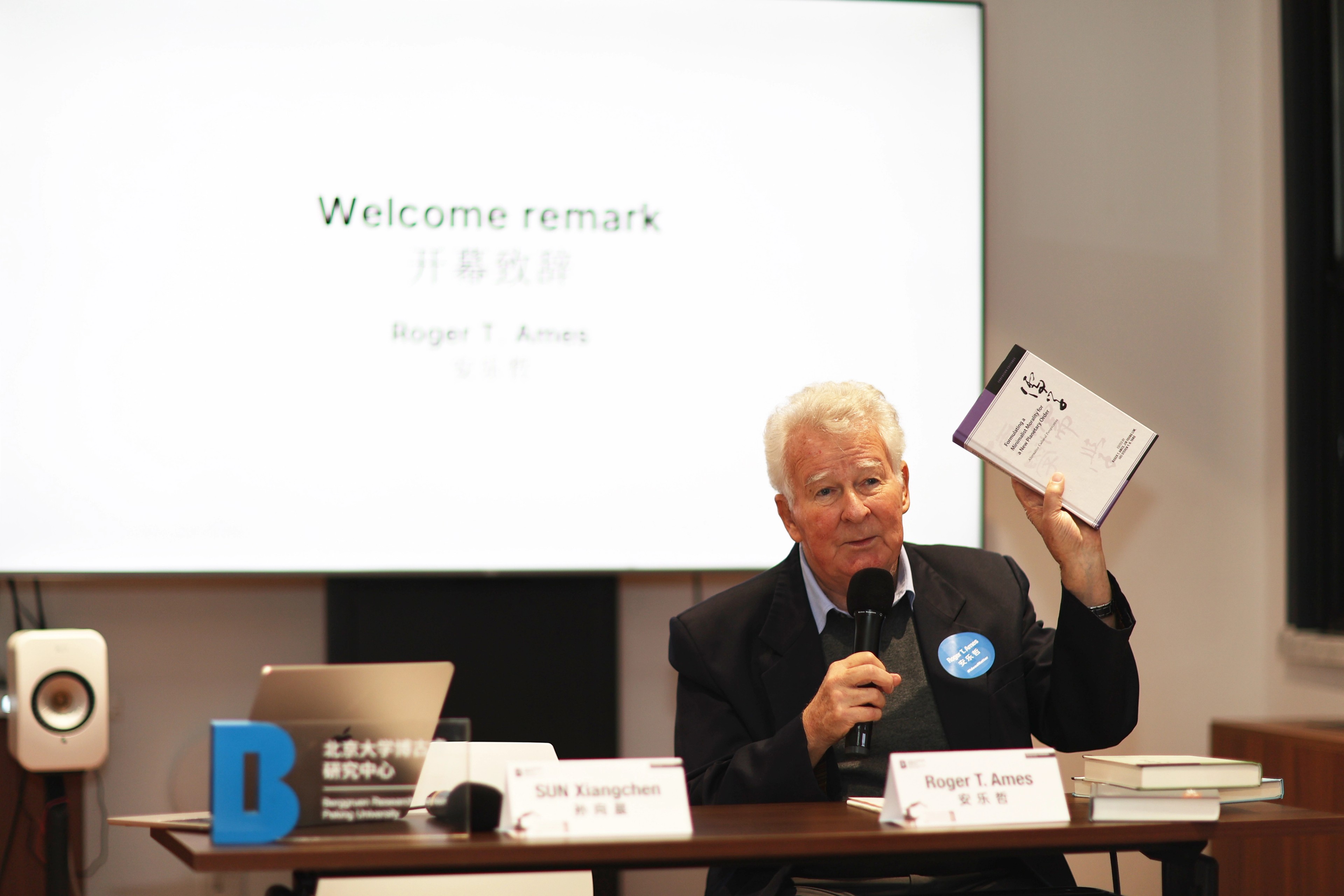
In his opening remarks, Roger T. Ames reiterated the original purpose of convening this workshop. Throughout modern China history, the family system has been central to debates on social reform. While Western liberalism emphasizes individual rights and has, to some extent, diminished the role of the family in certain societies, most regions around the world continue to place strong value on familial relations—the family retains a universal significance across cultures. In non-western contexts particularly, it remains a primary locus of self-identity.
Therefore, the concept of “family” as a fundamental philosophical theme can offer new perspectives on a wide range of social issues, including gender equality, population aging, homelessness, and social justice. A deeper exploration of the philosophy of family thus promise insights and momentum for contemporary social transformation and an evolving geopolitical landscape.
Following the opening remarks, Xiangchen Sun delivered a keynote speech titled “Philosophy of Family and the Issue of Freedom.” Sun traced two modern intellectual genealogies that position the family in opposition to freedom: first, the anti-family and anti-filial piety discourse of the New Culture Movement; and second, the deconstruction of the family found in modern philosophy and liberalism, which defends freedom through individual autonomy. Although acknowledging the emancipatory achievements of modern notions of freedom – especially in terms of individual independence and dignity – Sun also highlighted its limitations: an overly one-dimensional emphasis on individual rights may ultimately provoke a backlash against liberalism itself.
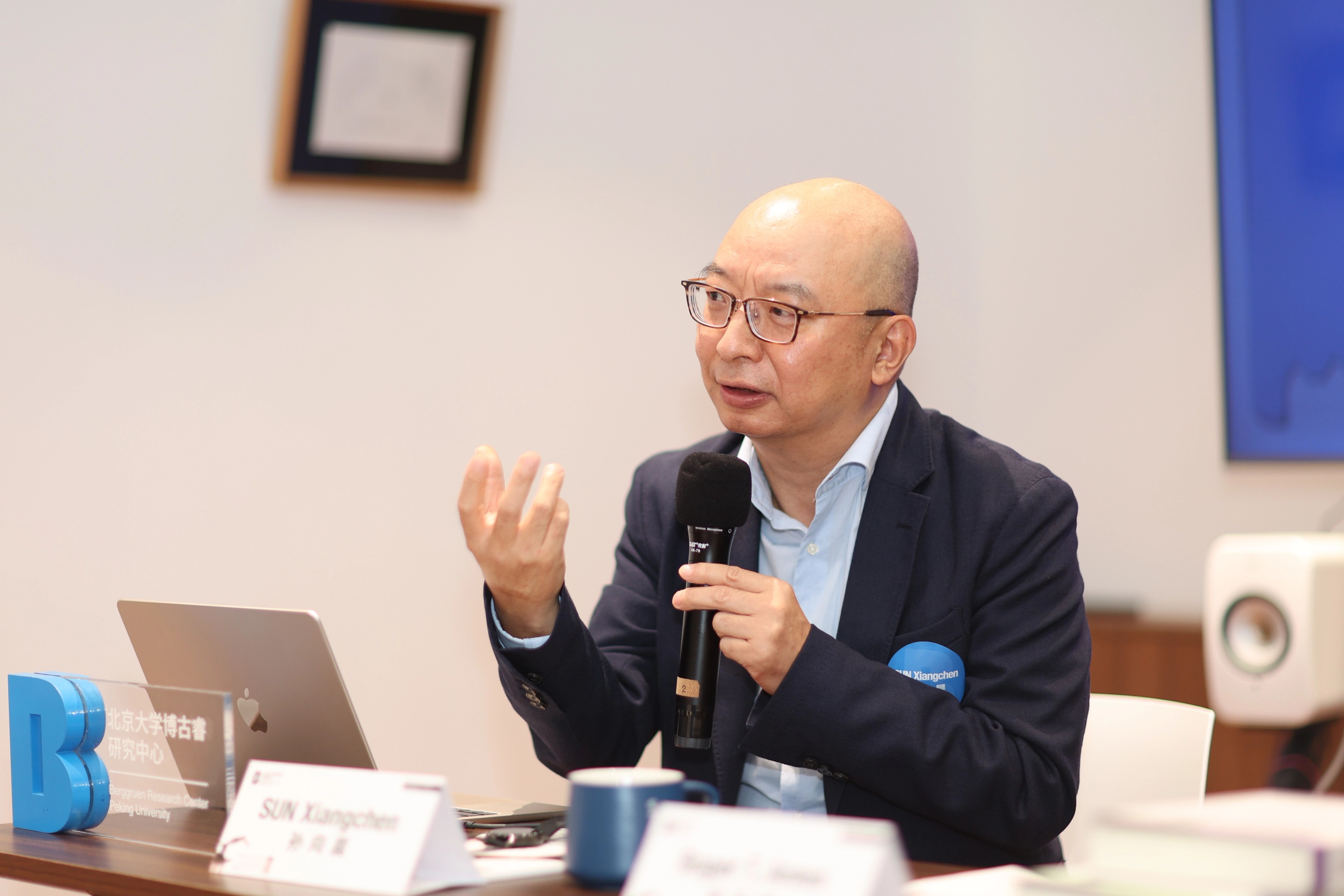
Historically, the concept of “individual” is far from self-evident. Rather, it emerged from the particular structure of the European nuclear family structure and Christian ethics of responsibility. Drawing on Hegel’s reflections on freedom and ethical life, Sun argued that the family and freedom are not intrinsically opposed. Nonetheless, ethical principles, systems of virtue, and intergenerational relationships all require renewed theorization. Building on Isaiah Berlin’s notion of “two concepts of liberty” and value pluralism, Sun proposed cultivating “minimal positive liberty” within the family to sustain a healthy micro-loop between the individual and the family. He concluded by advocating a conception of “rooted freedom” that transcends individualistic interpretations of liberty. Positioning the family as the smallest normative community, he suggested, can provide a foundational basis for the formation of both freedom and the individual.
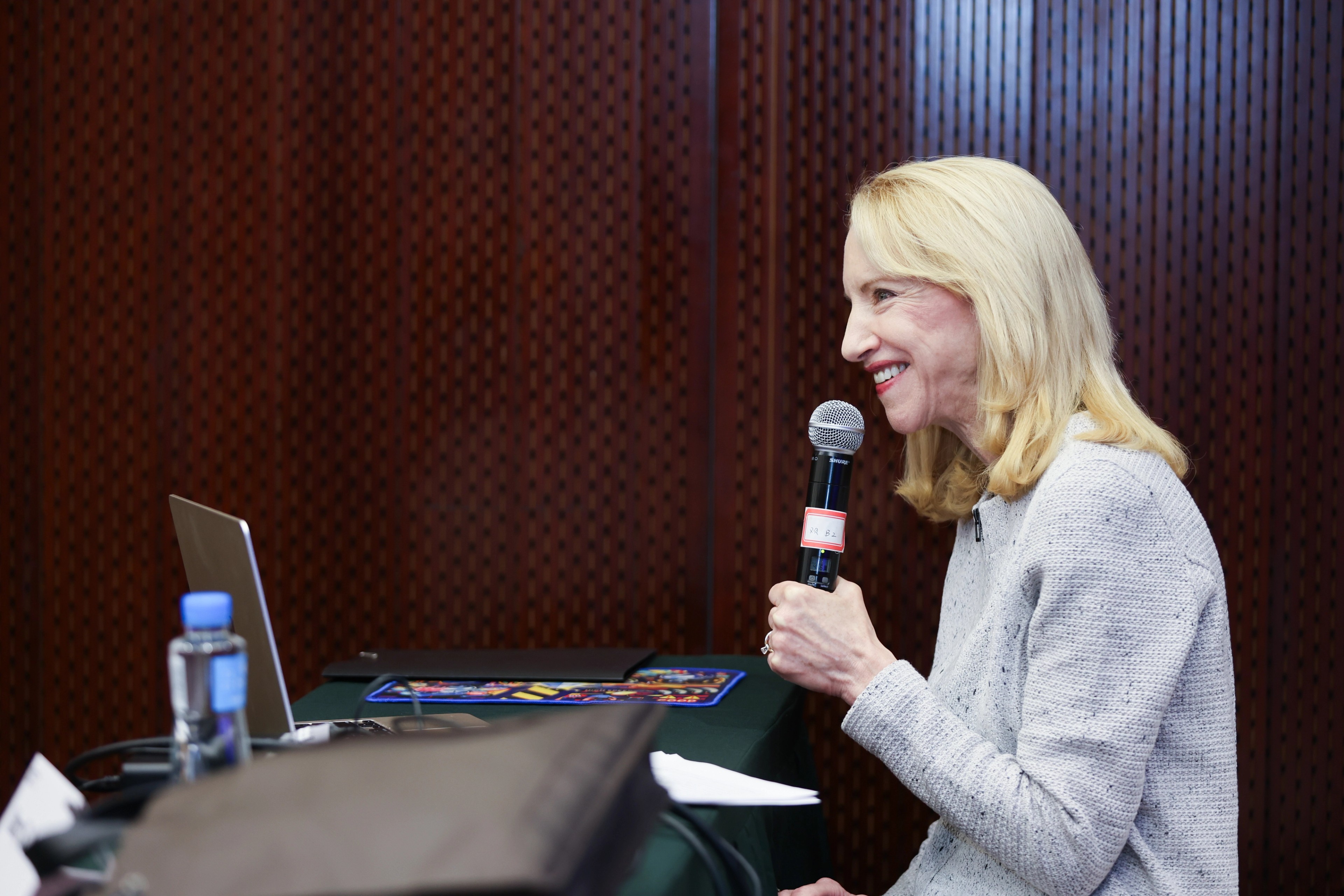
The workshop continued at Lakeview Hall, Zhongguanyuan Global Village, PKU, from October 17 to 18. The first speaker was Nancy S. Jecker, professor of Bioethics and Humanities, School of Medicine, University of Washington. She challenged the current Westphalia model of states using Chinese-Confucian and Sub-Saharan African philosophy. Today’s interconnected world reveals the weakness of the Westphalian model, where states are solely responsible for themselves and alliances are voluntary. Global risks like climate change, technological acceleration, and shifts in geological power cannot be solved domestically. Seeking an alternative, Jecker finds convergences in Chinese-Confucian tianxia (all under heaven) and Sub-Saharan African ubuntu (humanness); both share an ontology where relationships as opposed to entities are the fundamental constituents of reality and share the ethics of “harmonious coexistence,” “collective responsibility,” “shared humanity,” and “leaving no one behind.” These convergences lead to the “Global Village,” an alternative narrative that has the potential to reshape how we solve global problems.
Ian Corbin, research fellow at the Human Flourishing Program, Institute for Quantitative Social Science, Harvard University, joined in the conference online. His presentation, titled “F Family Culture in the Age of TikTok: From Hyperculture to Hypoculture,” explored the profound impact of digital media on contemporary American society, particularly on the cultural formation of younger generations. He pointed out that the widely discussed issues in recent years—such as loneliness, depression, anxiety, and the loss of meaning and purpose—are not isolated psychological phenomena. Rather, they stem from a failure in the mechanisms of enculturation.
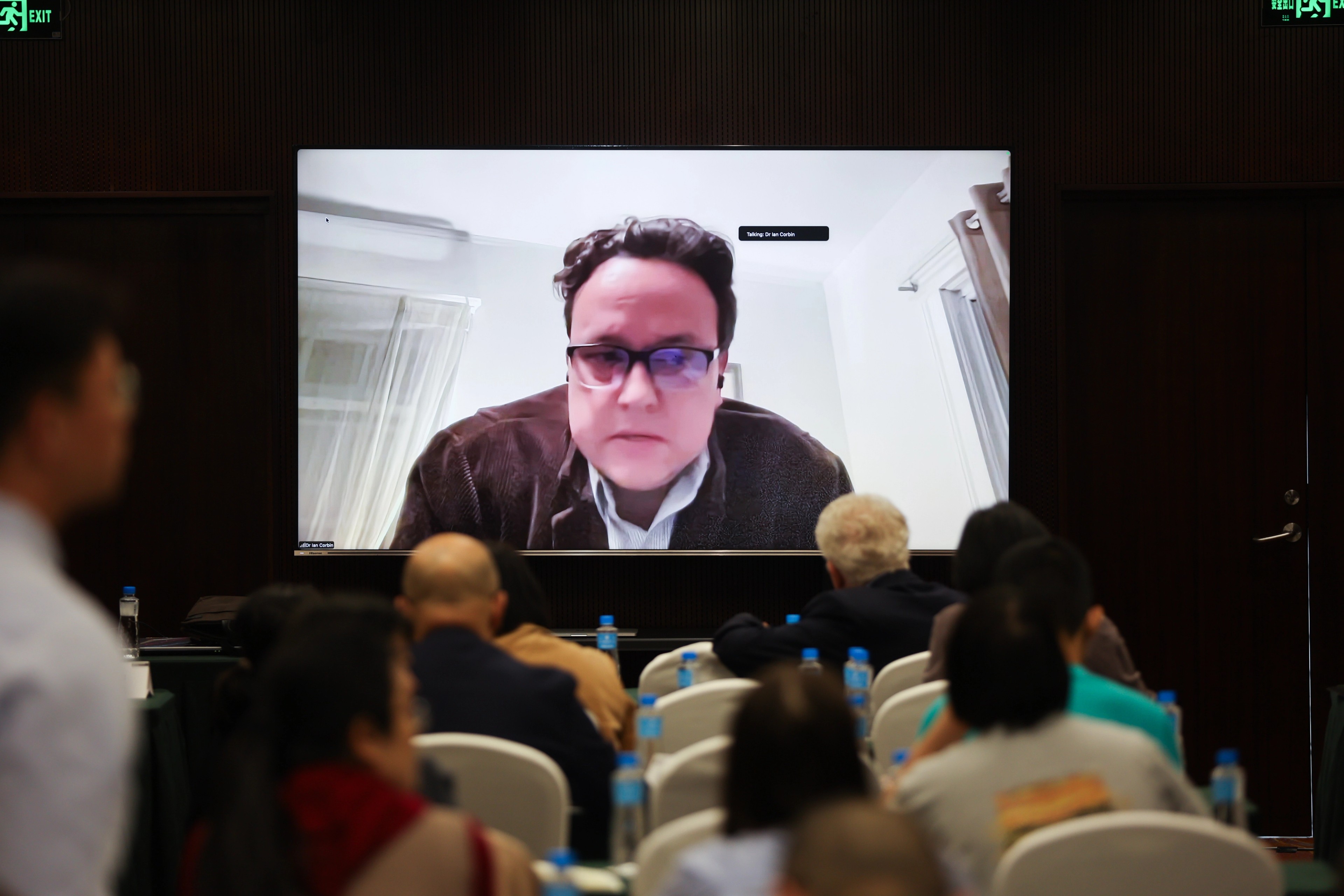
Traditionally, the family has played a crucial role in shaping individual culture by establishing intersubjectivity, fostering an understanding of authority, and accommodating necessary solitude. Yet these functions are being progressively eroded by the digital “hyperculture” represented by platforms like TikTok. Corbin emphasized that immersive short-video algorithms, hyper-stimulating sensory inputs, and fragmented attentional environments make it difficult for children to establish a stable cultural framework of self, others, and rules.
Moreover, increasingly realistic AI-generated content further exacerbates cognitive disarray, disrupting an already fragile process of enculturation. The outcome is not a healthy reproduction of culture, but a hollow “pseudo-culture” lacking deep structural support, which has already inflicted widespread damaging effects on social life. He called for a reexamination of the irreplaceable role of the family in cultural transformation within the digital age, urging society to consider how to rebuild the foundational conditions necessary for enculturation in a highly mediatized environment, so as to address this profound cultural crisis.
Roger Ames presented his speech titled “The Family Roots of Confucian philosophy: On Making Yourself at Home,” in response to the workshop’s topic “philosophy of family as a subfield in professional philosophy.” Building on John Dewey’s critique of autonomy, Ames argues Dewey failed to see family as the initial site of “associated living.” In Confucianism, family is the initial model from which all other relations in the social, political, and cosmic order take inspiration. Becoming human is achieved through self-cultivation (修身) in one’s relations. Ames posits this can be conceived of as an ecology (生生) rather than ontology, which he demonstrates in the term Dao (道). Dao is not the external ordering principle, but “the unsung totality of an unbounded of ecology,” emerging from the coalescences of its parts. If one understands oneself ecologically, their uniqueness is inseparable from the relationships that constitute one’s environment.
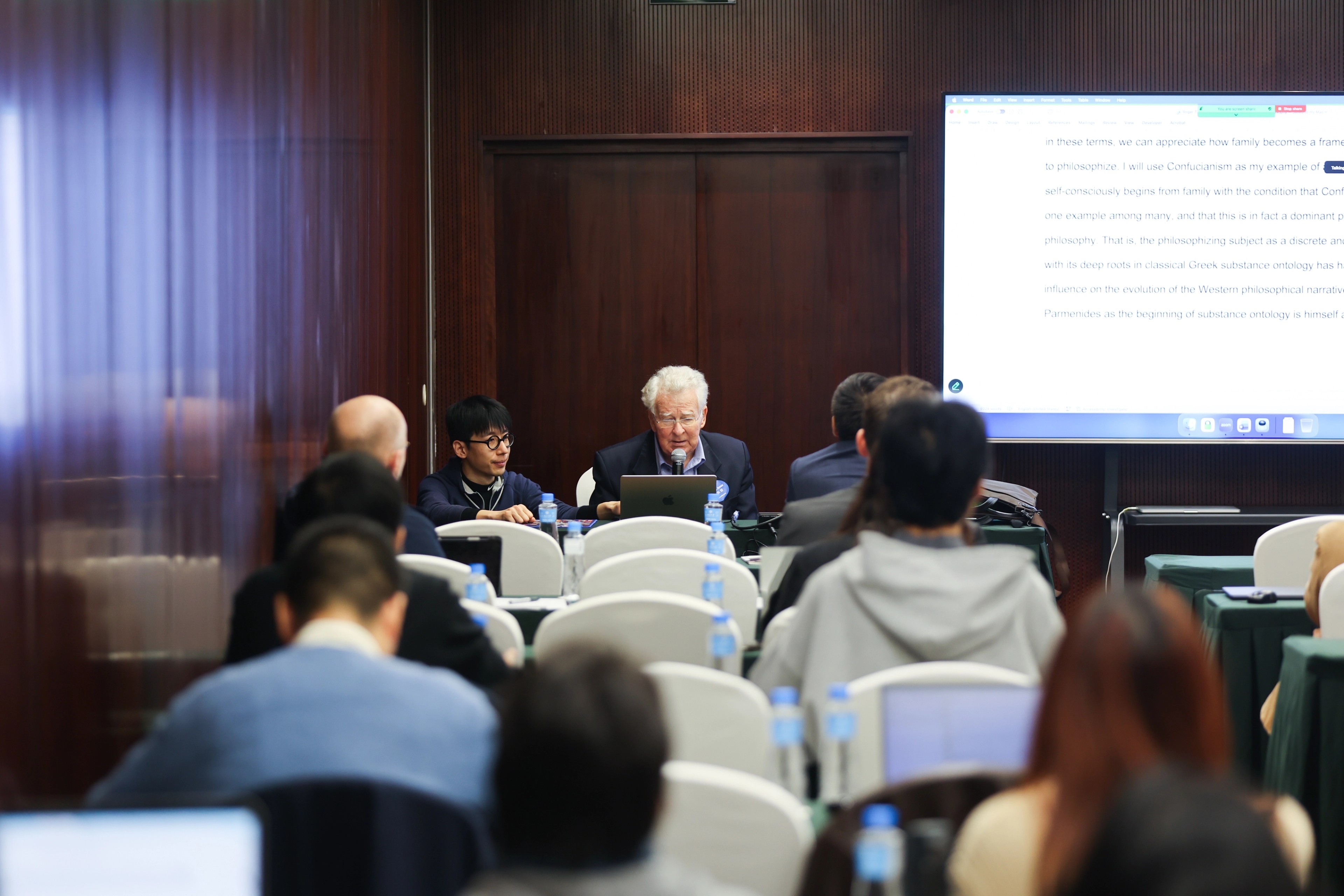
Professor Bisheng Chen from the Department of Philosophy, Tsinghua University, re-examined the theory of “family” from the perspective of “civilization.” He reviewed the conceptual and institutional evolution of “family” in China over the past century, thus pointing out that although the Chinese civilizational tradition underwent a comprehensive disintegration and restructuring of the state-family structure, human relationships, and family ethics during the modern transformation of the late Qing and early Republican periods, the “family” — as the most fundamental element of this tradition (centered on the parent-child and husband-wife models, with “filial piety” as its ethical cornerstone) — has remained a dominant force in modern China.
In addition, contemporary academic research on “family” and “filial piety” primarily follows two approaches: one discusses the “philosophy of family” from the perspective of modern philosophy, while the other seeks to understand the historical and contemporary transformations of Chinese human and familial relationships by returning to classical texts. Chen advocates for synthesizing these two approaches within a civilizational framework. Although their methodologies differ, he argues they can ultimately converge in a rediscovery and reconstruction of the “family.”
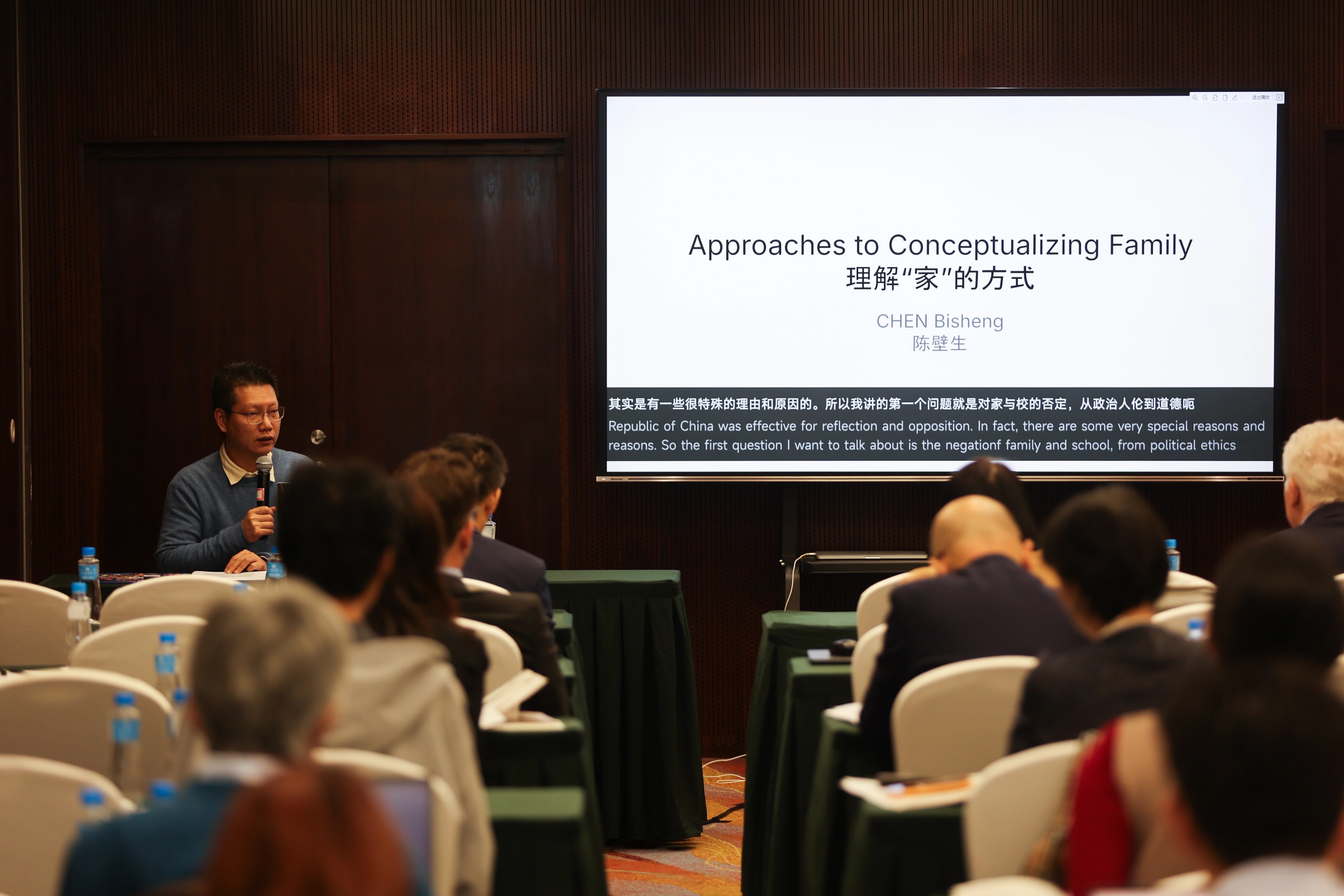
Professor Genyou Wu from Ma Yifu Academy, Zhejiang University, elucidated the unique significance of “Philosophy of Family” from a methodological perspective. He argued that it distinguishes itself from the individual-centric tradition of Western philosophy by offering an alternative path centered on empirical holism and relationality. Through the intimate and diachronic intergenerational relationships inherent in family life, philosophy of family reveals the foundation of both human society and individual existence, providing a crucial perspective for understanding the balance between emotion and reason, the individual and the collective.
Wu systematically examined three theoretical frameworks of philosophy of family proposed by Xiao Si Yang, Xiangchen Sun, and Xianglong Zhang. He highlighted that philosophy of family is not only a manifestation of innovation within Chinese-language philosophy, but also an intellectual resource for addressing the crisis of the family in modern society and the existential challenges posed by the era of artificial intelligence.
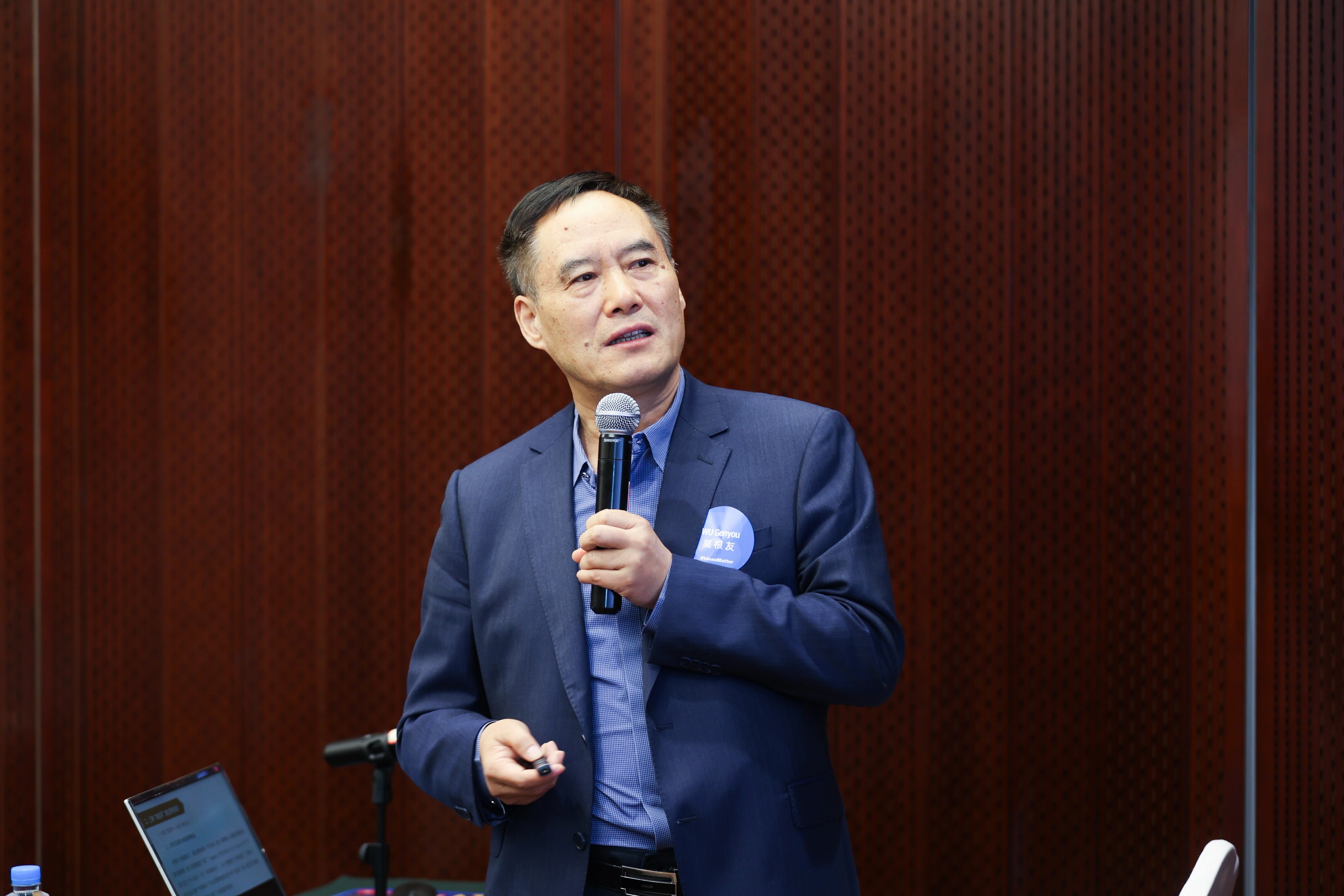
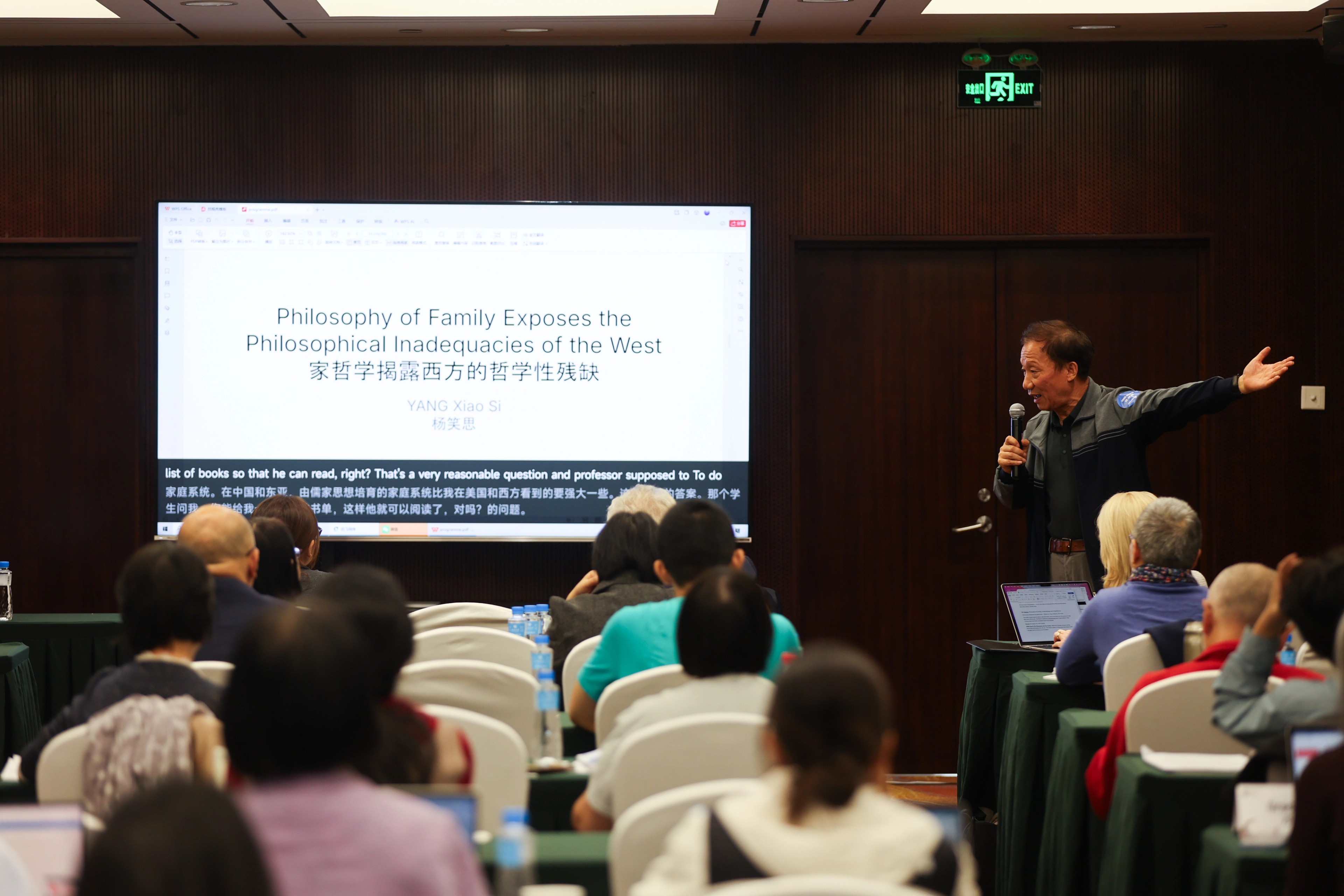
Professor Xiao Si Yang, author of Philosophy of Family: the Westerners’ Blind Spot, reflects on the structural blind spots in the Western philosophical tradition from the perspective of “philosophy of family.” He points out that most great thinkers in the history of Western philosophy were unmarried and lacked firsthand family experience, making it difficult for them to develop philosophical reflections on the family. At the same time, Western religious systems historically supplanted many familial functions, therefore excluding family from philosophical and social science discourse.
Yang further argues that because Western philosophy has long been dominated by binary frameworks such as “individual-society” and “state-citizen,” the family has been deprived of an independent ontological status. In contrast, Chinese thought takes the family as the starting point of cosmic and ethical order, using family as a basis for understanding human nature, politics, and morality—thus offering a corrective to the shortcomings of Western philosophy. He summarizes his core argument with the phrase “My family, therefore I am,” emphasizing that the family is the philosophical foundation of what it means to be human.
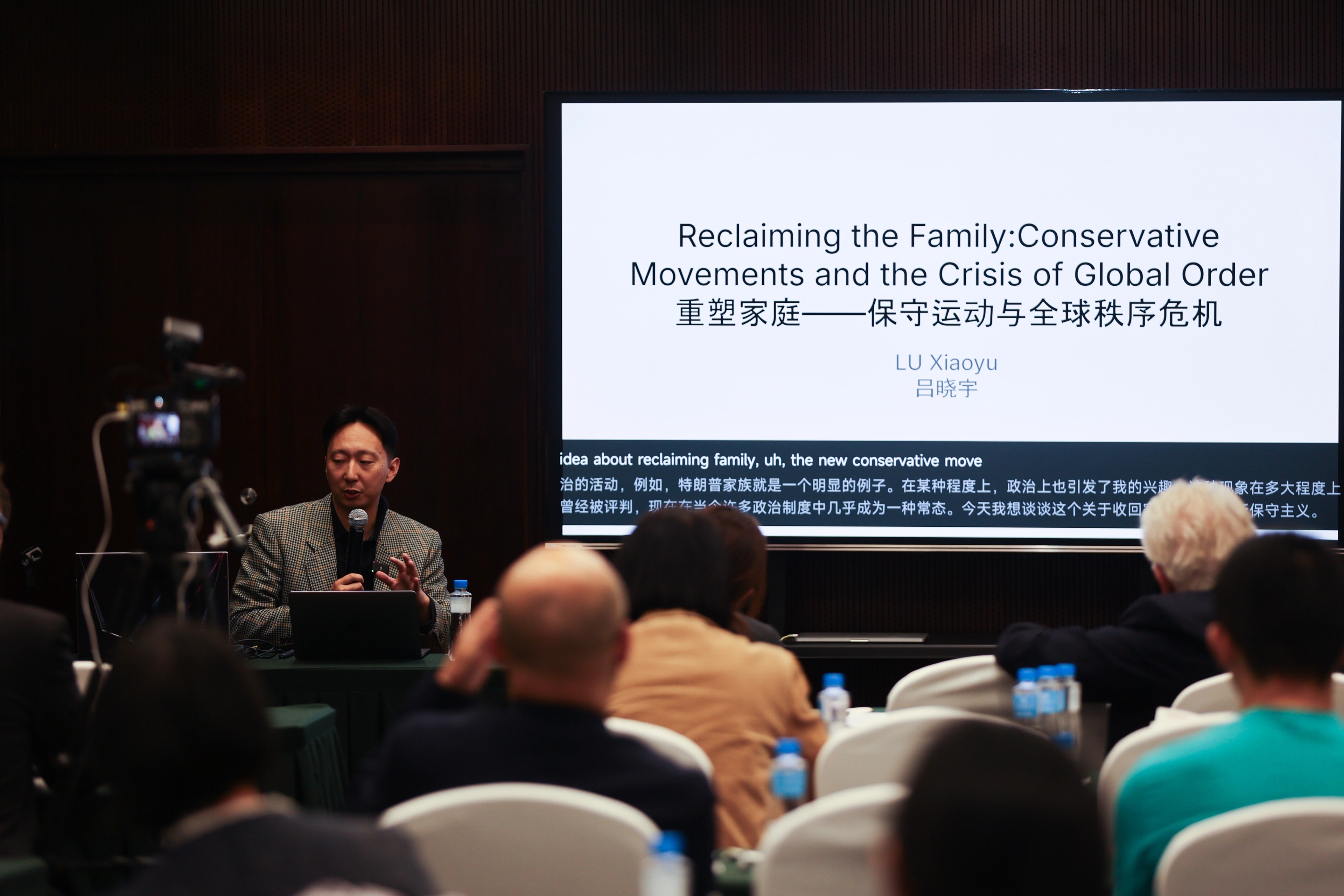
In the next presentation, Xiaoyu Lu, Assistant Professor at the School of International Studies, Peking University, drew on his research concerning family values and anti-Enlightenment movement to discuss the pivotal role of the family in contemporary political and intellectual debates. He highlighted that in recent years, global conservative movements have once again positioned the family as a core element for political mobilization and moral critique, weaponizing familial rhetoric to resist liberal individualism’s perceived destabilization of tradition, gender norms, and communal identity. The family becomes the focus of controversy precisely because of its multiple attributes: it functions simultaneously as a normative institution, an emotional bond, and a political symbol. These attributes allow the family to be portrayed either as the foundation of a moral community or as a mechanism for exclusion and control.
Using the divergence between Enlightenment and anti-Enlightenment as a starting point, Lu analyzed how conservatives construct the family as a pre-political vessel of stable values. He contrasted Susan Moller Okin’s critique of gender inequality within the family with the Confucian tradition of family as isomorphic with the state. Furthermore, he pointed out that illiberal regimes’ selective appropriation of Confucian family ethics provides cultural legitimacy for authoritarian governance, patriarchal structures, and resistance to LGBTQ+ rights.
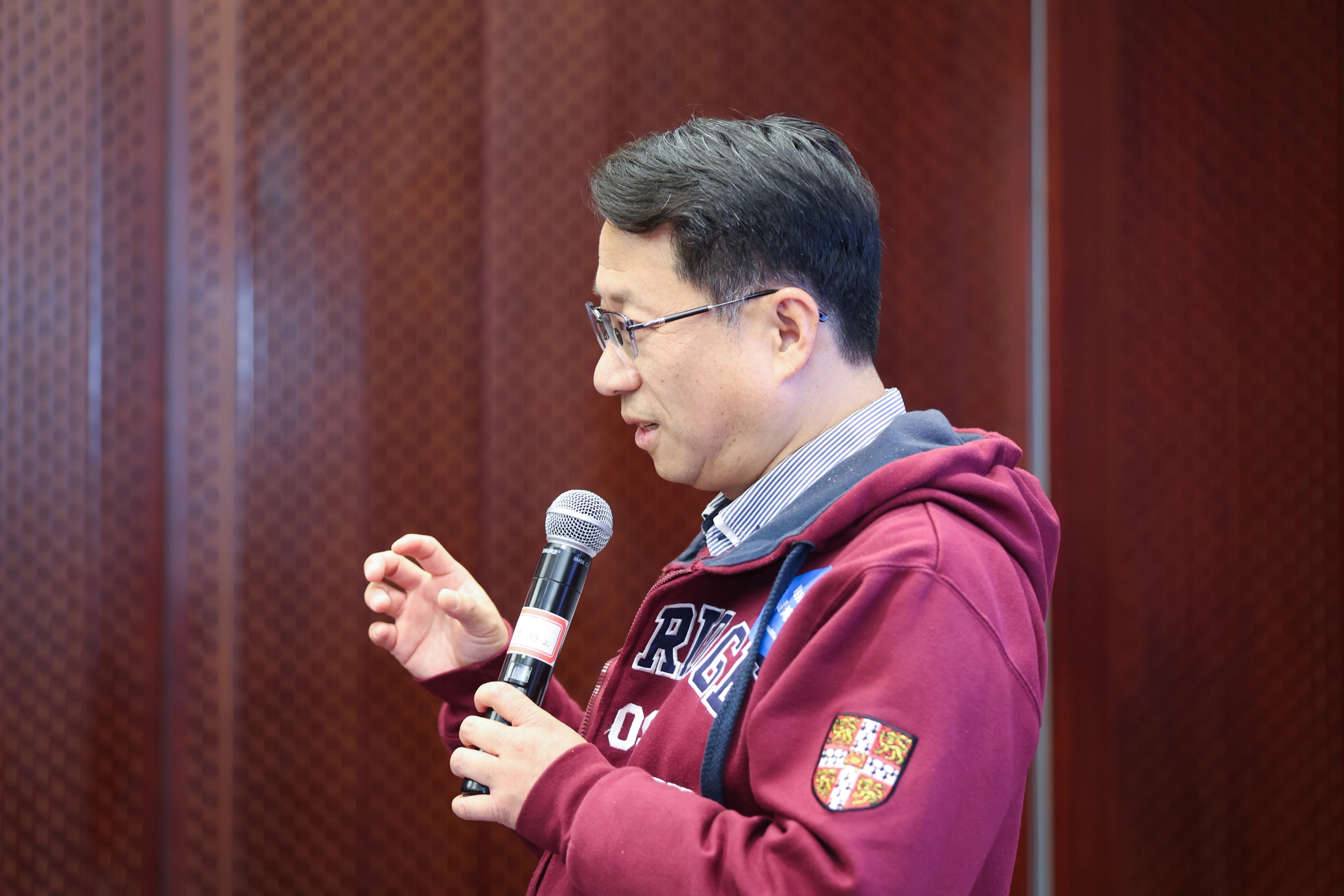
Professor Haiming Wen from the School of Philosophy, Renmin University of China, argued that philosophy of family should serve as the foundation for social sciences to prevent them from becoming a “heartless science” due to over-reliance on natural science paradigms. Grounded in his framework of intentionality ontology, he pointed out that the family is the most primordial and enduring ground for human intentionality, where an individual’s earliest experiences of love, trust, and responsibility first take root.
From a comparative Sino-Western philosophical perspective, Wen suggested that the atomized individual in modern Western philosophy has led to antagonisms between humans and the world, as well as widespread alienation. In contrast, Confucian philosophy of family, with its emphasis on the relational self and intergenerational responsibility, can offer an antidote to the predicaments of individualism. For China, which is still undergoing modernization, this implies that creatively transforming family philosophy could potentially help rebuild the ethical foundations of modern society. In conclusion, Wen called for establishing philosophy of family as a common basis for global social sciences. This would facilitate a fundamental shift across all disciplines—from alienation, confrontation, and calculation toward connections, symbiosis, and innovation—thereby laying a philosophical groundwork for a more sustainable global civilization.
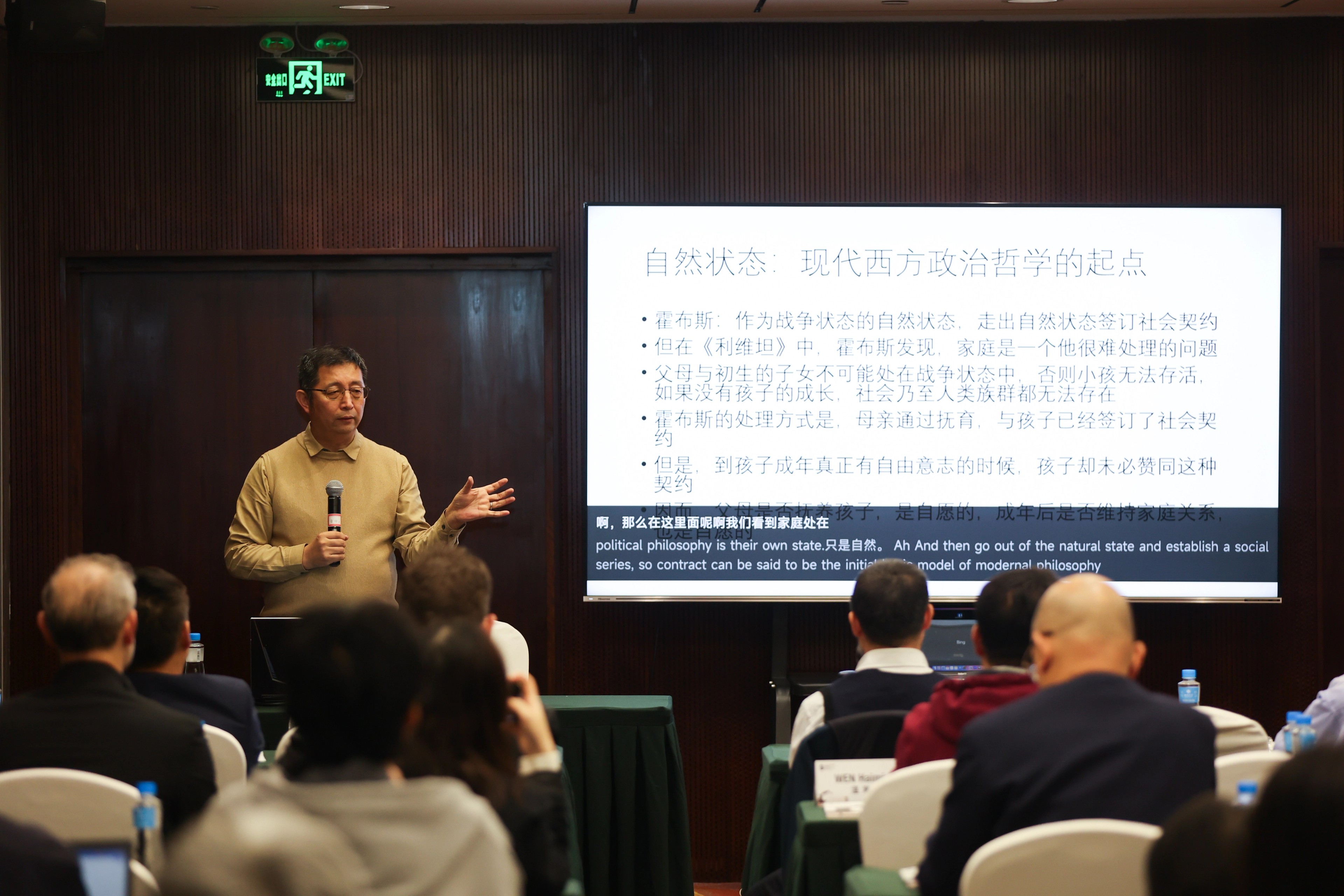
Professor Fei Wu from the Department of Philosophy at Peking University delivered a report titled “The Family as a Natural Community.” He pointed out that Western political philosophy often conceptualizes the individual’s state of nature as purely monadic, considering even human groups like the family as constructed. In contrast, the Confucian tradition views the family as naturally existent. Despite various potential disorderly situations within a family, the fundamental parent-child relationship remains a given.
Proceeding from a life-and-death philosophy, the family is considered the primordial, natural community of life. It predates any single individual and does not rely on human creation. Therefore, it is not a form of contractual relationship; this principle applies not only to human society but also to many animal species. Consequently, our conception of the family, civilization, and the national community differs fundamentally from that of the West.
As the opening poem of the Classic of Poetry, Guanju(关雎) epitomizes ancient Chinese perspectives on marriage. Drawing from literary interpretation, history of the classics(经), and ancient ritual systems, Professor Wenming Tang from the Department of Philosophy, Tsinghua University, delved into a detailed analysis of how the marriage of King Wen and Taisi, as depicted in Guanju, reflects Confucian marital rites.
Professor Tang pointed out that the marriage portrayed in Guanju encompasses three dimensions: the righteousness(义) of seeking alliance between two families, the righteousness of affection between individuals, and the sacredness conferred by ritual norms. He argued that, despite evolving social attitudes, certain characteristics of ancient marital rites continue to influence contemporary Chinese marriage customs. Revisiting Guanju can inspire a renewed emphasis on personal virtues rooted in Confucian thought and their positive impact on fostering harmonious family relationships.
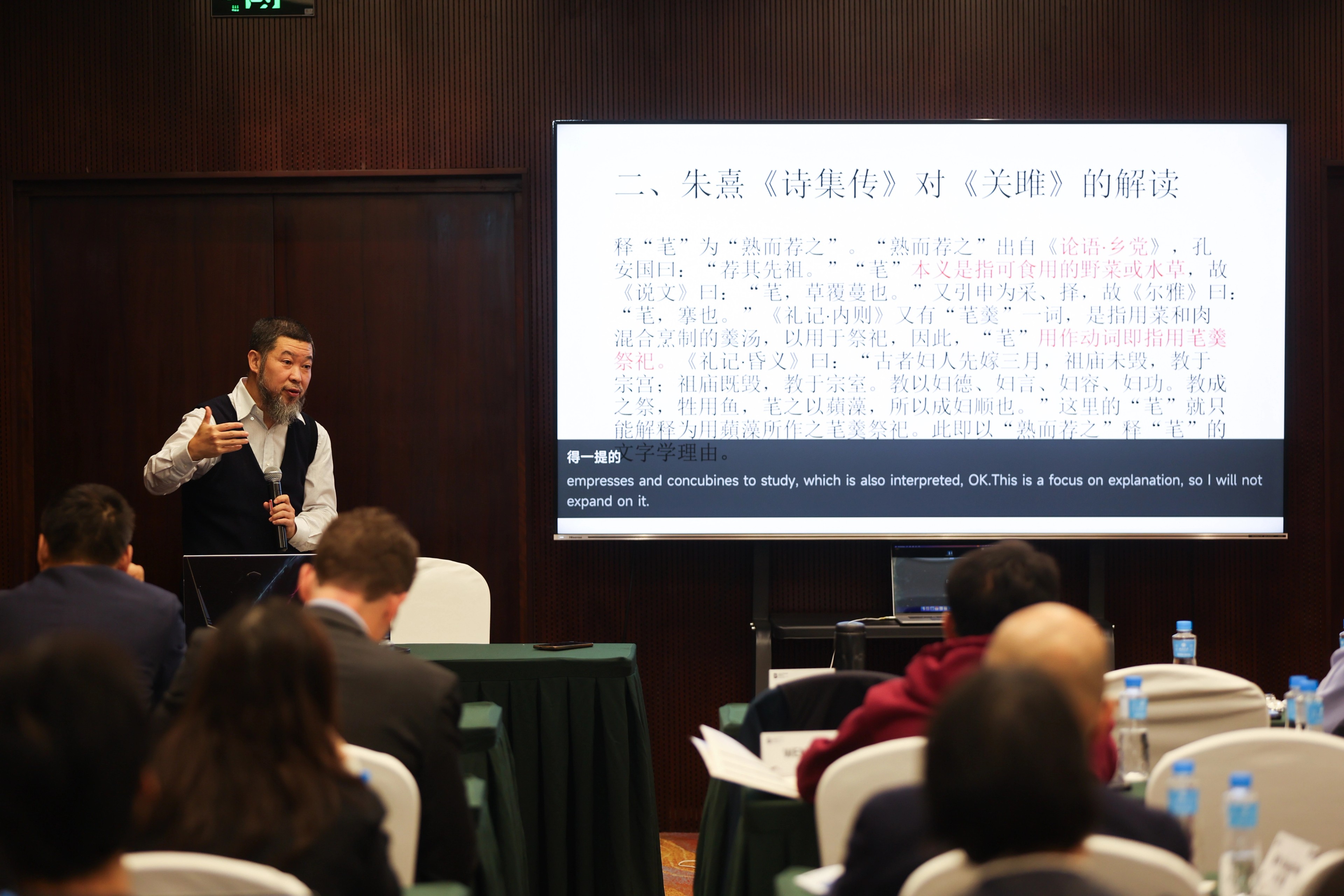
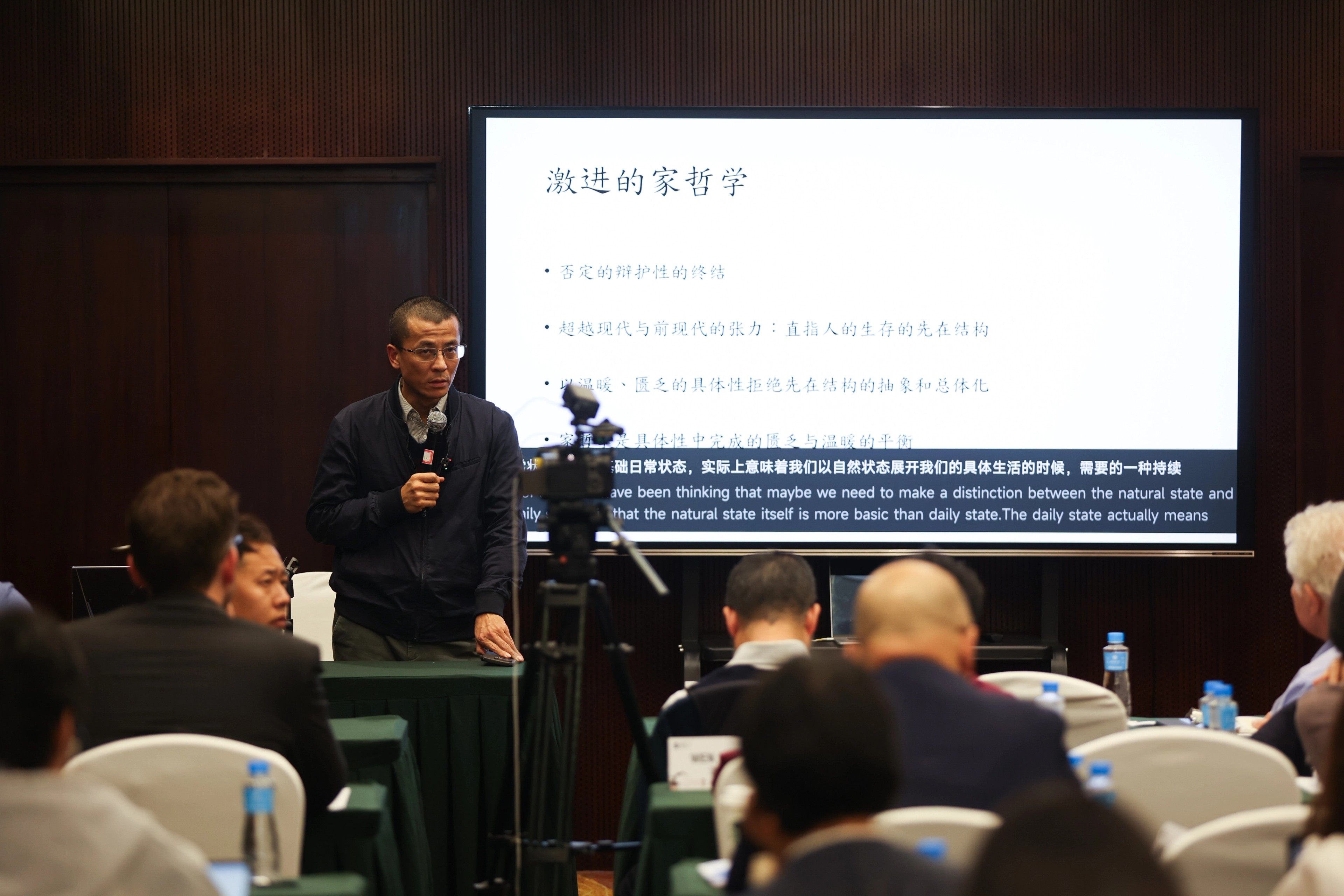
Professor Lesong Cheng, Boya Distinguished Professor at Peking University and Dean of the Department of Philosophy and Religious Studies, presented a report titled “Concreteness and Warmth: Towards a Radical Philosophical Interpretation of Home.” He proposed that the philosophical concept of home should transcend its dimension as a social institution and return to the ontological foundation of human existence. “Returning home” can overcome the sense of lack intensified by modernity and help achieve a natural state of “being-at-home.”
This state, centered on concreteness, establishes warmth and emotional mutual trust between people, thereby balancing the sense of lack arising from individual finitude. The philosophical value of home lies in providing the primordial situation for human existence, enabling individuals to rebuild warm connections with others within concrete life, rather than simply reverting to any traditional family form. From a philosophical standpoint, advancing from a philosophy of home to an existentialist sense of warmth may be radical, yet potentially more effective.
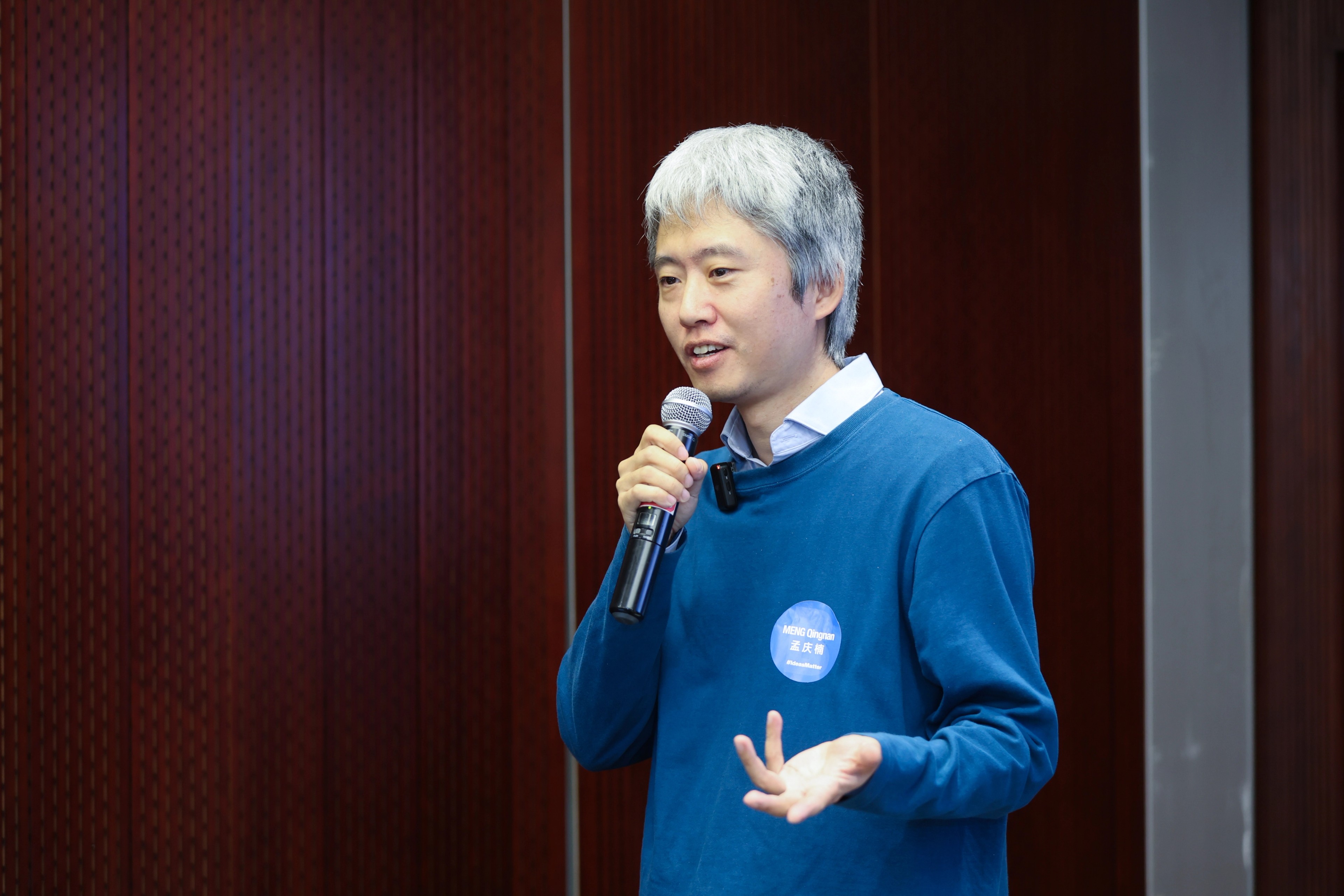
Associate Professor Qingnan Meng of the Department of Philosophy, Peking University, reinterpreted the Confucian ethics of the father-son relationship – based on a threefold understanding of the generation and intergenerational structure – as an ordered relationship, a temporal span, and a system regulated and carried by “names” (名). He contrasted the duties and their transmission inherent to the generational positions of father and son.
For the son, the journey begins with receiving a physical body at birth and entering learning. After the turning adult, he begins to shoulder future responsibilities, establishes his own family through marriage and childbirth to continue the ancestral line. In prime and senior age, he fulfills his duties by discipling himself, protecting the family name, and showing filial piety through support and ritual sacrifices. For the father, responsibility begins immediately with the birth of a son, with no apprenticeship period. He bears the duties of upbringing, education, and the dignity of his position, along with the implicit responsibility of modeling behavior for the next generation.
Drawing on Professor Xianglong Zhang’s theory of “reversed intergenerational memory,” Meng emphasized that within the interaction of “the son serving the father and the father attending the son,” one who is a son must himself experience the nurturing of a son as a father to truly understand and empathize with the father’s role. Qingnan Meng also stressed that rapid contemporary social changes have led to an imbalance in intergenerational understanding, creating difficulties for sons in understanding the previous generation and leads to misunderstandings by fathers towards the next generation. Therefore, clarifying the structure of generations helps reveal the mechanisms of formation, transmission, and interaction of father-son roles, which is significant for understanding the dynamic evolution of the modern family and the individuals within it.
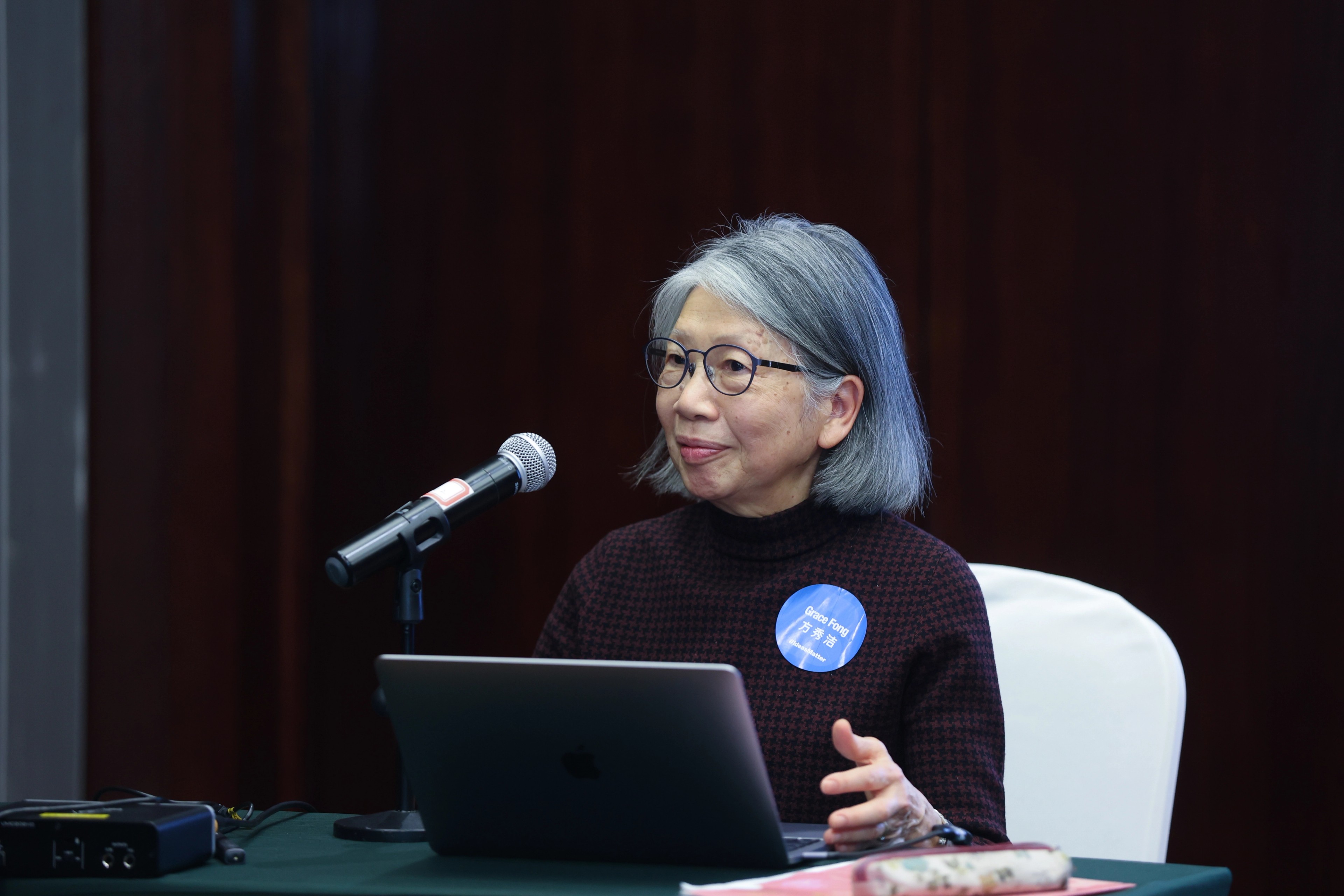
Professor Grace Fong, Professor Emerita of Chinese Literature in the Department of East Asian Studies, McGill University, explored how gender influences the Confucian virtue of filial piety (xiao). Within the Confucian patriarchal ideology, filial piety has long been regarded as a male-centered virtue. Through her research, Fong found that during the Ming and Qing dynasties, with the spread of female education, a daughter’s filial piety towards her parents gradually became a self-determined category. The basic definition of a filial daughter evolved to include women who chose not to marry in order to care for their parents, those who risked their lives to save their parents, or those who did both. By resisting the traditionally determined female fate within marriage and deciding their own life paths, these women challenged social norms.
The cases selected by Professor Fong demonstrated how different concepts of family and care can foster female agency and self-determination. During the Q&A session, audience asked whether the choices made by filial daughters could be seen as a special form of “remonstrance” (jian) towards their parents. This interpretation transforms filial piety from one-way obedience into a relationship of mutual responsibility. Professor Fong responded that these filial daughters expanded the conceptual boundaries of traditional filial piety, revealing it as a practice of moral agency that created space for women to pursue non-traditional life paths even within strict social norms.
Professor David Weissman from City University of New York began with an example. In the past, women often formed informal social networks within neighbourhoods, which tightly connected families to the community. However, as women generally entered the workforce and became highly specialized, they no longer had time to maintain these neighbourhood ties, consequently leading to families becoming increasingly isolated.
Weissman contrasted two types of societies: one is the “integrated society” depicted in Plato’s Republic, where an individual’s identity and duties are determined by their place within the whole; the other is our current “open society,” which champions personal autonomy and independence, but at the cost of diminishing the family’s value as a “resonant cell” of productive reciprocity. Weissman suggested the need to find a third social model—one that respects individual choice and family structures while also being able to practically and progressively rebuild social support networks tailored to specific issues. He cited Nordic countries as examples of successfully integrating public welfare with the private sphere.
During the Q&A session, an audience member noted that economic necessity often leads people to choose living with their parents. In response, Weissman pointed out that many young people co-residing with parents due to financial pressure does not constitute a voluntarily chosen model of well-being. Ultimately, he concluded, our core task is figuring out how to sustain the family while simultaneously fostering individual autonomy.
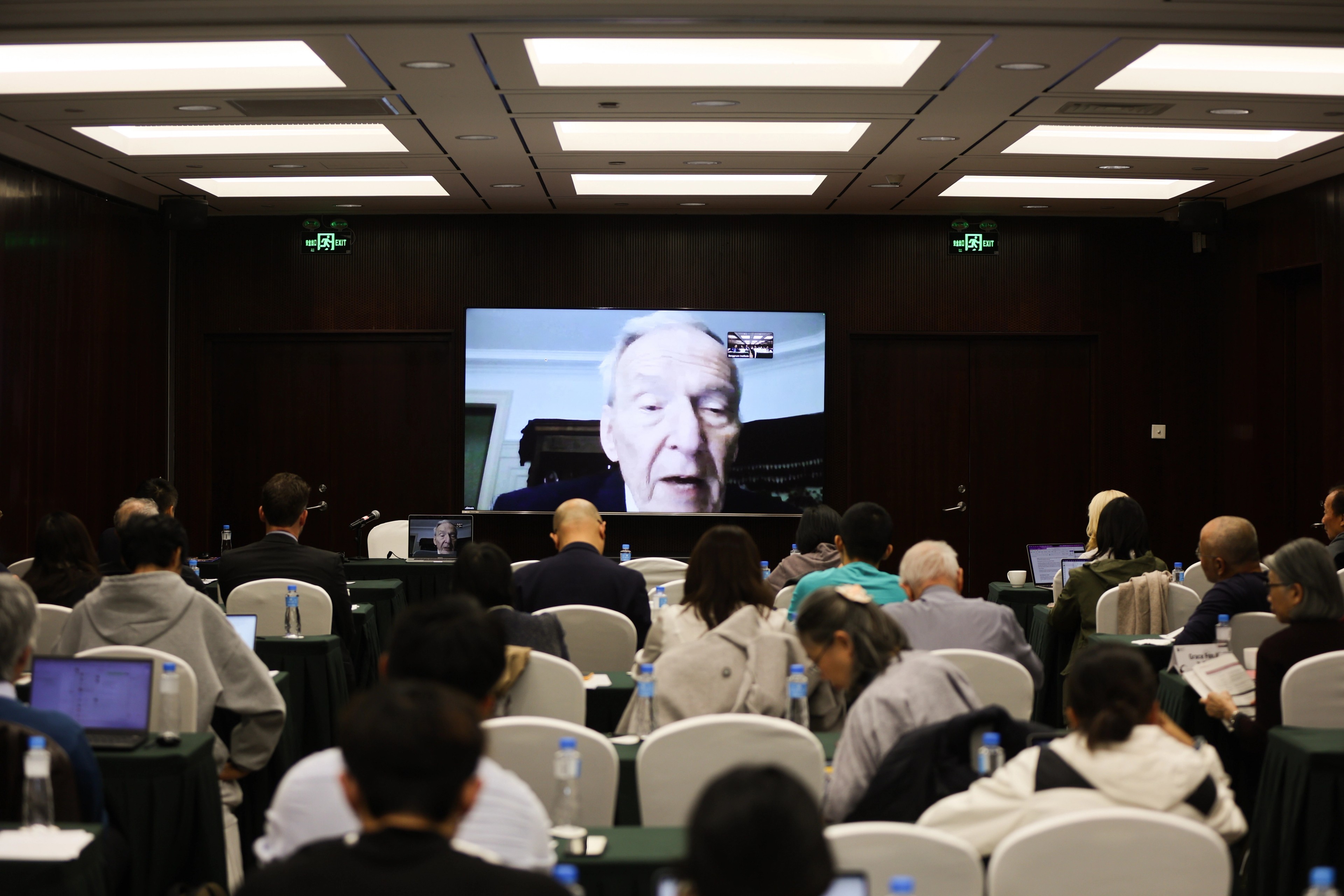
Professor Dermot Moran, the Joseph Chair in Catholic Philosophy at Boston College, joined the conference online to explore the concept of “feeling at home,” which was particularly valued in the ancient Greek worldview. Beginning with Homer’s epic The Odyssey, Moran pointed out that Odysseus’s journey home symbolizes the search for identity and deep familial connections. He examined the classical ideal of “home” through distinct perspectives of three phenomenologists: Husserl emphasized the “consciousness of a homeland” (das Bewußtsein einer Heimatlichkeit) within a community; Heidegger viewed everyday tranquility as “fallenness,” advocating that “uncanniness” (Unheimlichkeit) awakens authentic existence; while Edith Stein proposed that truly being at home brings a sense of wholeness and fulfillment she termed “fullness” (die Fülle).
Moran further noted that home is far from a single, idealized concept. It is both a source of security and identity, and potentially a place of psychological trauma. It is not merely a physical space but can also be childhood, memory, dreams, or even what Stein found in Aquinas’s thought world. Therefore, a phenomenological understanding of home must be multidimensional, encompassing its temporal, spatial, and psychological aspects. Moran argued that being-at-home is not just an internal feeling but a form of public care that requires collective social commitment and institutional support.
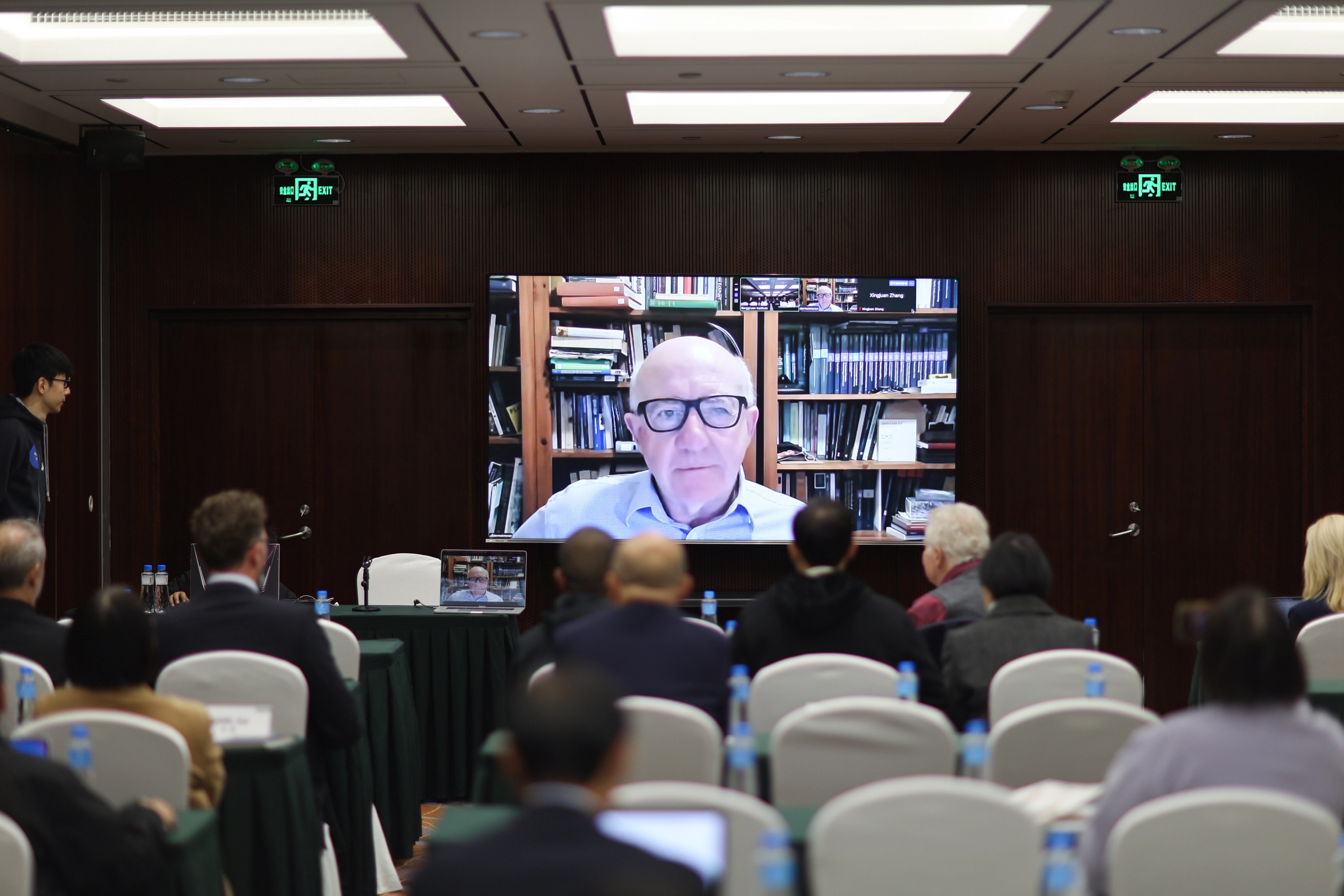
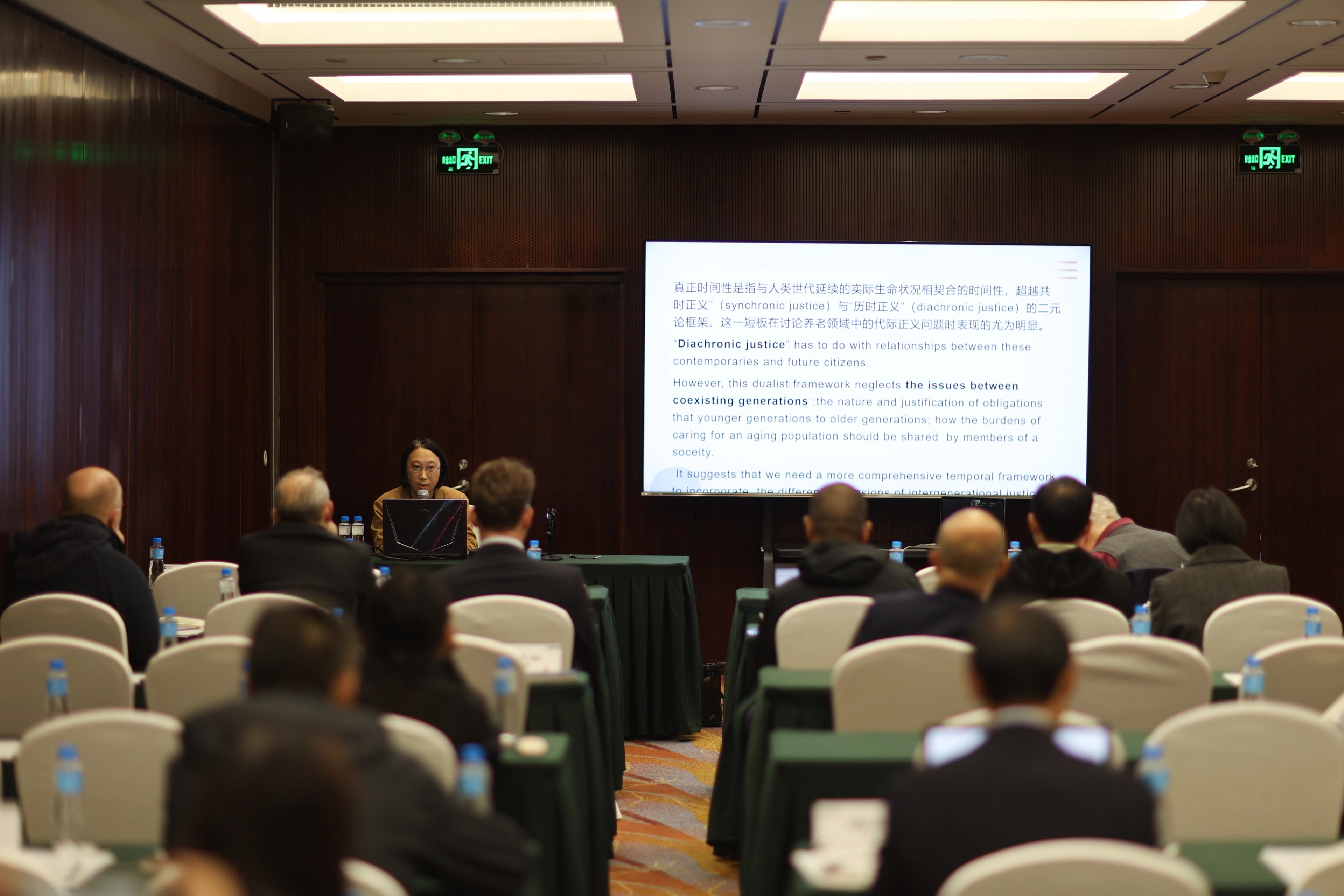
Professor Jue Wang of the Department of Philosophy, Xi'an Jiaotong University, tried to reconstruct theories of intergenerational justice using a framework of “generational temporality.” She pointed out that Western theories of intergenerational justice are confined by the binary opposition of “synchronic” and “diachronic” perspectives, which severs the authentic temporal connection between generations. She then proposed a Confucian perspective on intergenerational justice: Chinese society is essentially a vertical society built upon generational continuity, with the family as its core institution that naturally links different generations together. Within this structure, the mechanism of “bao (reciprocity)” forms the central bond sustaining intergenerational relationships, manifesting as an ethical reciprocation towards the source of life and the qinqin community.
Therefore, Confucian intergenerational justice is essentially virtue-oriented. Its focus lies not in the equal distribution of rights, but in each member fulfilling responsibilities appropriate to their life stage within the generational linkage. Based on this, Jue seeks to construct a Confucian theory of intergenerational justice centered on the family and grounded in generational temporality, aiming to address the crisis in elderly support systems under the current pressures of an aging population.
Professor Yong Li from the School of Philosophy, Wuhan University, addressed the issue of aging in East Asia, exploring the realities and dilemmas of family care from the perspective of Confucian ethics. He pointed out that while traditional Confucianism, with filial piety at its core, regards family as the foundation of ethical and social order, the family-based care model faces challenges amidst modern social structural changes, declining birthrates, and increasing individualism.
Li criticized contemporary Confucian scholars who insist on a “family care first” stance, arguing that the essence of filial piety lies in emotion and responsibility, not round-the-clock physical care. Family bonds, he contended, can be maintained within a socialized elderly care framework and are not incompatible with institutional support. He advocated for preserving the value of Confucian familial ethics while simultaneously promoting more flexible social care systems in response to the structural transformations of modern East Asian societies.
David Schweikard, Interim Professor of European Political Philosophy at University of Flensburg, used a social ontology and meta normative analytic framework, asking what is a family and what should it be. he settled on the intuitive understanding of family as a special “human kind,” not purely a social group or natural kind, but socially constructed while deeply tied to human nature. He then turned to the normative infrastructure of a family made of deontic relationships. Rejecting single principles which govern the normative relationships of family such as kinship and reciprocates, he instead looks at two relationships: parent obligation, understood as joint duties grounded in the child's needs, and filial obligations, which are conditional on the child's age, able-bodiness, and arguably the parent-child relationship. He concludes by advocating for a descriptive approach to the social ontology of family with a pluralistic approach to understanding family as a human kind and familial duty.
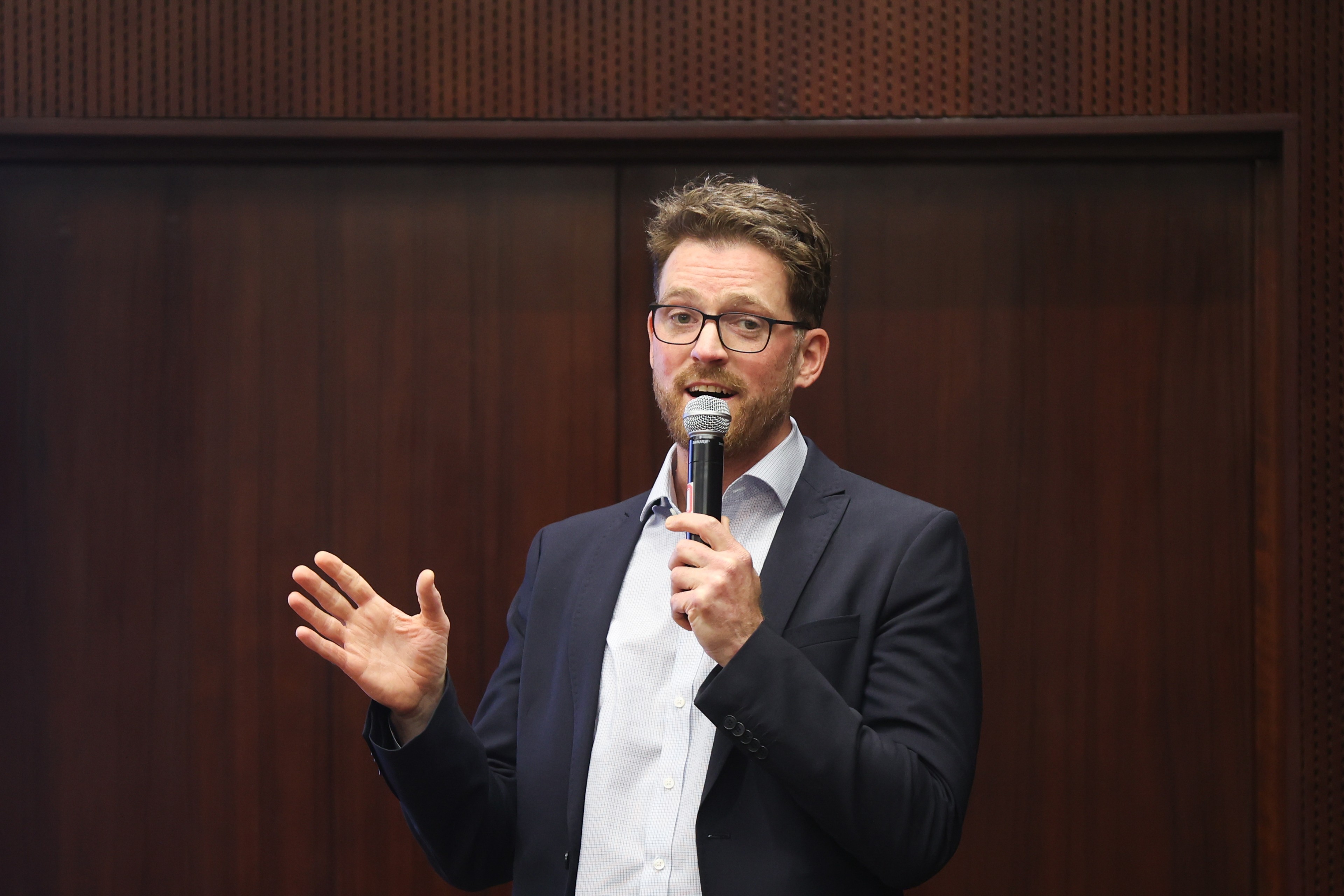
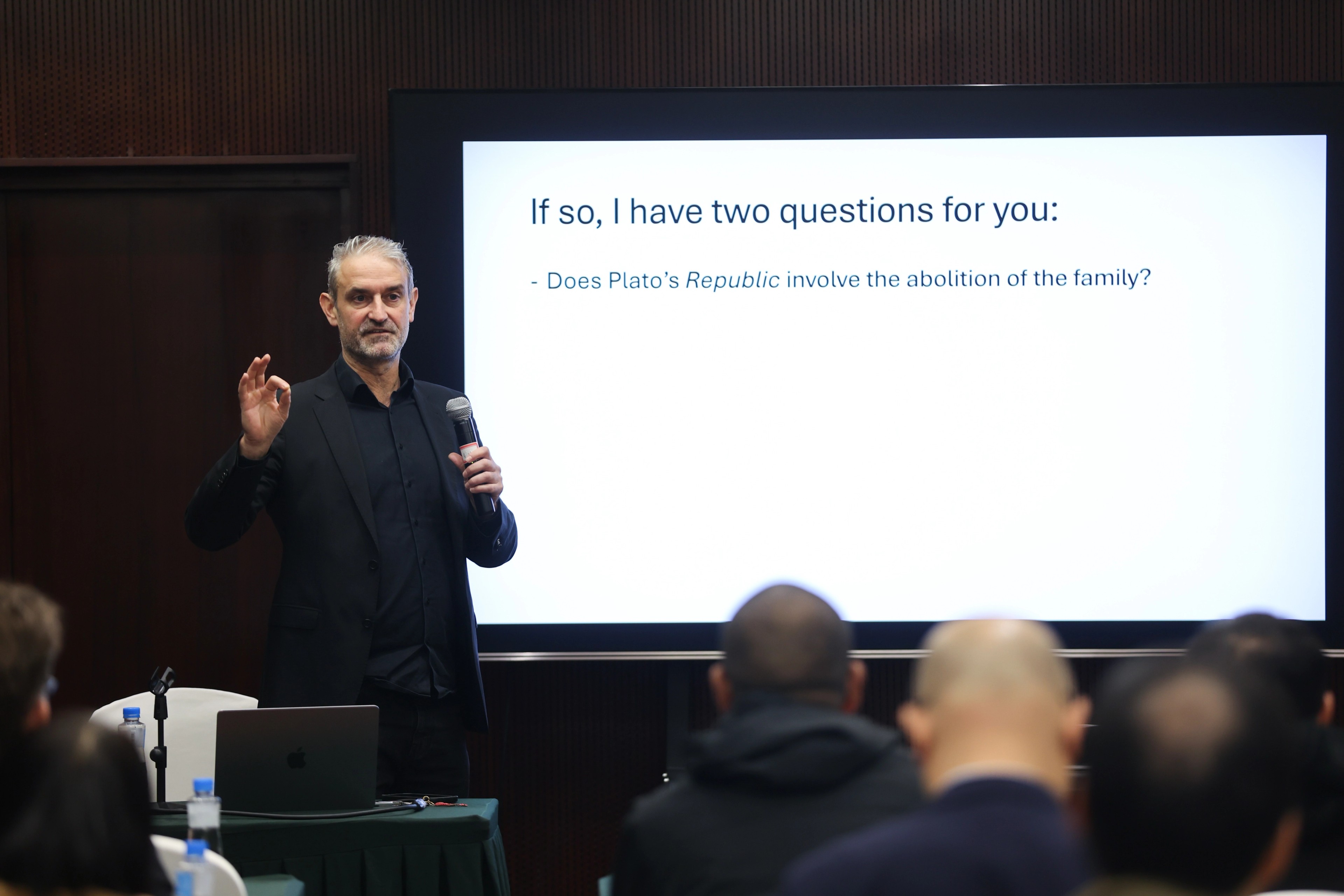
Professor Hans Bernhard Schmid from the University of Vienna analyzed the concept of family from the perspective of social ontology. He began by posing two provocative questions: “Does Plato’s Republic abolish the family?” and “Can the group marriage described by Engels be considered a family?” These questions immediately revealed the complexity and historicity inherent in defining “family.” Schmid pointed out that the family is a multidimensional concept, whose definition involves biological, legal, economic, and sociological dimensions, among others.
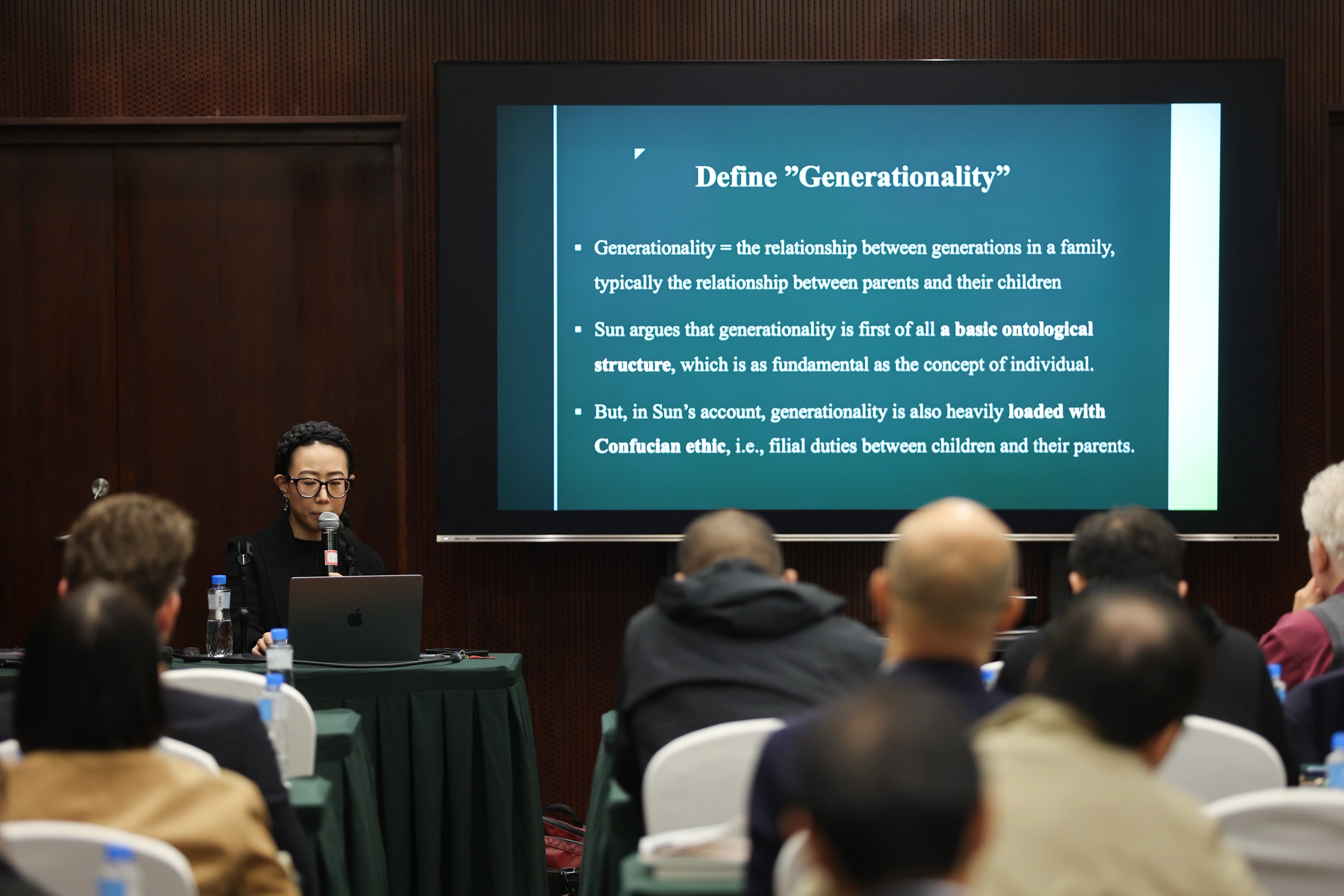
Associate Professor Xiaoxi Wu from the Department of Philosophy and Science, Southeast University, presented titled “Constructing an Authentic Generativity,” which further engaged in a scholarly dialogue with Xiangchen Sun’s philosophy of family. Wu argued that while Sun takes the Confucian concept of familial affection (qinqin) as his starting point, establishing intergenerational family relations as a primordial existential structure co-equal with individuality to construct a warm world of being-at-home, the significance of these generational relationships far exceeds the warmth depicted by qinqin. As the unchosen, “thrown” primordial condition for the individual, the key issue lies in the fact that this initial situation is the very field where an individual first encounters the complex facets of human nature and develops ethical capacities. It places urgent demands on the individual’s ethical capabilities, preparing them to become a genuine social being. Therefore, Wu contended that the attainment of individuality should be the premise and goal for constructing authentic intergenerational relationships.
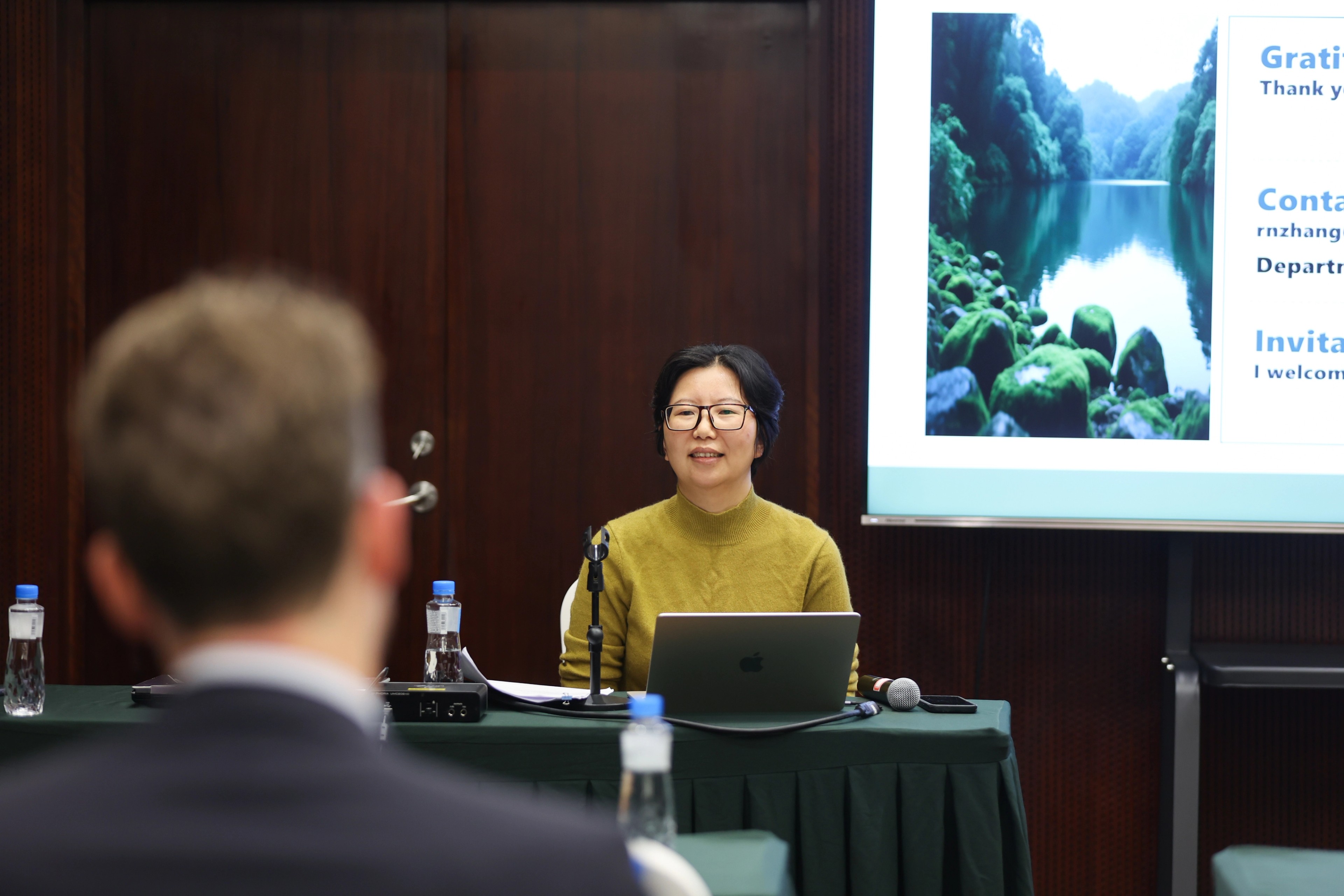
Professor Rongnan Zhang from the Department of Philosophy, East China Normal University, argued that modernity, through disenchantment and individualization, has reshaped social imagination, leading to a structural transformation of the family from a “community of survival” in traditional society towards a “fluid emotional community” in modern society. This shift deconstructs the stable linkage between marriage, family, and procreation, thereby weakening family functions. Drawing on the philosophy of family concepts developed by Xianglong Zhang and Xiangchen Sun, which emphasize the embodiment, temporality, and the structure of familial affection (qinqin) inherent to the family, Zhang proposed that a complementary tension can be achieved between the dual foundations of individuality and familial affection. This enables forming the core mechanism for achieving “the modernity of the family’s return.”
Zhang suggested that comparative Sino-Western analysis reveals distinctive Chinese characteristics: state-driven individualization, the resilience of familism, structural tensions surrounding gender equality, and a symbiosis of tradition and modernity. Ultimately, the family can be reshaped into a community of care that addresses human vulnerability, resisting the impacts of modernity and achieving a revival of the home endowed with both emotional depth and ethical substance.
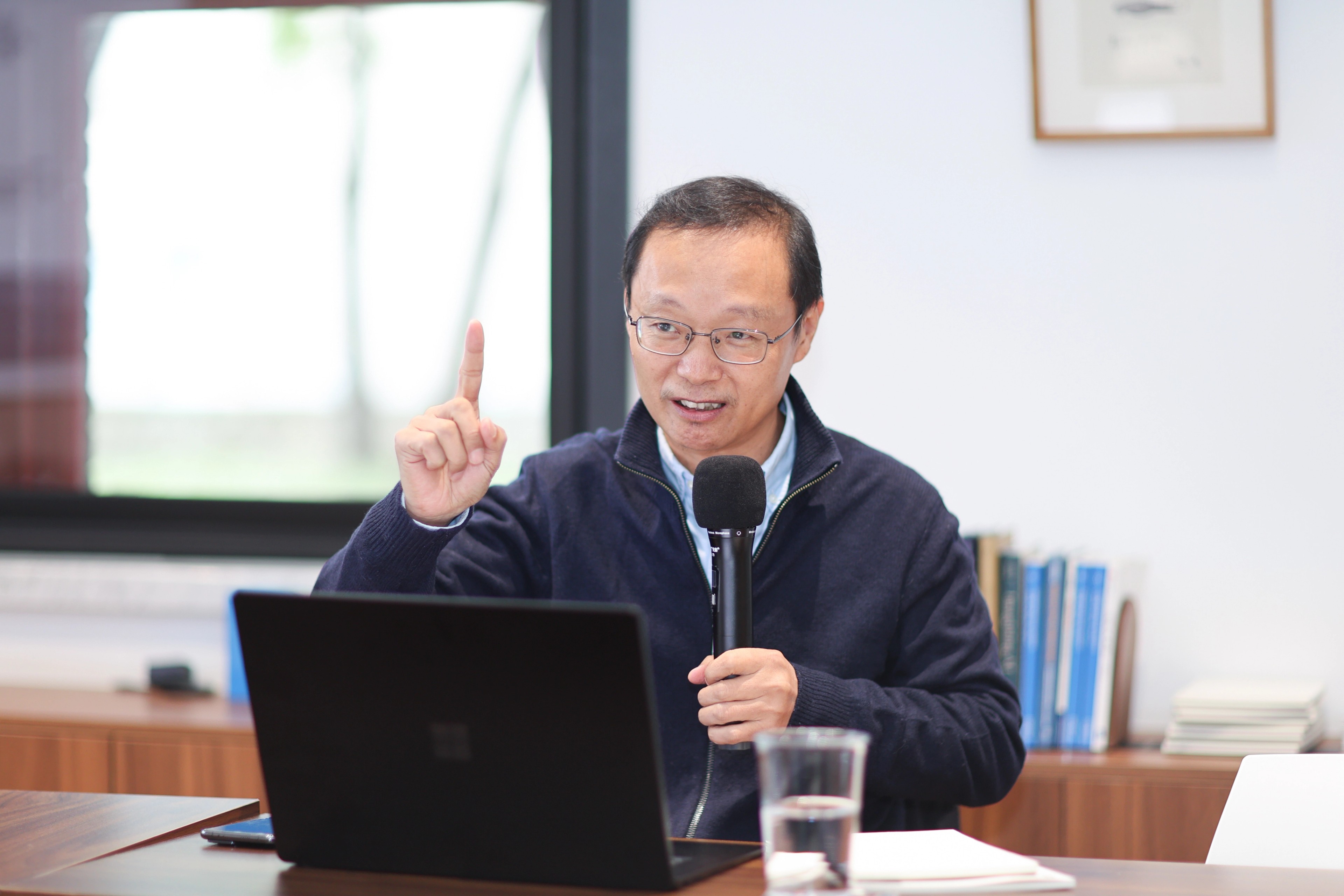
Professor Gang Zhu from the Department of Philosophy, Sun Yat-sen University, proposed that in Confucian classics, qinqin, primarily manifested as filial piety (xiao) and parental care (ci), is the foundation of being human and represents the inter-subjective relationship between family members. Qinqin is not a traditional relationship of power domination, but rather a fundamental mode of emotional interaction under the concept of family. It serves as a basic model for the relationship between self and others, encompassing both identity and difference.
From Lévinas’s perspective, individual growth is a process from identity to difference, a difference that is often irreducible—just as children, after becoming independent, are destined to separate from their parents. However, within the Confucian system of qinqin, parents and children can reconstruct a connection of identity on an emotional level through ci and xiao.
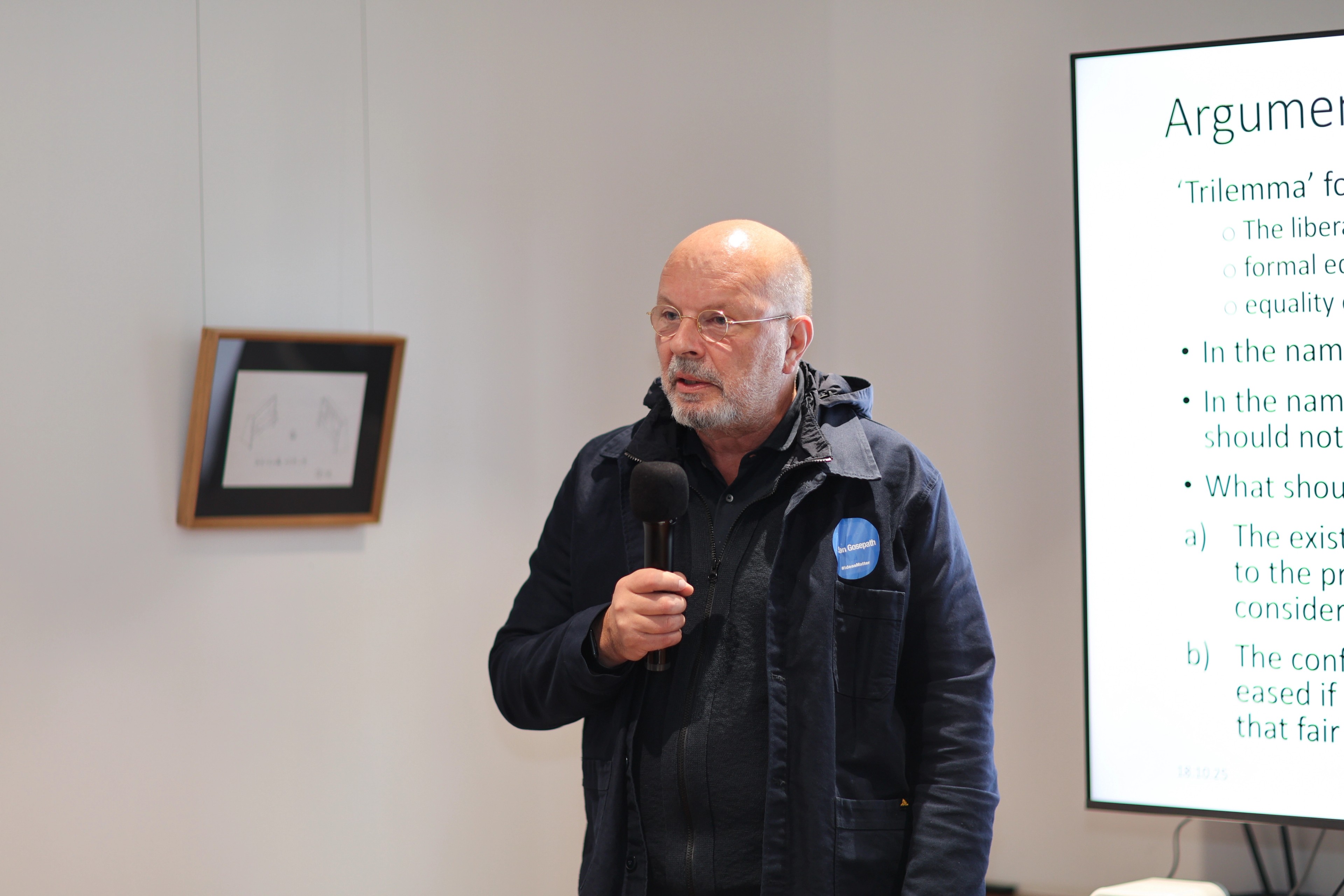
Professor Stefan Gosepath from Freie Universität Berlin, the final speaker at the conference, addressed a core dilemma of the family system within moral and political philosophy: why is the family, on one hand, seen as a valuable community worthy of preservation, yet on the other, it perpetuates structural inequalities that conflict with principles of justice? He pointed out that the distinctiveness of the family arises from justified partiality within it, such as parents’ prioritized care for their children and special duties among family members. However, this partiality, at the societal level, leads to the intergenerational reproduction of privilege, granting systematic advantages to some family members while leaving others at a disadvantage. This contravenes the demand of fairness to “treat all persons equally.”
This leads to the pivotal question: If the family inherently creates undeserved inequalities, how should we approach this institution? Should it be abolished, as radicals argue, or can it be reconciled with justice in principle through reinterpretation, institutional reform, and normative constraints? Gosepath stressed that this issue concerns not only the internal ethical structure of the family but also how the state regulates the spillover effects of familial partiality in the broader society. He called for a rethinking of the legitimacy conditions of the family system and, without undermining the value of familial affection and intimate relationships, advocated for institutional designs that reduce undeserved inequalities, limit the intergenerational transmission of privilege, and promote a fairer distribution of opportunities.
---
Written by: Berggruen Interns: Peter Chenzhou Li, Tianzheng Tian, Zhenghao Wang, Wulan Tuoya, Shi En Hsu, Chianna Cohen, Wentao Yu, Lochlan Liyuan Zhang
Translated by: Peter Chenzhou Li