In Conversation: Michael Sandel and Ngaire Woods at the University of Oxford
- Date: June 2, 2026
- Location: Oxford, United Kingdom
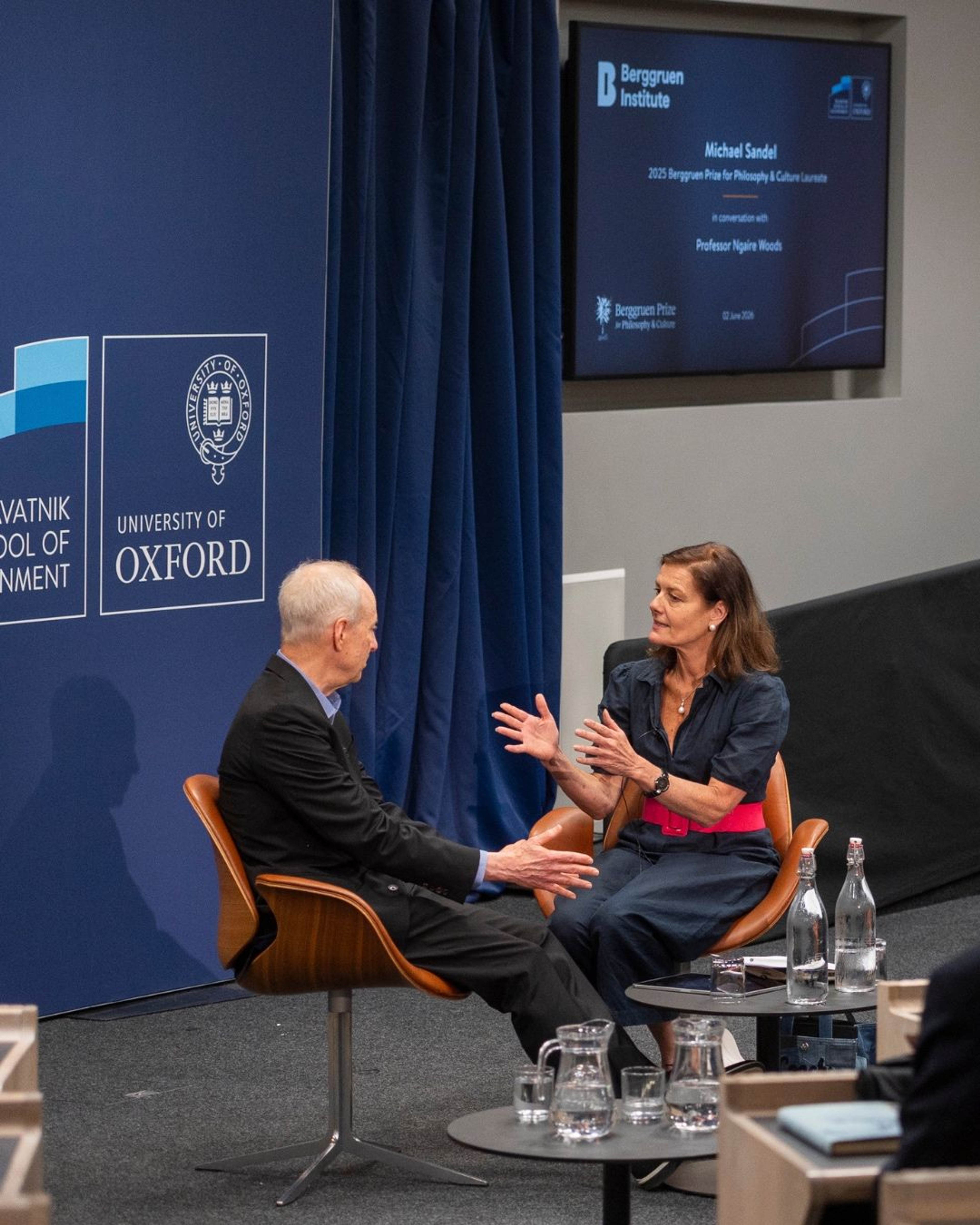
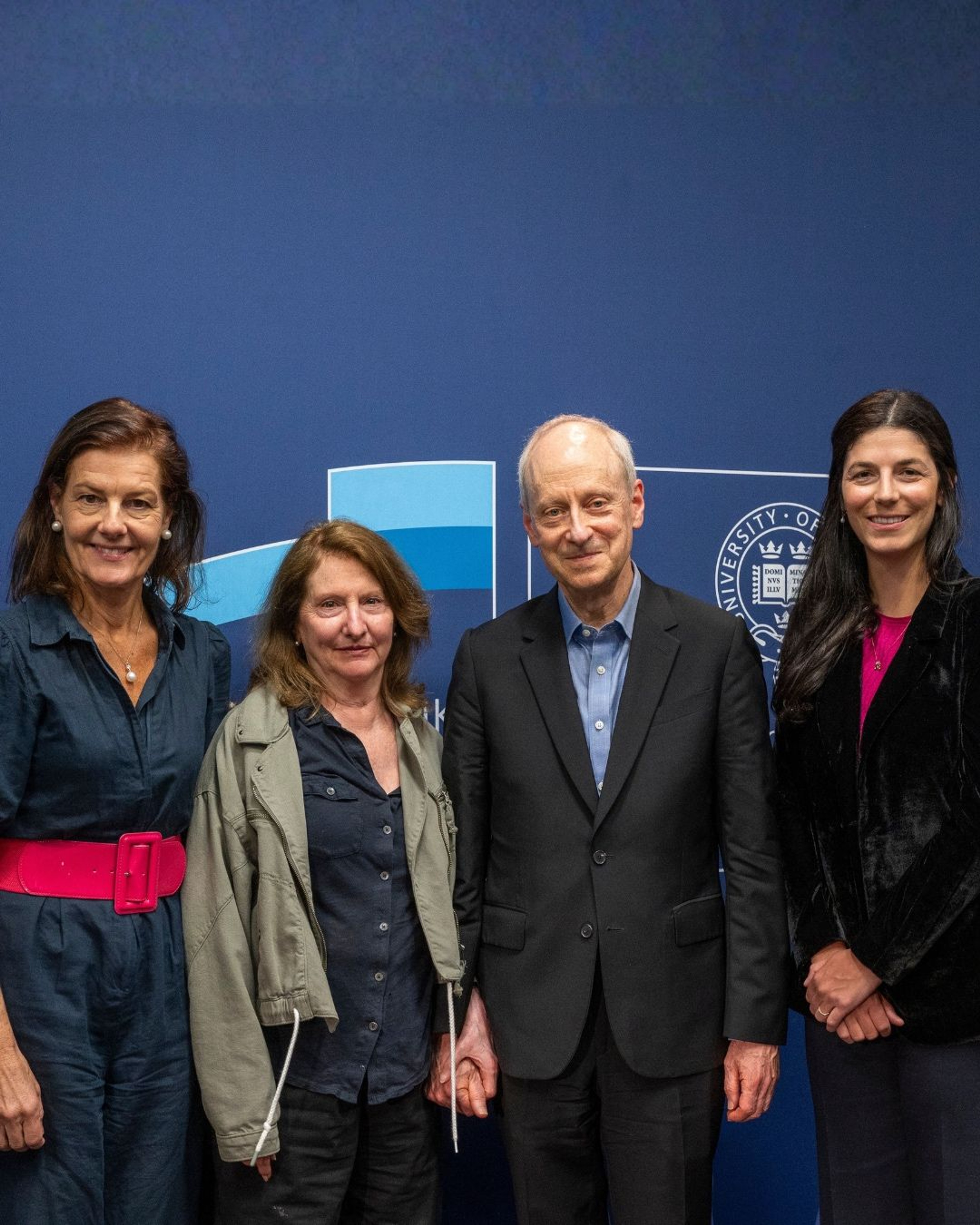
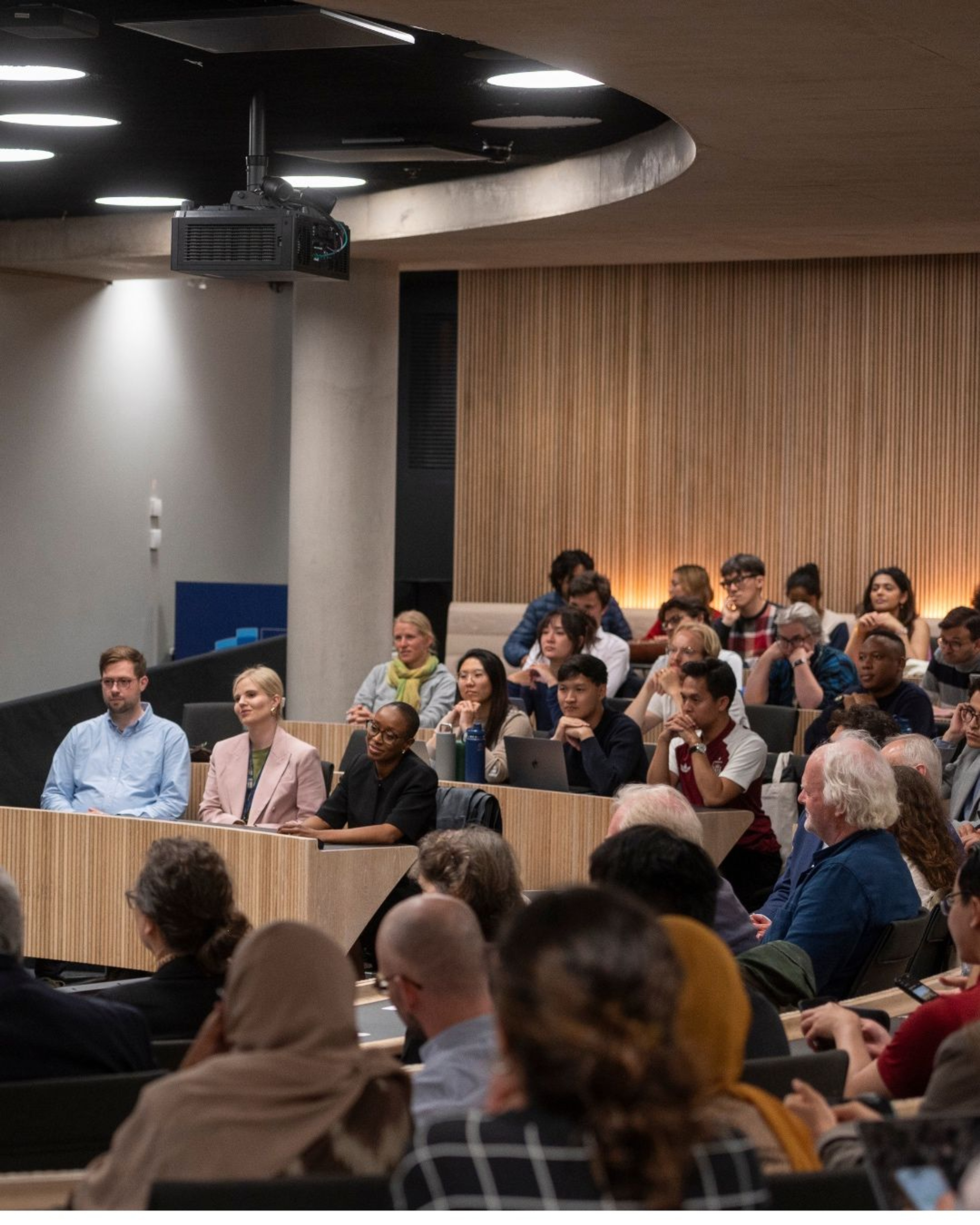
In collaboration with the Blavatnik School of Government, the Berggruen Institute hosted 2025 Berggruen Prize Laureate Michael Sandel for a timely conversation on the philosophical and political frameworks needed to navigate the pressing issues society faces today.
Eminent political philosopher Professor Michael Sandel sat down with Ngaire Woods, Dean of the Blavatnik School of Government at the University of Oxford, to discuss several themes central to his work: theories of ethics, markets, and justice as well as critiques of neoliberalism, meritocracy, inequality, and populism. Over the course of the evening, attendees were offered a thoughtful glimpse into Sandel’s impressive intellectual journey, spanning from a debate with Ronald Reagan in his youth, to his many publications throughout his career and far-ranging global impact. Across all his endeavors, Sandel sharpens signature calls to action: renewing democratic public discourse, protecting the dignity of work, and cultivating a pluralistic conception of the good life.
During his conversation with Woods, Sandel highlighted the notion of justice, presenting his distinctly “contributive” conception which seeks to uphold and affirm an individual’s positive input to society, which should exist in its own right and as a complement to distributive justice – the fair allocation of resources for individuals within society. Sandel’s work radically challenges the market-faith politics of neoliberalism and interrogates the contradictions of meritocracy in the United States and the West at large.
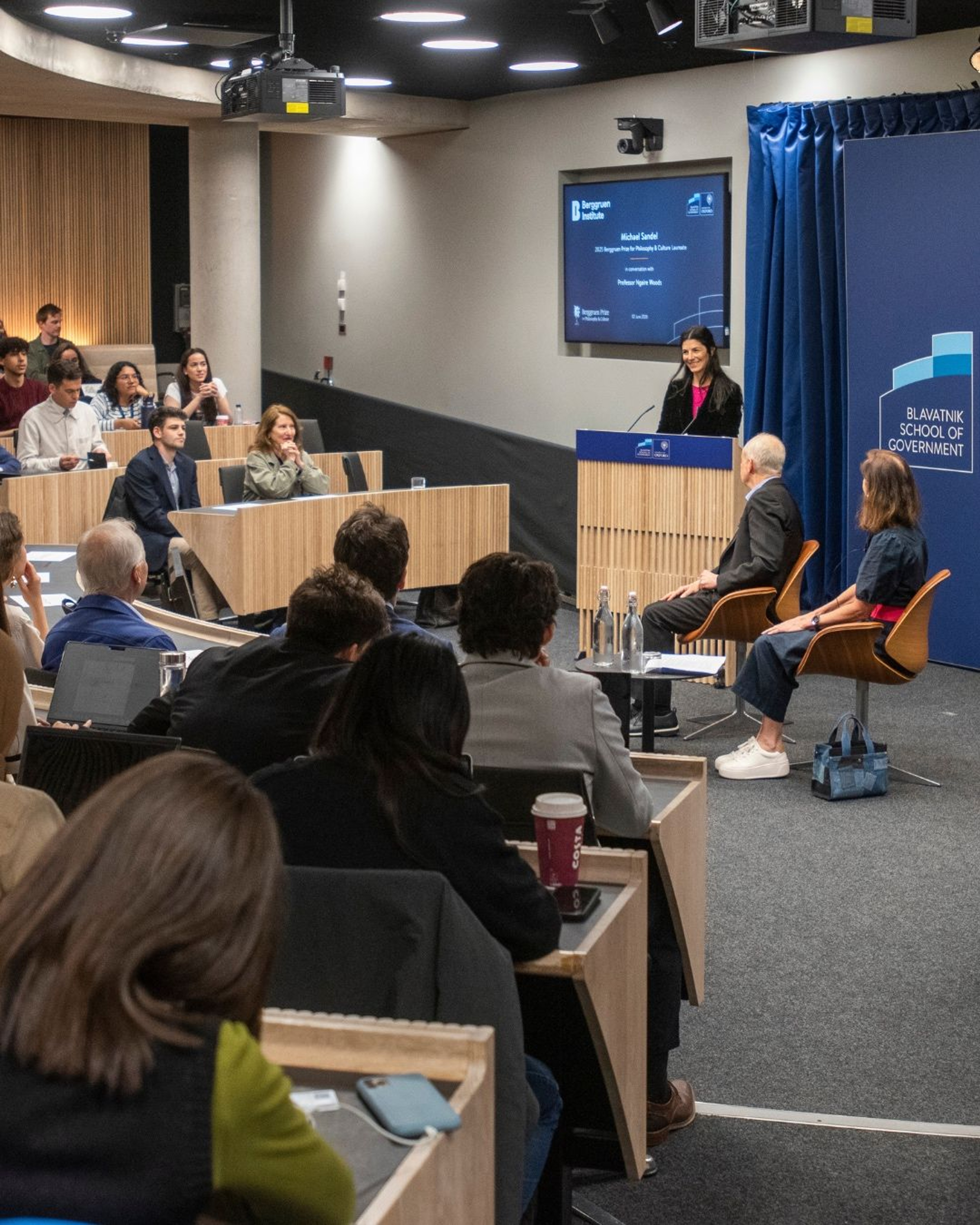
Towards the end of the evening, Sandel fielded a series of incisive questions from the audience – which included students, practitioners, and members of the broader community. In one instance, Sandel responded to a student’s comparison of ‘equality of opportunity’ and ‘equality of wealth’, noting that beyond this scheme was a third option, ‘equality of condition,’ which grounds itself in communal education, inter-class contact, and a broader advocacy for non-sequestered civic life. Taken together, Sandel noted, these practices could help build a society that treats individuals from invariably different backgrounds as nevertheless “participants in a common life.”
About The Berggruen Institute
About The Berggruen Institute
About The Berggruen Institute
About The Berggruen Institute
About The Berggruen Institute
About The Berggruen Institute
About The Berggruen Institute
About The Berggruen Institute
About The Berggruen Institute
About The Berggruen Institute
Related
Wang Hui wins International “Antonio Feltrinelli” Prize for Moral and Historical Sciences

Geophilosophy Lecture Series: Michael Sandel at Casa dei Tre Oci
“Michael Sandel, a philosopher who is a prophet in his own country.” | Berggruen Prize Ceremony
Geophilosophy Lecture Series: Patricia Hill Collins at Casa dei Tre Oci
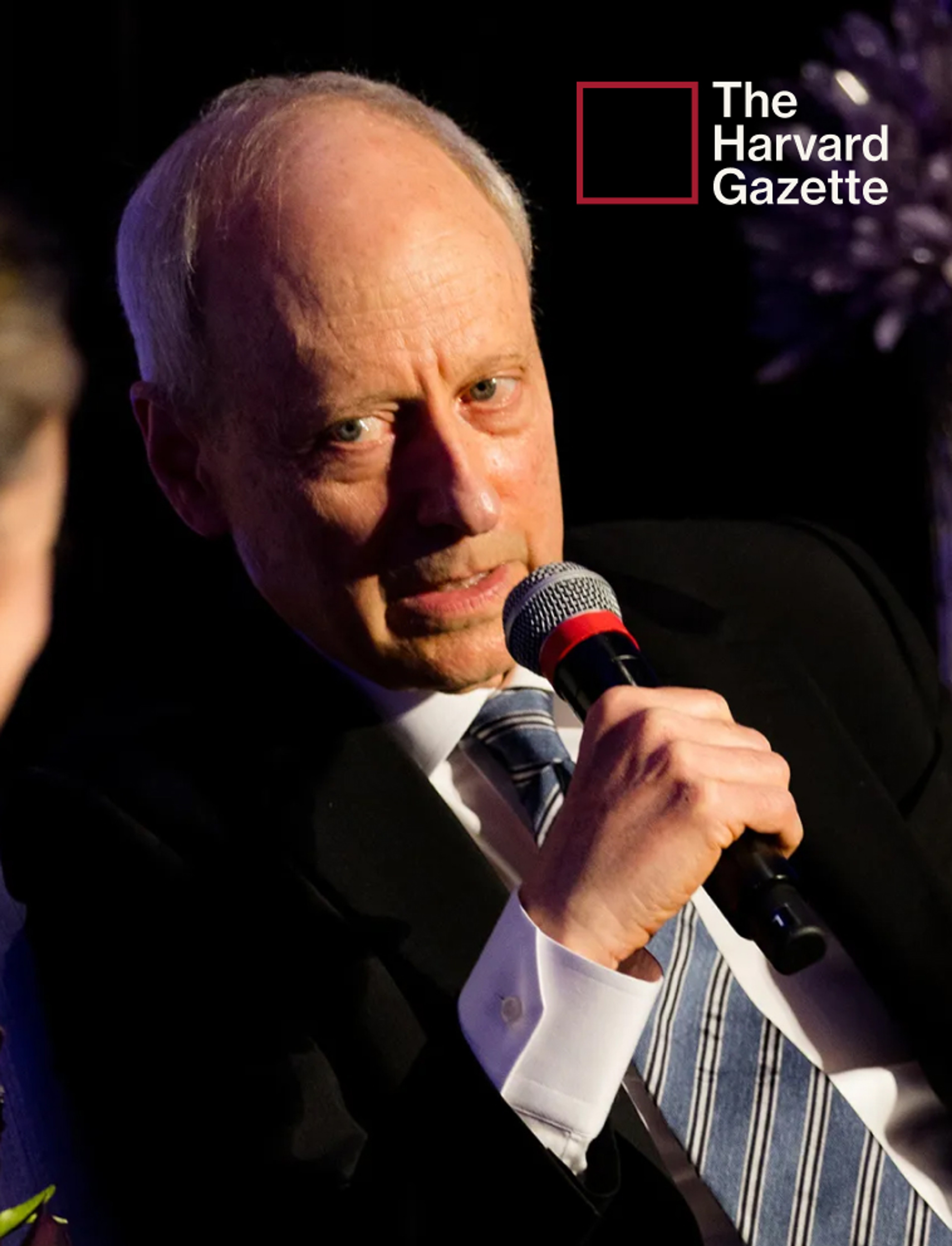
Michael Sandel Saw It Coming
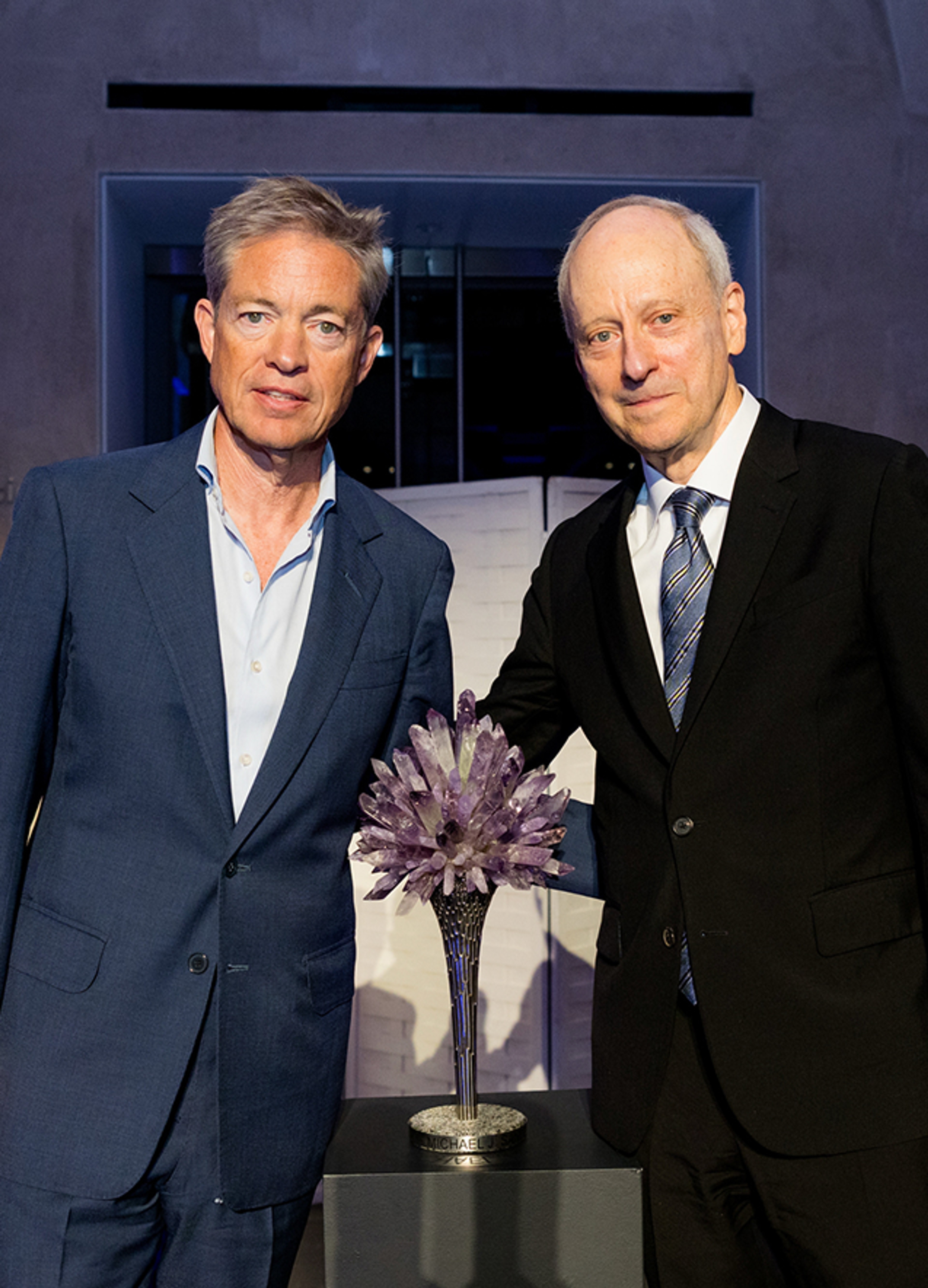
Berggruen Prize Honors 2025 Laureate Michael Sandel at Award Ceremony in Cambridge, MA
Michael Sandel Interview in Project Syndicate: "Reclaiming Democracy From the Market"
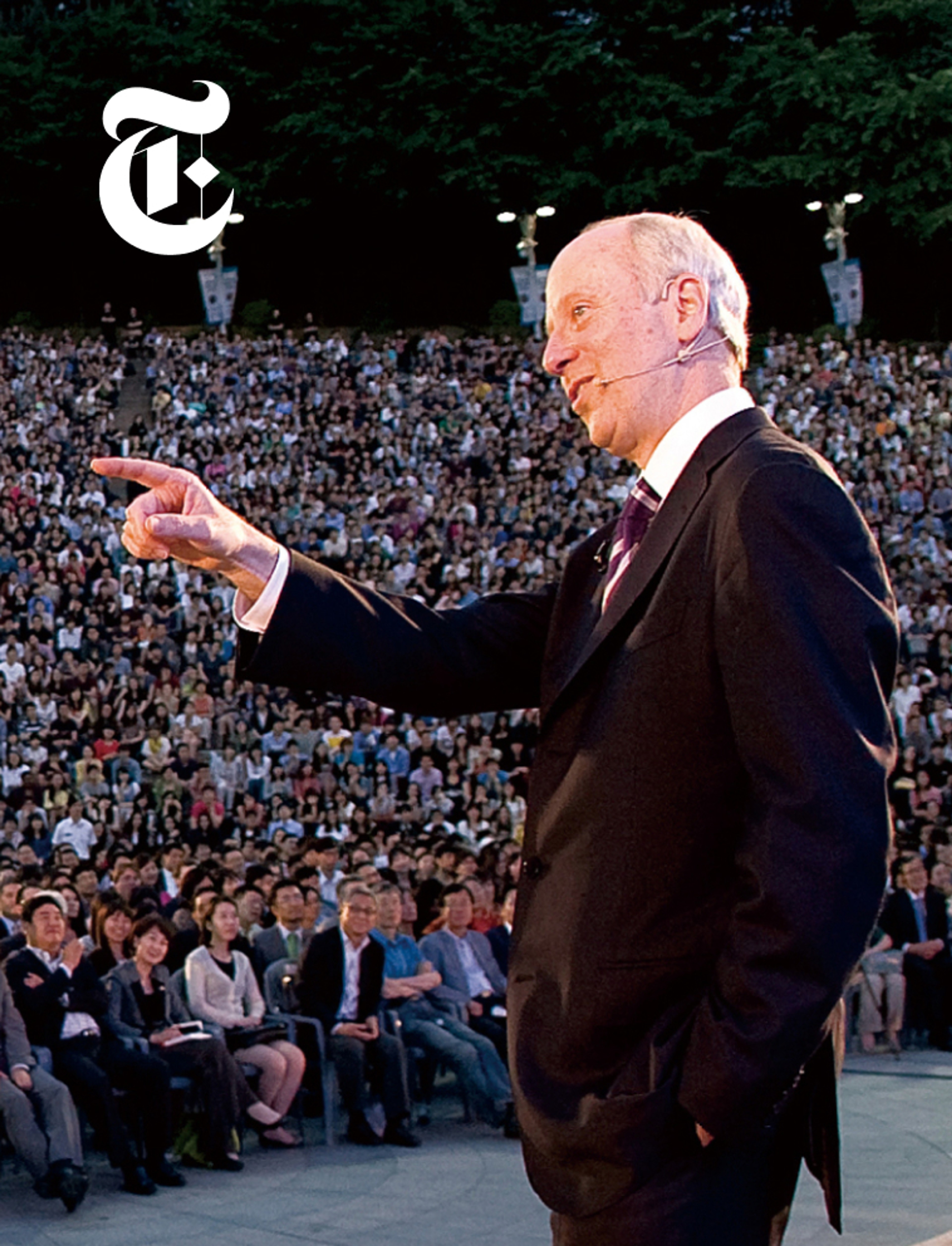
Michael Sandel in The New York Times: "A Philosopher ‘Prophet’"

Michael Sandel: The pessimist who became a prophet

Michael Sandel Interviews on PBS
Michael Sandel Highlighted in South China Morning Post
Michael Sandel in Der Spiegel: “Es war ein Fehler, den Rechten das Monopol auf Patriotismus zu überlassen”
Michael Sandel Speaks to Foreign Policy on Winning the Berggruen Prize and the Future of Liberalism
Michael Sandel Interviewed by Le Figaro on Winning the Berggruen Prize
‘Justice’ professor Michael Sandel wins $1M philosophy prize
Michael Sandel Announced as 2025 Berggruen Prize Laureate
$1 Million Berggruen Philosophy Prize Awarded to Michael Sandel

TIME100 Philanthropy 2025: Peter Singer, A Philosopher of Giving
In Conversation with Peter Singer | Utilitarianism: Avoiding Common Misunderstandings and Responding to Objections

American Fiction: Cord Jefferson and Dr. Patricia Hill Collins